Zhou Mei, Learned R Marc, Rossi Stephen J, DePaoli Alex M, Tian Hui, Ling Lei
NGM Biopharmaceuticals, Inc. South San Francisco CA.
Hepatol Commun. 2017 Oct 16;1(10):1024-1042. doi: 10.1002/hep4.1108. eCollection 2017 Dec.
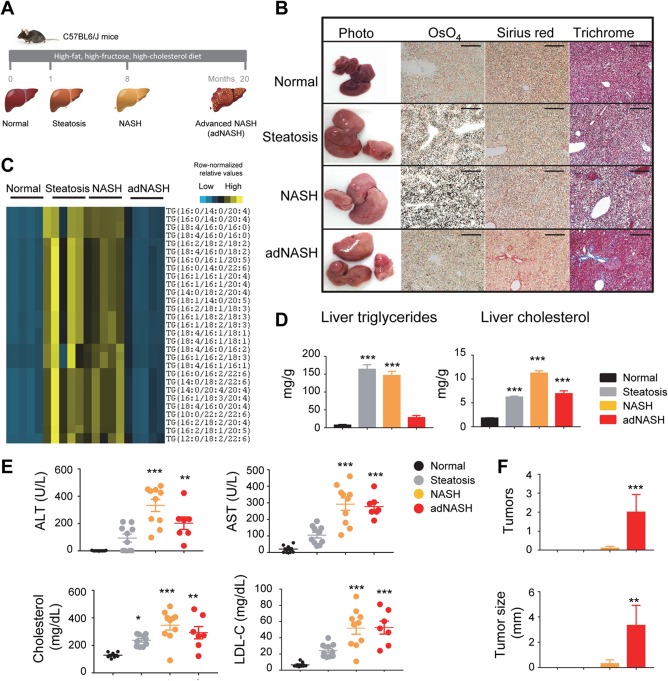
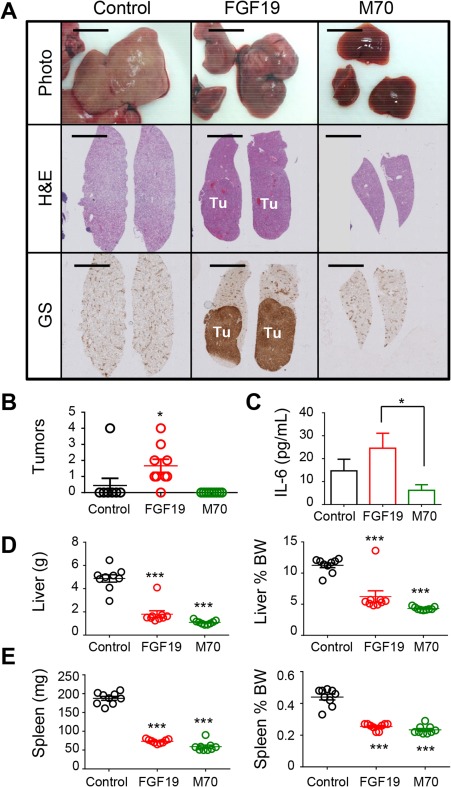
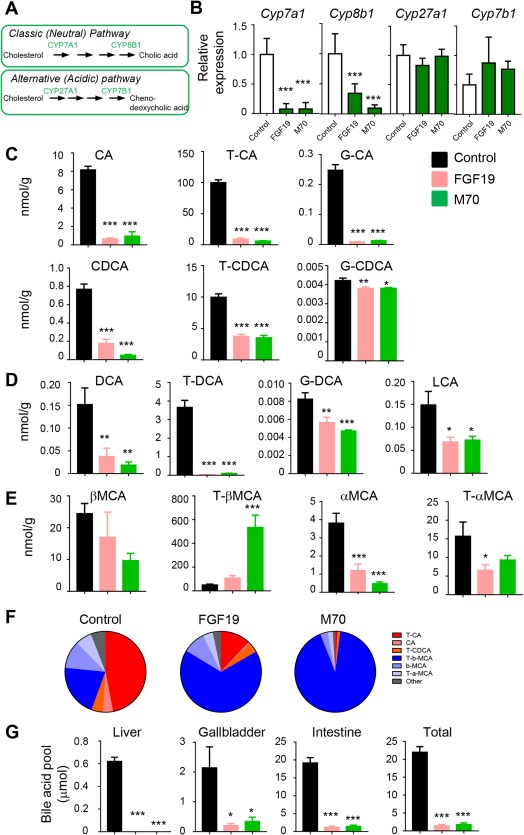
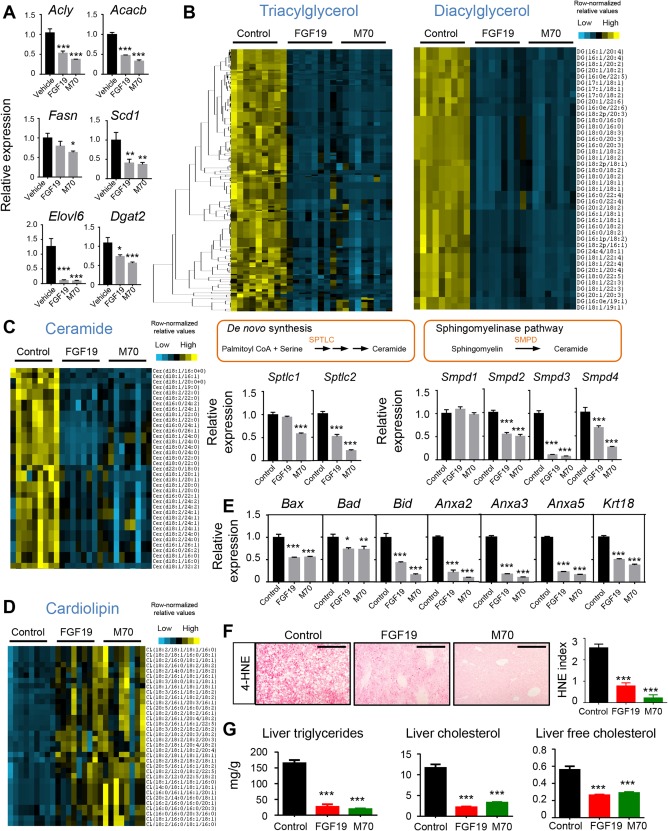
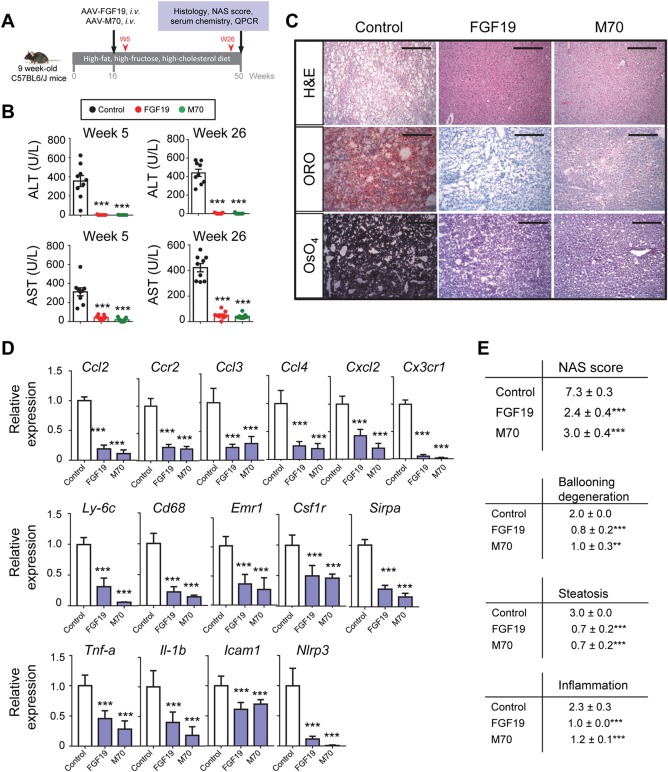
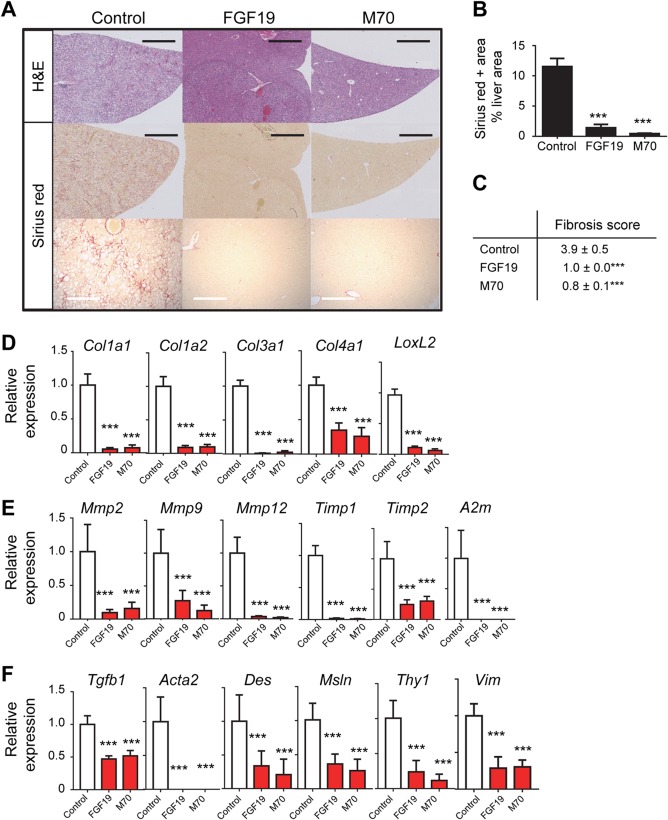
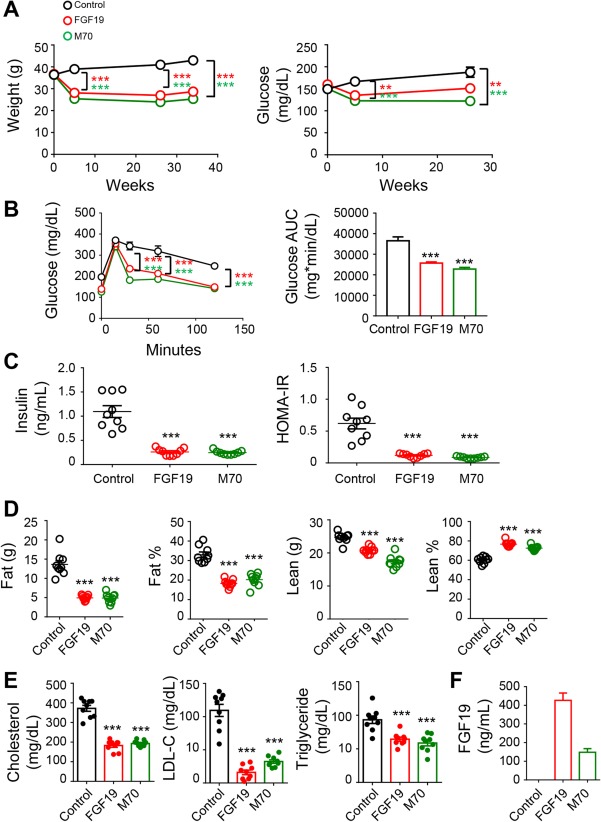
Nonalcoholic fatty liver disease (NAFLD) is an increasingly prevalent chronic liver disease for which no approved therapies are available. Despite intensive research, the cellular mechanisms that mediate NAFLD pathogenesis and progression are poorly understood. Although obesity, diabetes, insulin resistance, and related metabolic syndrome, all consequences of a Western diet lifestyle, are well-recognized risk factors for NAFLD development, dysregulated bile acid metabolism is emerging as a novel mechanism contributing to NAFLD pathogenesis. Notably, NAFLD patients exhibit a deficiency in fibroblast growth factor 19 (FGF19), an endocrine hormone in the gut-liver axis that controls bile acid synthesis, lipogenesis, and energy homeostasis. Using a mouse model that reproduces the clinical progression of human NAFLD, including the development of simple steatosis, nonalcoholic steatohepatitis (NASH), and advanced "burnt-out" NASH with hepatocellular carcinoma, we demonstrate that FGF19 as well as an engineered nontumorigenic FGF19 analogue, M70, ameliorate bile acid toxicity and lipotoxicity to restore liver health. Mass spectrometry-based lipidomics analysis of livers from mice treated with FGF19 or M70 revealed significant reductions in the levels of toxic lipid species (i.e., diacylglycerols, ceramides and free cholesterol) and an increase in levels of unoxidized cardiolipins, an important component of the inner mitochondrial membrane. Furthermore, treatment with FGF19 or M70 rapidly and profoundly reduced levels of liver enzymes, resolved the histologic features of NASH, and enhanced insulin sensitivity, energy homeostasis, and lipid metabolism. Whereas FGF19 induced hepatocellular carcinoma formation following prolonged exposure in these mice, animals expressing M70 showed no evidence of liver tumorigenesis in this model. We have engineered an FGF19 hormone that is capable of regulating multiple pathways to deliver antisteatotic, anti-inflammatory, and antifibrotic activities and that represents a potentially promising therapeutic for patients with NASH. ( 2017;1:1024-1042).
非酒精性脂肪性肝病(NAFLD)是一种日益普遍的慢性肝病,目前尚无获批的治疗方法。尽管进行了深入研究,但介导NAFLD发病机制和进展的细胞机制仍知之甚少。虽然肥胖、糖尿病、胰岛素抵抗以及相关的代谢综合征,这些西方饮食生活方式的所有后果,都是公认的NAFLD发展的危险因素,但胆汁酸代谢失调正成为一种导致NAFLD发病机制的新机制。值得注意的是,NAFLD患者表现出成纤维细胞生长因子19(FGF19)缺乏,FGF19是一种在肠-肝轴中的内分泌激素,可控制胆汁酸合成、脂肪生成和能量稳态。使用一种能再现人类NAFLD临床进展的小鼠模型,包括单纯性脂肪变性、非酒精性脂肪性肝炎(NASH)以及伴有肝细胞癌的晚期“终末期”NASH的发展,我们证明FGF19以及一种经过改造的非致瘤性FGF19类似物M70可改善胆汁酸毒性和脂毒性,以恢复肝脏健康。基于质谱的脂质组学分析显示,用FGF19或M70处理的小鼠肝脏中,有毒脂质种类(即二酰基甘油、神经酰胺和游离胆固醇)的水平显著降低,而未氧化的心磷脂水平升高,心磷脂是线粒体内膜的重要组成部分。此外,用FGF19或M70治疗可迅速且显著降低肝酶水平,解决NASH的组织学特征,并增强胰岛素敏感性、能量稳态和脂质代谢。虽然在这些小鼠中长期暴露FGF19会诱导肝细胞癌形成,但在该模型中,表达M70的动物未显示肝肿瘤发生的迹象。我们已经改造了一种FGF19激素,它能够调节多种途径,发挥抗脂肪变性、抗炎和抗纤维化活性,这对NASH患者来说可能是一种有前景的治疗方法。(2017;1:1024 - 1042)