Computational Chemistry and Molecular Biophysics Unit, Molecular Targets and Medications Discovery Branch, National Institute on Drug Abuse, Intramural Research Program, National Institute of Health, 333 Cassell Drive, Baltimore, MD 21224, USA.
Medicinal Chemistry Section, Molecular Targets and Medications Discovery Branch, National Institute on Drug Abuse, Intramural Research Program, National Institute of Health, 333 Cassell Drive, Baltimore, MD 21224, USA.
Neuropharmacology. 2018 May 1;133:264-275. doi: 10.1016/j.neuropharm.2018.01.042. Epub 2018 Jan 31.
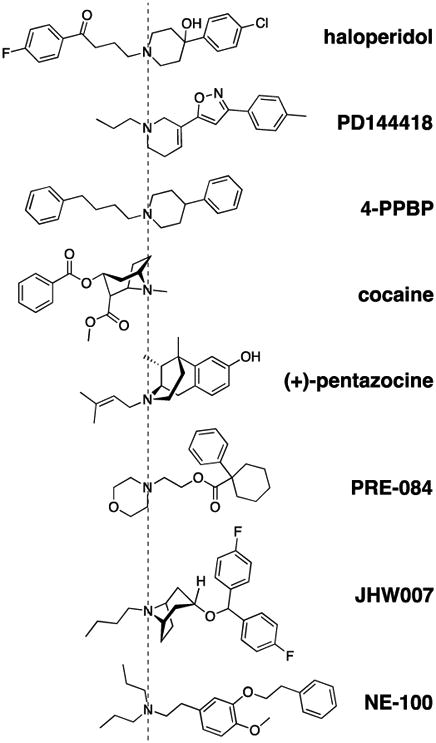
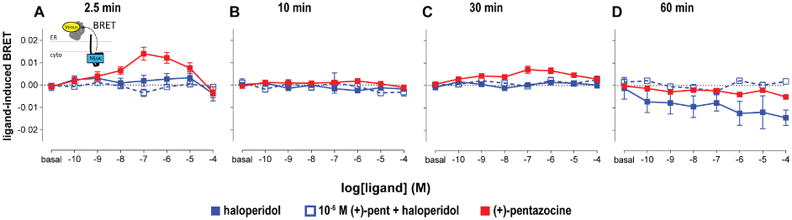
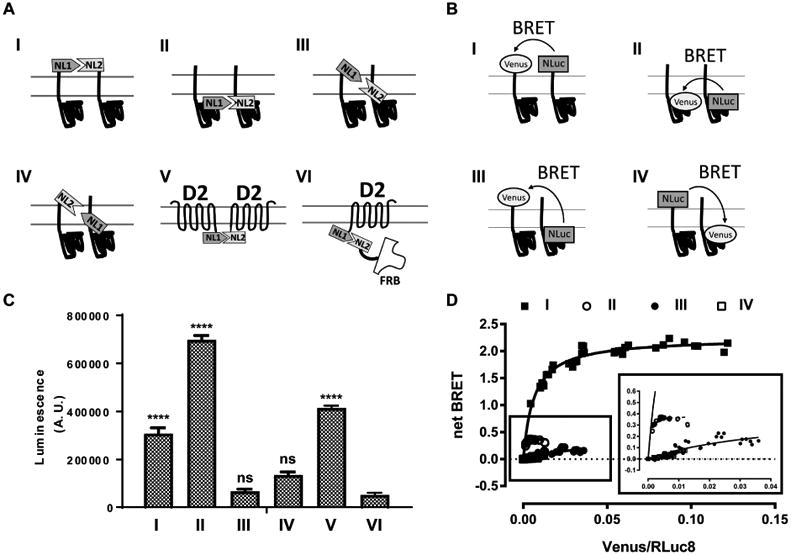
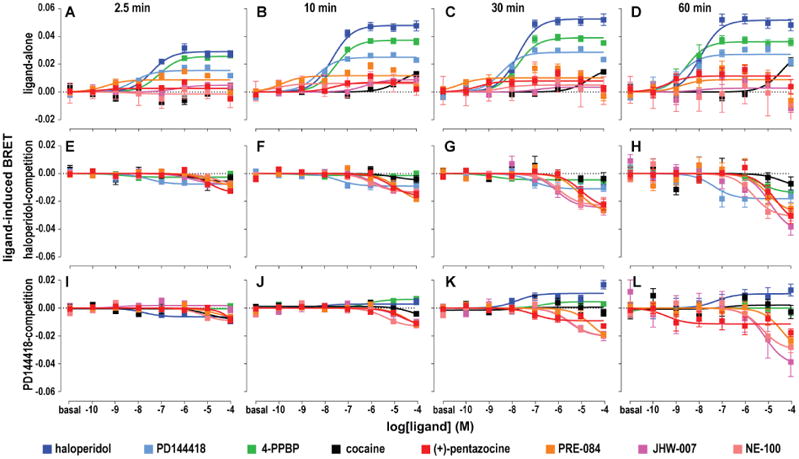
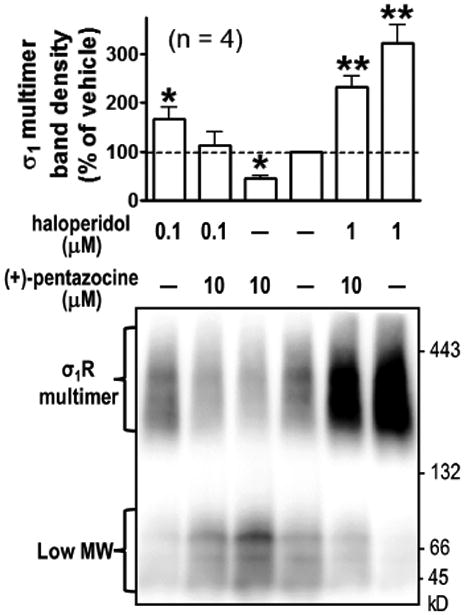
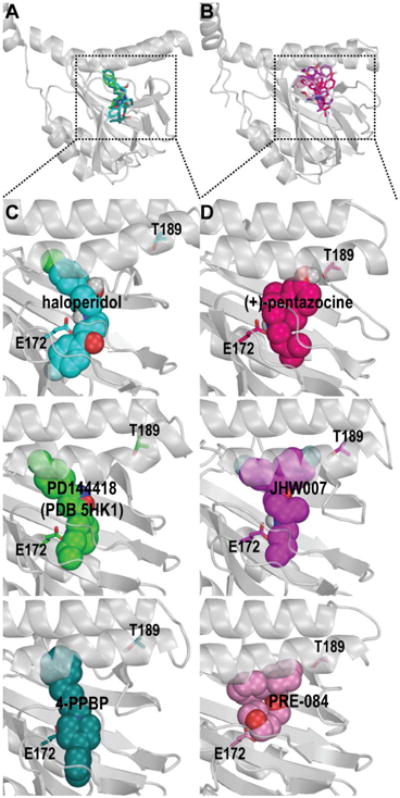
The sigma 1 receptor (σR) is a structurally unique transmembrane protein that functions as a molecular chaperone in the endoplasmic reticulum (ER), and has been implicated in cancer, neuropathic pain, and psychostimulant abuse. Despite physiological and pharmacological significance, mechanistic underpinnings of structure-function relationships of σR are poorly understood, and molecular interactions of selective ligands with σR have not been elucidated. The recent crystallographic determination of σR as a homo-trimer provides the foundation for mechanistic elucidation at the molecular level. Here we report novel bioluminescence resonance energy transfer (BRET) assays that enable analyses of ligand-induced multimerization of σR and its interaction with BiP. Haloperidol, PD144418, and 4-PPBP enhanced σR homomer BRET signals in a dose dependent manner, suggesting their significant effects in stabilizing σR multimerization, whereas (+)-pentazocine and several other ligands do not. In non-denaturing gels, (+)-pentazocine significantly decreased whereas haloperidol increased the fraction of σR multimers, consistent with the results from the homomer BRET assay. Further, BRET assays examining heteromeric σR-BiP interaction revealed that (+)-pentazocine and haloperidol induced opposite trends of signals. From molecular modeling and simulations of σR in complex with the tested ligands, we identified initial clues that may lead to the differed responses of σR upon binding of structurally diverse ligands. By combining multiple in vitro pharmacological and in silico molecular biophysical methods, we propose a novel integrative approach to analyze σR-ligand binding and its impact on interaction of σR with client proteins.
西格玛 1 受体(σR)是一种结构独特的跨膜蛋白,在内质网(ER)中作为分子伴侣发挥作用,与癌症、神经病理性疼痛和精神兴奋剂滥用有关。尽管具有生理和药理学意义,但 σR 的结构-功能关系的机制基础理解甚少,选择性配体与 σR 的分子相互作用也尚未阐明。最近 σR 作为同源三聚体的晶体结构测定为在分子水平上阐明机制提供了基础。在这里,我们报告了新的生物发光共振能量转移(BRET)测定法,这些测定法可以分析配体诱导的 σR 寡聚化及其与 BiP 的相互作用。氟哌啶醇、PD144418 和 4-PPBP 以剂量依赖的方式增强了 σR 同型三聚体的 BRET 信号,表明它们在稳定 σR 寡聚化方面具有显著作用,而(+)-戊唑辛和其他几种配体则没有。在非变性凝胶中,(+)-戊唑辛显著降低而氟哌啶醇增加了 σR 多聚体的分数,与同型三聚体 BRET 测定的结果一致。此外,检查 σR- BiP 异源相互作用的 BRET 测定法显示,(+)-戊唑辛和氟哌啶醇诱导了信号的相反趋势。通过对 σR 与测试配体复合物的分子建模和模拟,我们确定了一些初始线索,这些线索可能导致 σR 在结合结构多样的配体时产生不同的反应。通过结合多种体外药理学和计算分子生物物理方法,我们提出了一种新的综合方法来分析 σR-配体结合及其对 σR 与客户蛋白相互作用的影响。