Pawar Aditya S, Thongprayoon Charat, Cheungpasitporn Wisit, Sakhuja Ankit, Mao Michael A, Erickson Stephen B
Department of Internal Medicine, Division of Nephrology and Hypertension, Mayo Clinic, Rochester, MN, USA.
Department of Internal Medicine, Bassett Medical Center, Cooperstown, NY, USA.
Urol Ann. 2018 Jan-Mar;10(1):87-93. doi: 10.4103/UA.UA_76_17.
The horseshoe kidney (HSK) is the most common type of renal fusion anomaly. The incidence and characteristics of kidney stones in patients with HSK are not well studied. The aim of this meta-analysis was to evaluate the incidence and types of kidney stones in patients with HSK.
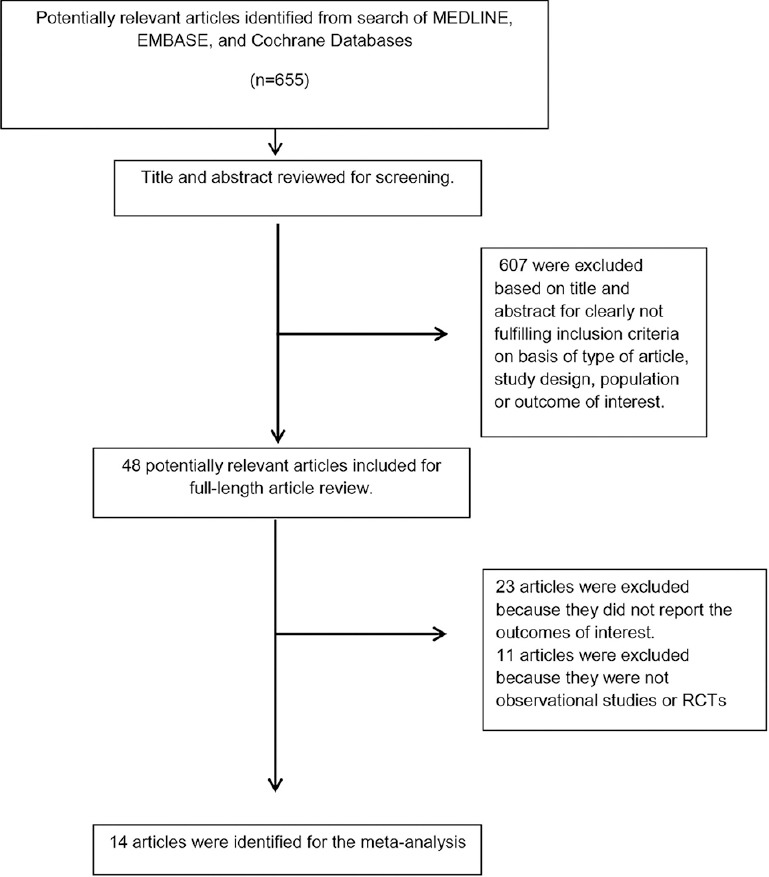
A systematic literature search was performed using MEDLINE, EMBASE, and Cochrane Database of Systematic Reviews from the databases' inception through November 2016. Studies assessing the incidence and types of kidney stones in patients with HSK were included. We applied a random-effects model to estimate the incidence of kidney stones. The study protocol was registered with PROSPERO (International Prospective Register of Systematic Reviews; no. CRD42016052037).
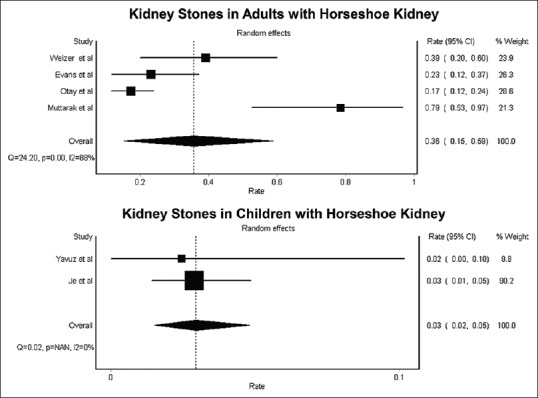
A total of 14 observational studies with 943 patients (522 adults and 421 pediatric) with HSK were enrolled. The estimated pooled incidence of kidney stones was 36% (95% confidence interval [CI], 15%-59%) in adults with the HSK. Kidney stones were less common in pediatric patients with HSK with an estimated pooled incidence of 3% (95% CI, 2%-5%). The mean age of adult stone formers with HSK was 44.9 ± 6.2 years, and 75% were males. Within reported studies, 89.2% of kidney stones were calcium-based stones (64.2% calcium oxalate [CaOx], 18.8% calcium phosphate [CaP], and 6.2% mixed CaOx/CaP), followed by struvite stones (4.2%), uric acid stones (3.8%), and others (2.8%).
Kidney stones are very common in adult patients with HSK with an estimated incidence of 36%. Calcium-based stones are the most prevalent kidney stones in adults with HSKs. These findings may impact the prevention and clinical management of kidney stones in patients with HSK.
马蹄肾(HSK)是最常见的肾脏融合异常类型。HSK患者肾结石的发病率及特征尚未得到充分研究。本荟萃分析的目的是评估HSK患者肾结石的发病率及类型。
通过检索MEDLINE、EMBASE和Cochrane系统评价数据库,对自各数据库建库起至2016年11月的文献进行系统检索。纳入评估HSK患者肾结石发病率及类型的研究。我们采用随机效应模型来估计肾结石的发病率。本研究方案已在国际前瞻性系统评价注册库PROSPERO(注册号:CRD42016052037)注册。
共纳入14项观察性研究,涉及943例HSK患者(522例成人和421例儿童)。HSK成年患者肾结石的合并估计发病率为36%(95%置信区间[CI],15% - 59%)。HSK儿童患者肾结石相对少见,合并估计发病率为3%(95%CI,2% - 5%)。成年HSK结石形成者的平均年龄为44.9±6.2岁,75%为男性。在已报道的研究中,89.2%的肾结石为钙基结石(64.2%草酸钙[CaOx]、18.8%磷酸钙[CaP]和6.2%混合CaOx/CaP),其次为鸟粪石结石(4.2%)、尿酸结石(3.8%)及其他(2.8%)。
HSK成年患者肾结石非常常见,估计发病率为36%。钙基结石是成年HSK患者中最常见的肾结石类型。这些发现可能会影响HSK患者肾结石的预防和临床管理。