Bond Leila, Bernhardt Kamren, Madria Priyank, Sorrentino Katherine, Scelsi Hailee, Mitchell Cassie S
Laboratory for Pathology Dynamics, Department of Biomedical Engineering, Georgia Institute of Technology and Emory University School of Medicine, Atlanta, GA, United States.
Department of Chemistry and Biochemistry, Georgia Institute of Technology, Atlanta, GA, United States.
Front Neurosci. 2018 Jan 24;12:10. doi: 10.3389/fnins.2018.00010. eCollection 2018.
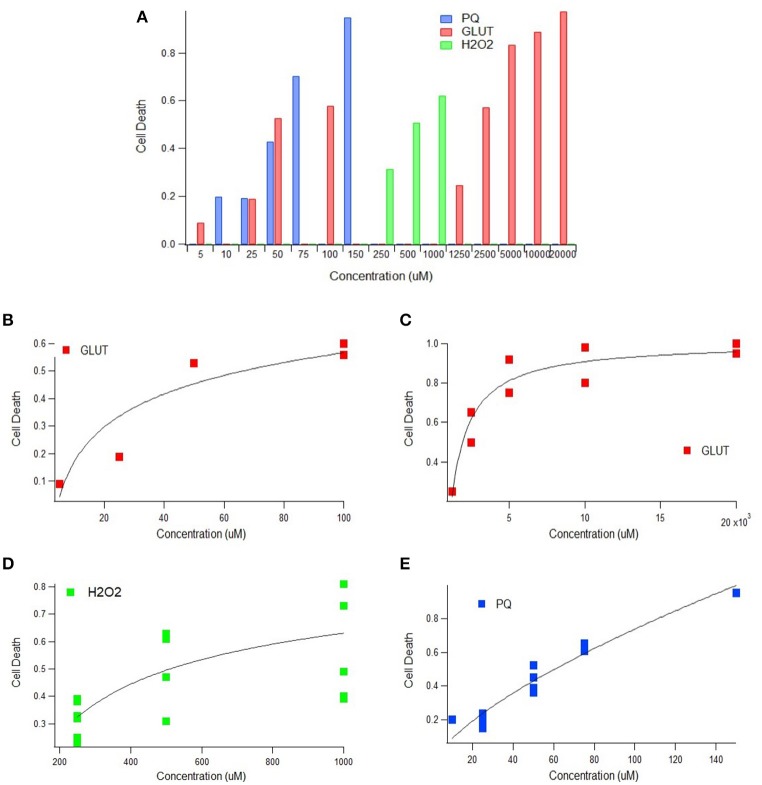
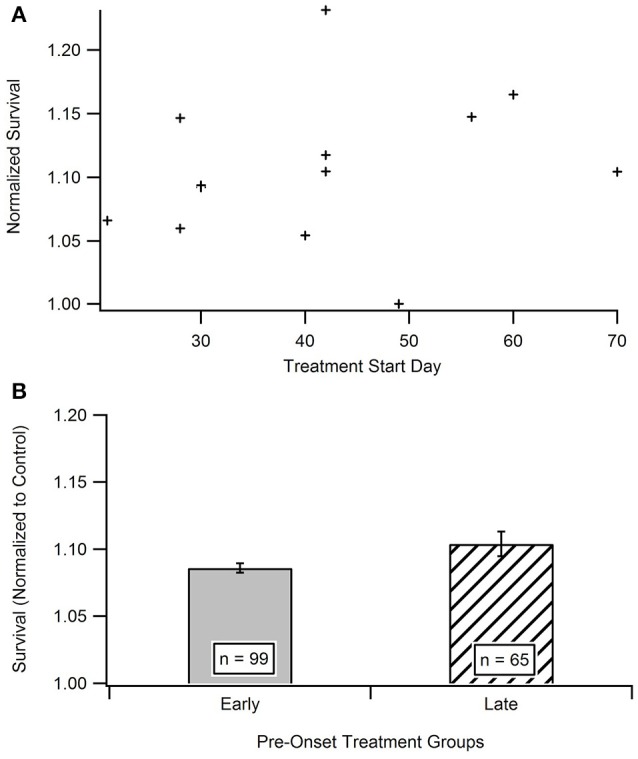
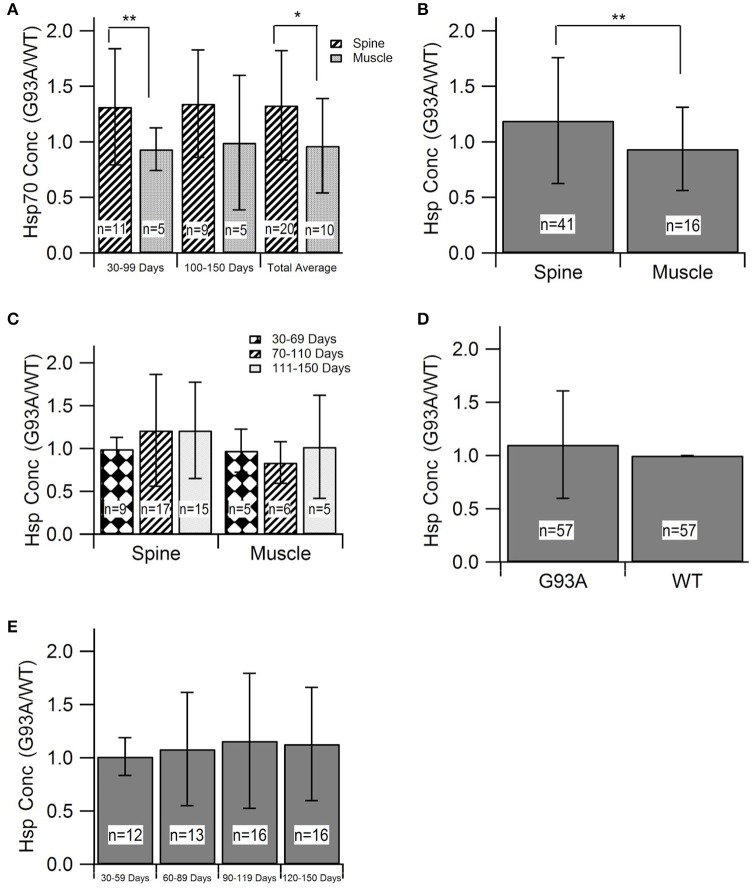
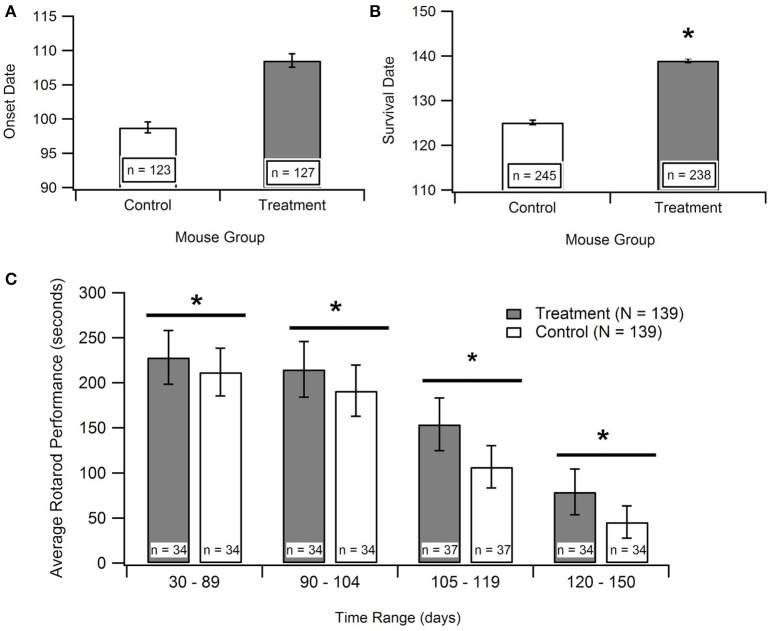
Oxidative stress, induced by an imbalance of free radicals, incites neurodegeneration in Amyotrophic Lateral Sclerosis (ALS). In fact, a mutation in antioxidant enzyme superoxide dismutase 1 (SOD1) accounts for 20% of familial ALS cases. However, the variance among individual studies examining ALS oxidative stress clouds corresponding conclusions. Therefore, we construct a comprehensive, temporal view of oxidative stress and corresponding antioxidant therapy in preclinical ALS by mining published quantitative experimental data and performing metadata analysis of 41 studies. aggregate analysis of innate oxidative stress inducers, glutamate and hydrogen peroxide, revealed 70-90% of cell death coincides to inducer exposure equivalent to 30-50% peak concentration ( < 0.05). A correlative plateau in cell death suggests oxidative stress impact is greatest in early-stage neurodegeneration. SOD1-G93A transgenic ALS mouse aggregate analysis of heat shock proteins (HSPs) revealed HSP levels are 30% lower in muscle than spine ( < 0.1). Overall spine HSP levels, including HSP70, are mildly upregulated in SOD1-G93A mice compared to wild type, but not significantly ( > 0.05). Thus, innate HSP compensatory responses to oxidative stress are simply insufficient, a result supportive of homeostatic system instability as central to ALS etiology. aggregate analysis of antioxidant therapy finds SOD1-G93A ALS mouse survival duration significantly increases by 11.2% ( << 0.001) but insignificantly decreases onset age by 2%. Thus, the aggregate antioxidant treatment effect on survival in preclinical ALS is not sufficient to overcome clinical heterogeneity, which explains the literature disparity between preclinical and clinical antioxidant survival benefit. The aggregate effect sizes on preclinical ALS survival and onset illustrate that present antioxidants, alone, are not sufficient to halt ALS, which underscores its multi-factorial nature. Nonetheless, antioxidant-treated SOD1-G93A ALS mice have significantly increased motor performance ( < 0.05) measured via rotarod. With a colossal aggregate preclinical effect size average of 59.6%, antioxidants are promising for increasing function/quality of life in clinical ALS patients, a premise worth exploration via low-risk nutritional supplements. Finally, more direct, quantitative measures of oxidative stress, antioxidant levels and bioavailability are key to developing powerful antioxidant therapeutics that can assert measurable impacts on redox homeostasis in the brain and spinal cord.
由自由基失衡引发的氧化应激会诱发肌萎缩侧索硬化症(ALS)中的神经退行性变。事实上,抗氧化酶超氧化物歧化酶1(SOD1)的突变占家族性ALS病例的20%。然而,各项研究在检测ALS氧化应激方面存在差异,这使得相应结论并不明确。因此,我们通过挖掘已发表的定量实验数据并对41项研究进行元数据分析,构建了临床前ALS氧化应激及相应抗氧化治疗的全面、时间性视图。对天然氧化应激诱导剂谷氨酸和过氧化氢的综合分析显示,70 - 90%的细胞死亡与诱导剂暴露相关,暴露量相当于峰值浓度的30 - 50%(<0.05)。细胞死亡中的相关平台期表明氧化应激影响在神经退行性变早期最为显著。对SOD1 - G93A转基因ALS小鼠热休克蛋白(HSPs)的综合分析显示,肌肉中的HSP水平比脊柱低30%(<0.1)。总体而言,与野生型相比,SOD1 - G93A小鼠脊柱中的HSP水平(包括HSP70)略有上调,但不显著(>0.05)。因此,天然HSP对氧化应激的代偿反应明显不足,这一结果支持了稳态系统不稳定是ALS病因核心的观点。对抗氧化治疗的综合分析发现,SOD1 - G93A ALS小鼠的存活时间显著增加了11.2%(<<0.001),但发病年龄仅略有下降,降幅为2%。因此,抗氧化治疗对临床前ALS存活的总体效果不足以克服临床异质性,这解释了临床前和临床抗氧化存活获益在文献中的差异。对临床前ALS存活和发病的总体效应大小表明,目前单独使用抗氧化剂不足以阻止ALS,这突出了其多因素性质。尽管如此,经抗氧化剂治疗的SOD1 - G93A ALS小鼠通过转棒试验测得的运动性能显著提高(<0.05)。抗氧化剂在临床前的总体效应大小平均高达59.6%,有望提高临床ALS患者的功能/生活质量,这一前提值得通过低风险营养补充剂进行探索。最后,更直接、定量地测量氧化应激、抗氧化剂水平和生物利用度是开发强大抗氧化疗法的关键,这些疗法能够对大脑和脊髓中的氧化还原稳态产生可测量的影响。