Cheng Oumei, Tian Xiaoyan, Luo Ying, Mai Shaoshan, Yang Yang, Kuang Shengnan, Chen Qi, Ma Jie, Chen Beibei, Li Rong, Yang Lu, Li Huan, Hu Congli, Zhang Jiahua, Chen Zhihao, Li Yuke, Xia Hui, Xu Ying, Yang Junqing
Department of Pharmacology, Chongqing Medical University, The Key Laboratory of Biochemistry and Molecular Pharmacology, Chongqing 400016, China.
Department of Neurology, The First Affiliated China Hospital, Chongqing Medical University, Chongqing, 400016, China.
Oncotarget. 2017 Dec 9;9(1):576-590. doi: 10.18632/oncotarget.23076. eCollection 2018 Jan 2.
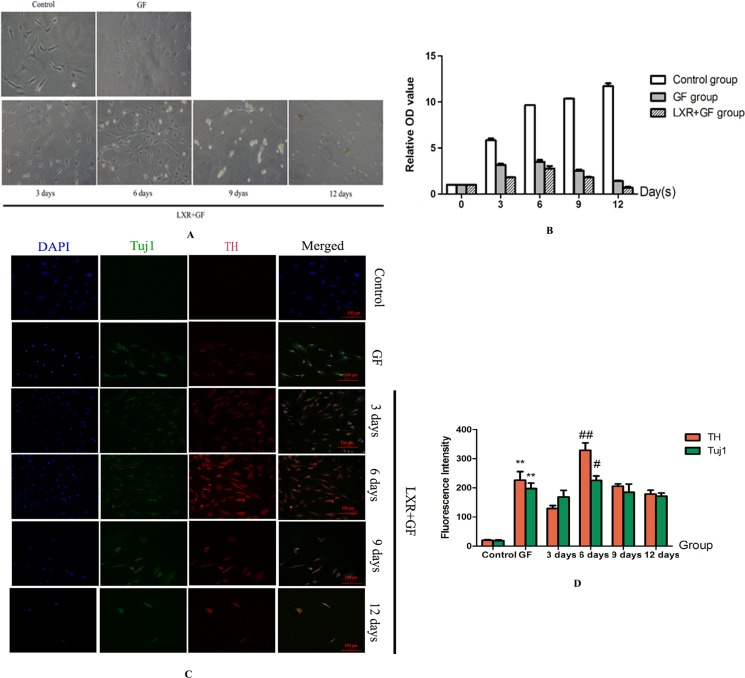
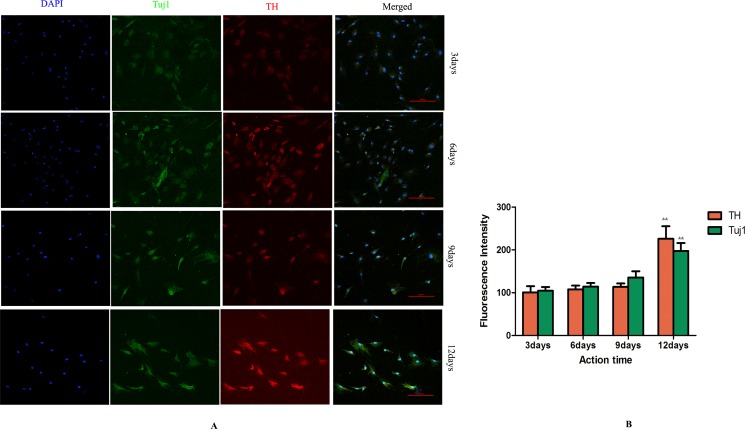
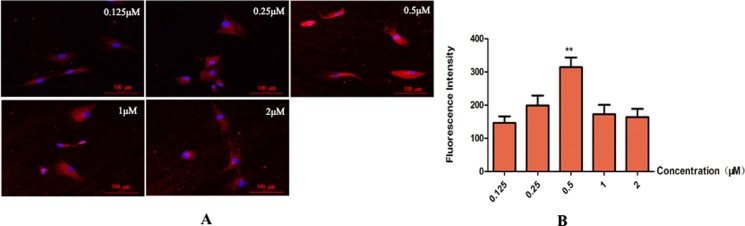
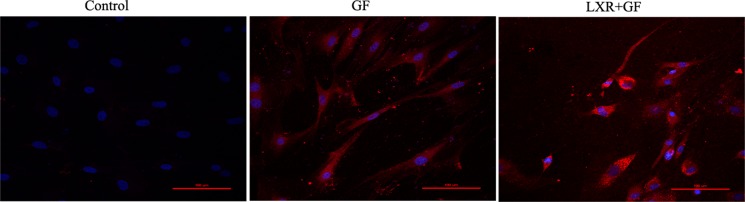
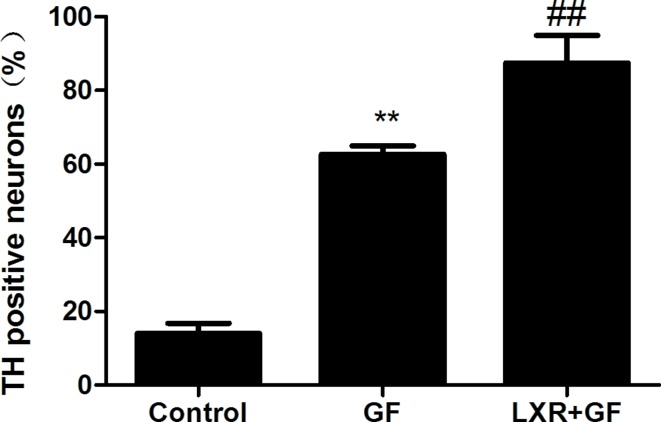
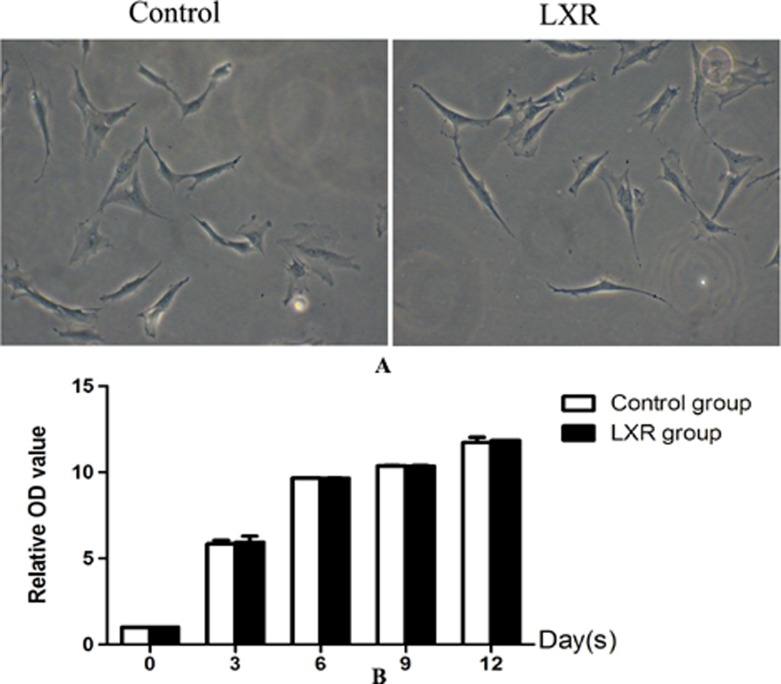
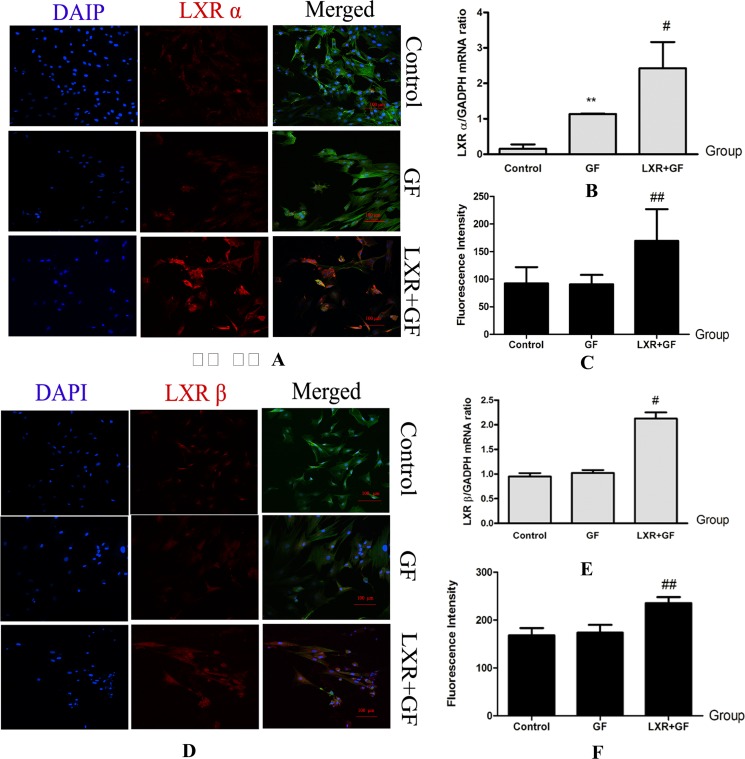
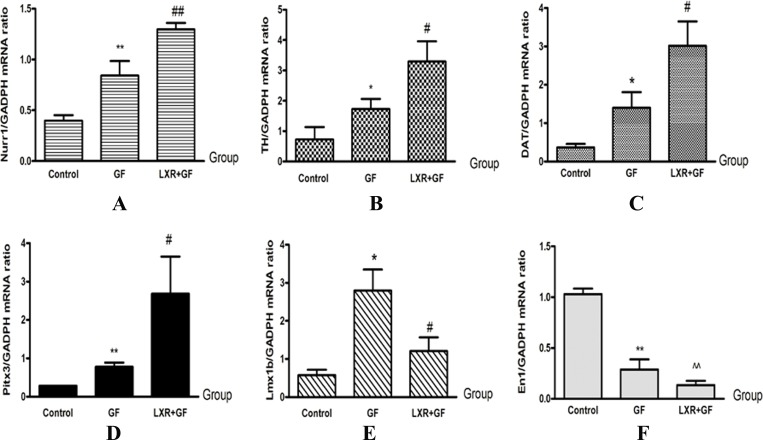
Dopaminergic (DA) neurons derived from bone marrow derived mesenchymal stem cells (BMSCs) maybe a valuable source for cell replacement therapy in Parkinson disease. Recent studies showed that new functions of LXR and their ligands have been proposed to prevent PD in the adult nervous system. The present study was designed to observe the effect of liver X receptors (LXR) agonist on differentiation of rat BMSCs into DA neurons. Expressions of the neuronal markers (Tuj1 and Nestin), the specific marker of DA neurons (tyrosine hydroxylase, TH), LXR α and LXR β were measured by immunocytochemical assay and TH/Tuj1 positive cells were determined by quantitative cell count analyses. mRNA expressions of LXR α, LXR β, TH, DAT, Nurr1, Pitx3, En1 and Lmx1b were measured by qPCR. Compared with growth factors (GF) treated group, combined use of LXR and GF induced rat BMSCs to TH-expressing cells with 87.42% of efficiency in 6 days of period of induction. LXR agonist alone did not induce the differentiation. Compared with GF alone, combined use of LXR and GF increased expressions of LXR α and LXR β protein and mRNA and TH, DAT, Nurr1, and Pitx3 mRNA, decreased expressions of En1 and Lmx1b mRNA. Our experimental results indicated that LXR activation leads to improve induction efficiency and shorten induction period of rat BMSCs into DA neuron-like cells through regulating DA development-related genes expressions and that LXR can be considered as a candidate target for drug development to improve differentiation of BMSCs into DA neurons.
源自骨髓间充质干细胞(BMSCs)的多巴胺能(DA)神经元可能是帕金森病细胞替代治疗的宝贵细胞来源。最近的研究表明,已提出肝脏X受体(LXR)及其配体的新功能可预防成人神经系统中的帕金森病。本研究旨在观察LXR激动剂对大鼠BMSCs向DA神经元分化的影响。通过免疫细胞化学分析测量神经元标志物(Tuj1和Nestin)、DA神经元特异性标志物(酪氨酸羟化酶,TH)、LXRα和LXRβ的表达,并通过定量细胞计数分析确定TH/Tuj1阳性细胞。通过qPCR测量LXRα、LXRβ、TH、DAT、Nurr1、Pitx3、En1和Lmx1b的mRNA表达。与生长因子(GF)处理组相比,LXR和GF联合使用在6天的诱导期内可将大鼠BMSCs诱导为TH表达细胞,效率为87.42%。单独使用LXR激动剂不能诱导分化。与单独使用GF相比,LXR和GF联合使用可增加LXRα和LXRβ蛋白及mRNA以及TH、DAT、Nurr1和Pitx3 mRNA的表达,降低En1和Lmx1b mRNA的表达。我们的实验结果表明,LXR激活可通过调节DA发育相关基因的表达来提高大鼠BMSCs向DA神经元样细胞的诱导效率并缩短诱导期,并且LXR可被视为改善BMSCs向DA神经元分化的药物开发候选靶点。