Biel Thomas G, Rao V Ashutosh
Laboratory of Applied Biochemistry, Division of Biotechnology Review and Research III, Office of Biotechnology Products, Center for Drug Evaluation and Research, Silver Spring, MD 20993, USA.
Oncotarget. 2017 Dec 11;9(1):995-1011. doi: 10.18632/oncotarget.23171. eCollection 2018 Jan 2.
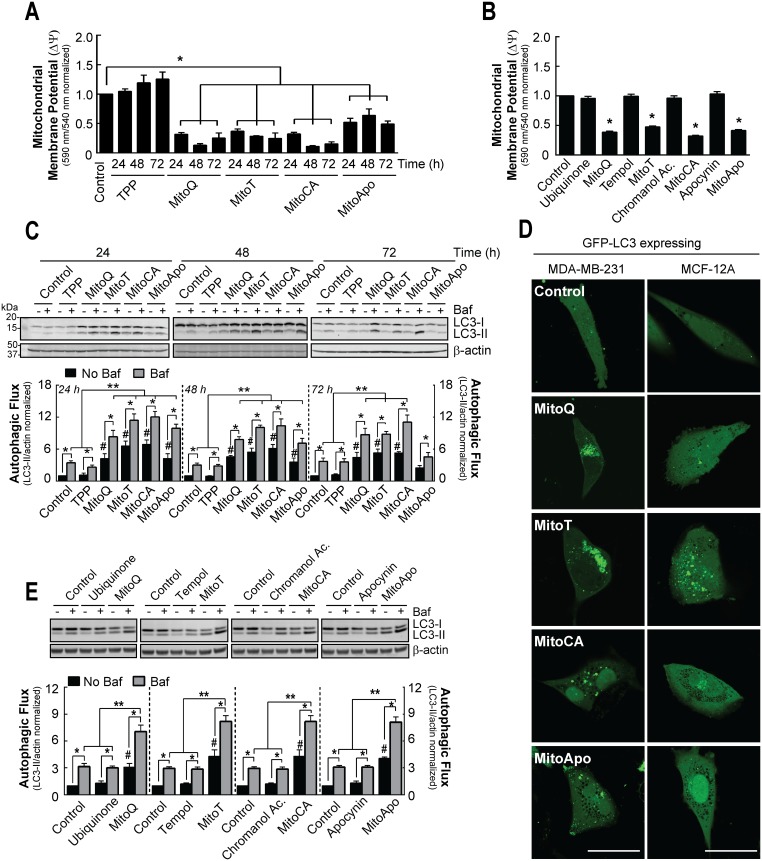
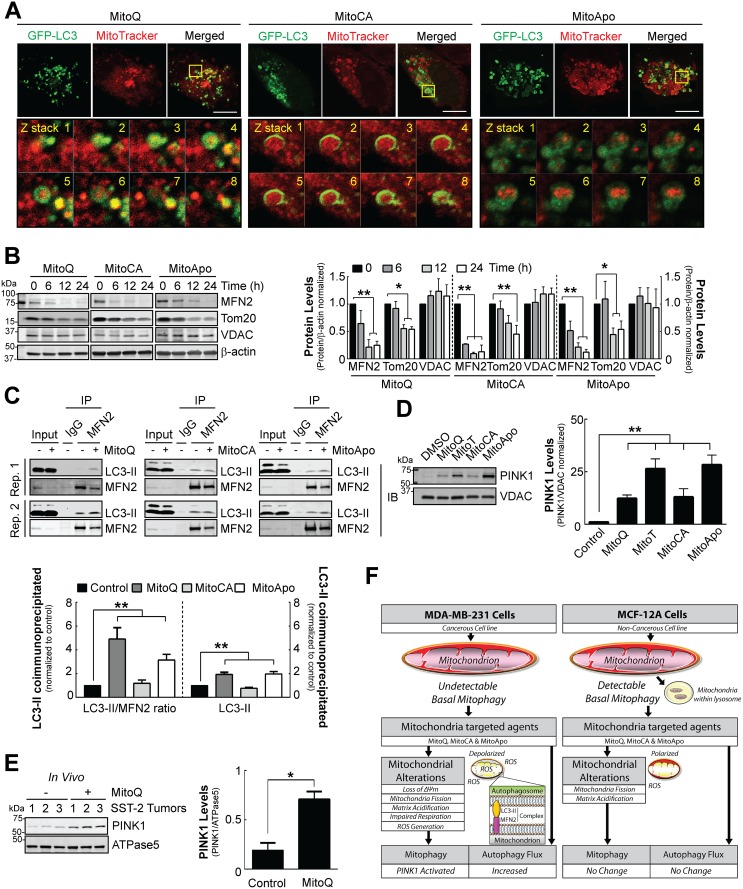
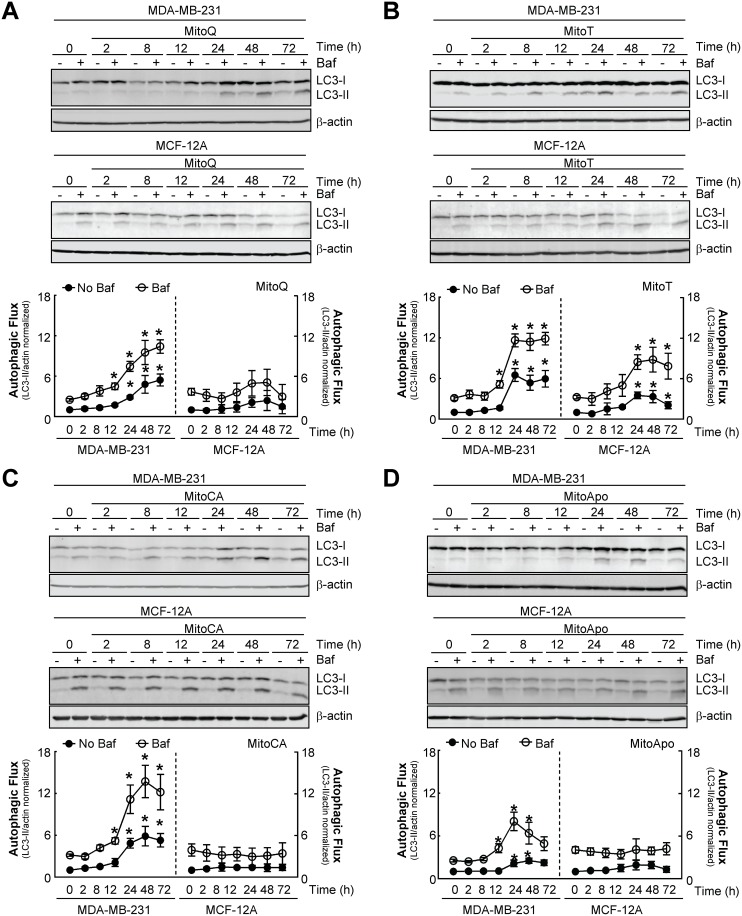
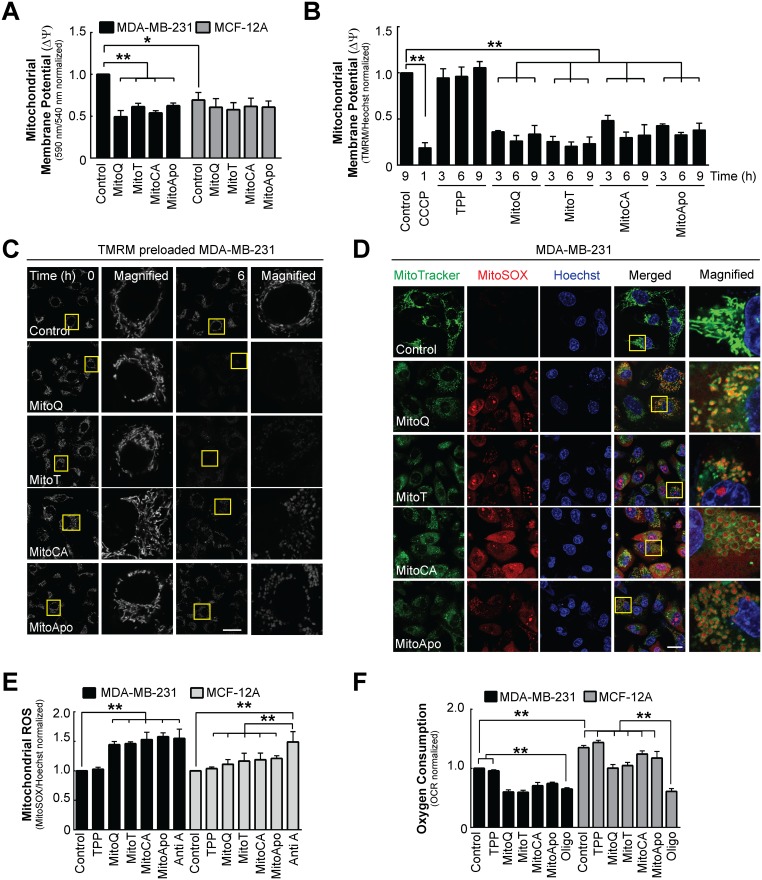
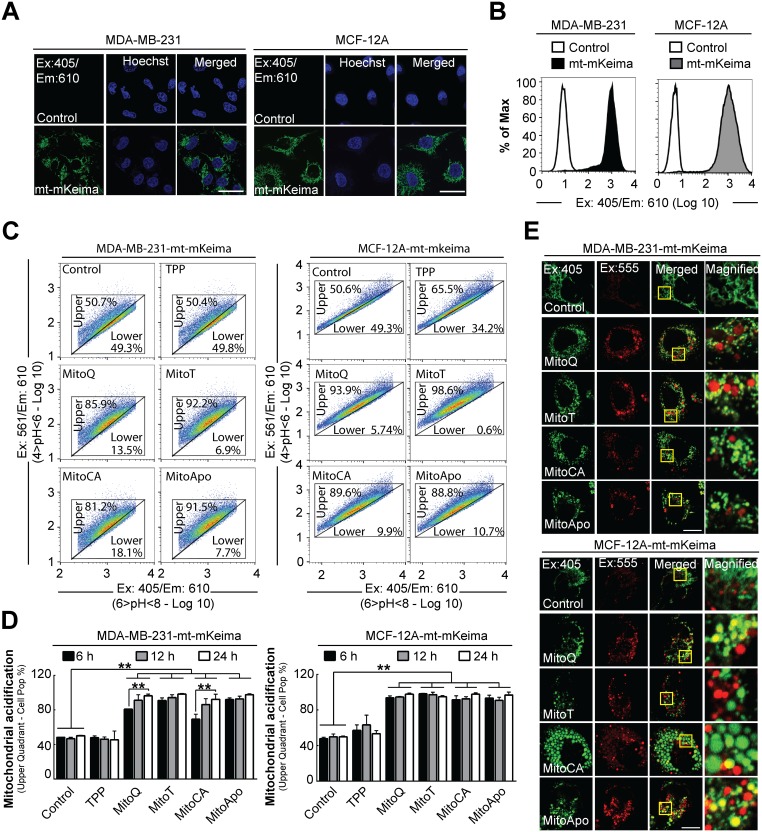
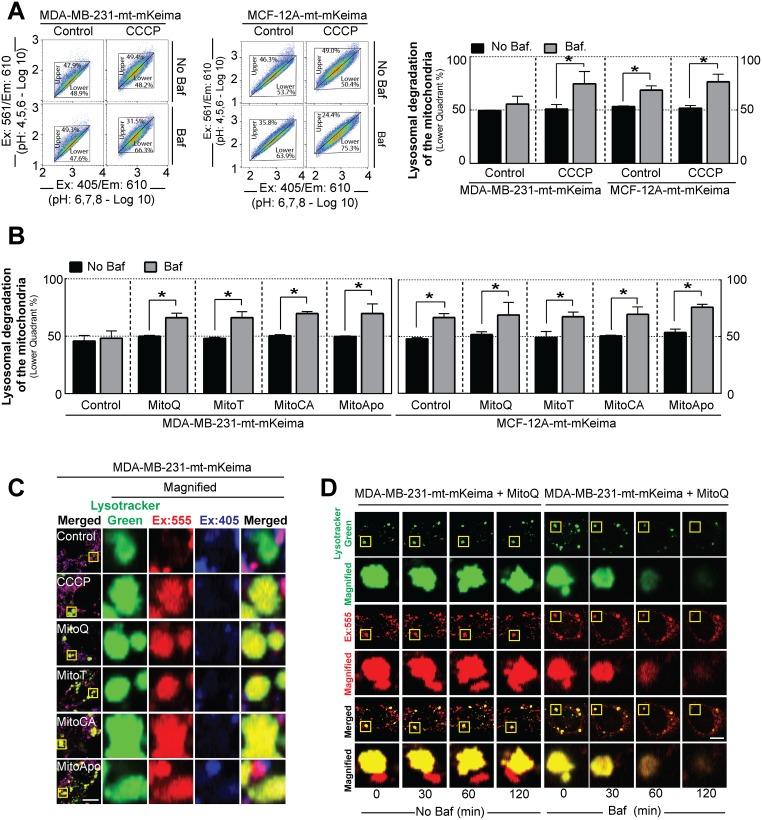
Molecules designed to target and accumulate in the mitochondria are an emerging therapeutic approach for cancer and other indications. Mitochondria-targeted redox agents (MTAs) induce mitochondrial damage and autophagy in cancer cells. However, the mechanisms for these molecules to induce mitophagy, the clearance of damaged mitochondria, are largely unknown. Using breast derived cell lines and a series of targeted molecules, mitochondrial dysfunction and autophagy was established to be selective for MDA-MB-231 cancer cells as compared to the non-cancerous MCF-12A cells. Kinetic analyses revealed that mitochondrial dysfunction precedes the activation of autophagy in these cancer cells. To determine the onset of mitophagy, stably expressing mitochondrial mKeima, a mitochondrial pH sensor, cell lines were generated and revealed that these drugs activate lysosomal dependent mitochondrial degradation in MDA-MB-231 cells. Mitophagy was confirmed by identifying the accumulation of a PINK1, mitochondria located in autophagosomes, and the formation of an autophagosome-mitochondria protein (MFN2-LC3-II) complex. These results are the first to demonstrate that mitochondrial redox agents selectively induce mitophagy in a breast cancer cell line and their potential application both as tools for investigating mitochondrial biomechanics and as therapeutic strategies that target mitochondrial metabolism.
旨在靶向并积聚于线粒体的分子是一种新兴的癌症及其他适应症的治疗方法。线粒体靶向氧化还原剂(MTA)可诱导癌细胞中的线粒体损伤和自噬。然而,这些分子诱导线粒体自噬(即清除受损线粒体)的机制在很大程度上尚不清楚。利用乳腺来源的细胞系和一系列靶向分子,与非癌性MCF-12A细胞相比,已证实线粒体功能障碍和自噬对MDA-MB-231癌细胞具有选择性。动力学分析表明,在这些癌细胞中,线粒体功能障碍先于自噬的激活。为了确定线粒体自噬的起始,构建了稳定表达线粒体pH传感器线粒体mKeima的细胞系,结果显示这些药物可激活MDA-MB-231细胞中溶酶体依赖性的线粒体降解。通过鉴定位于自噬体中的线粒体PINK1的积累以及自噬体-线粒体蛋白(MFN2-LC3-II)复合物的形成,证实了线粒体自噬。这些结果首次证明线粒体氧化还原剂可在乳腺癌细胞系中选择性诱导线粒体自噬,以及它们作为研究线粒体生物力学的工具和靶向线粒体代谢的治疗策略的潜在应用。