Division of Infection and Immunity, Systems Immunity Research Institute, School of Medicine, Cardiff University, Cardiff, Wales, United Kingdom.
Centre for Innate Immunity and Infectious Diseases, Hudson Institute of Medical Research, Clayton, VIC, Australia.
Int J Cancer. 2018 Jul 1;143(1):167-178. doi: 10.1002/ijc.31298. Epub 2018 Feb 19.
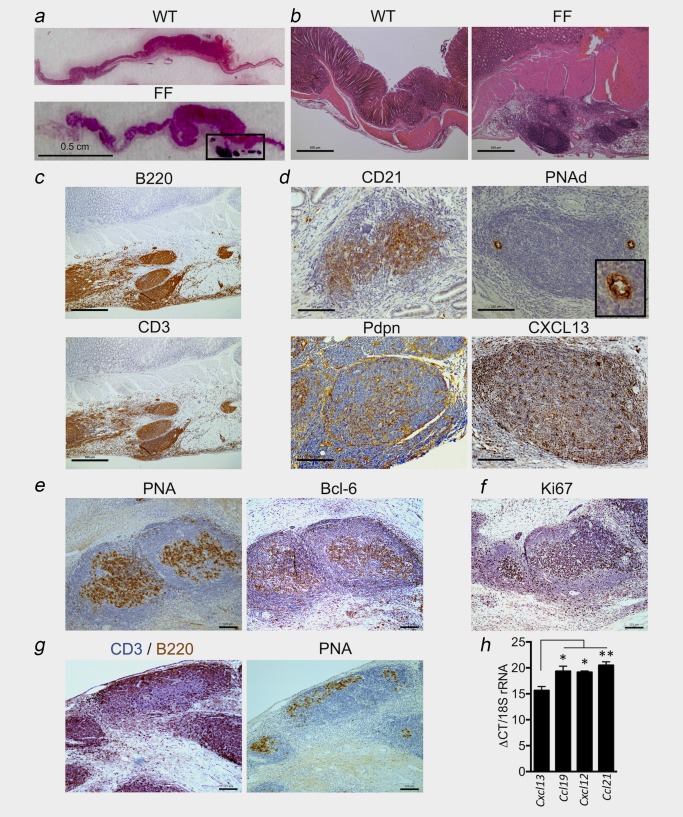
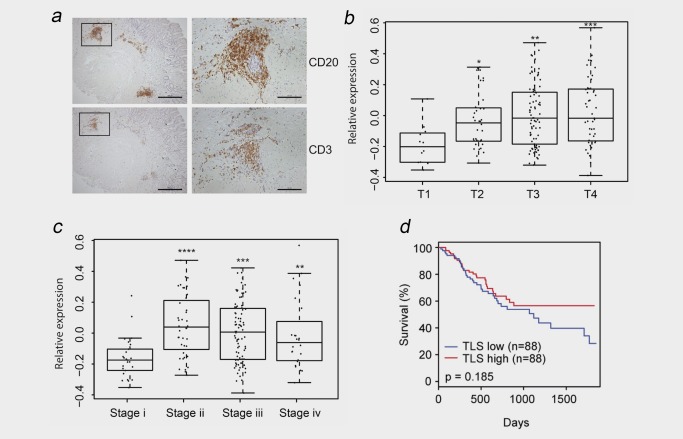
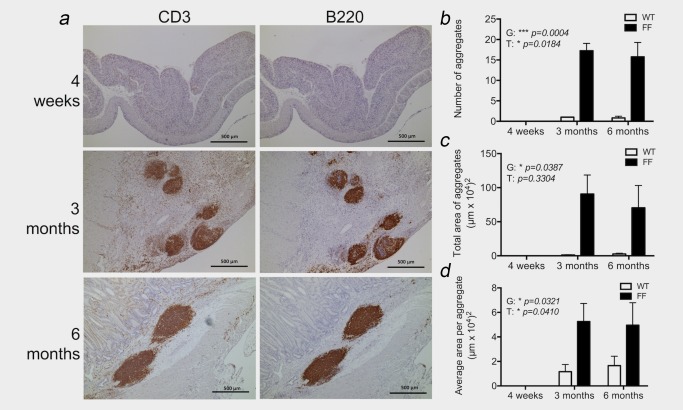
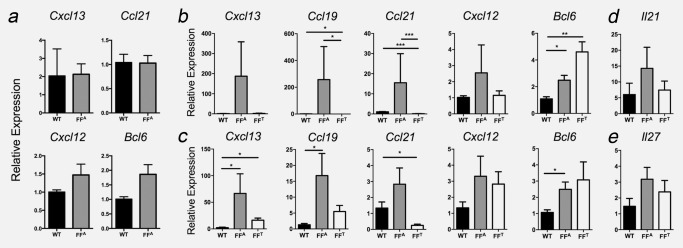
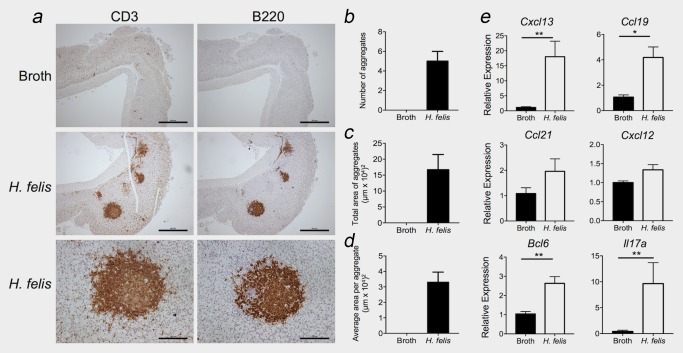
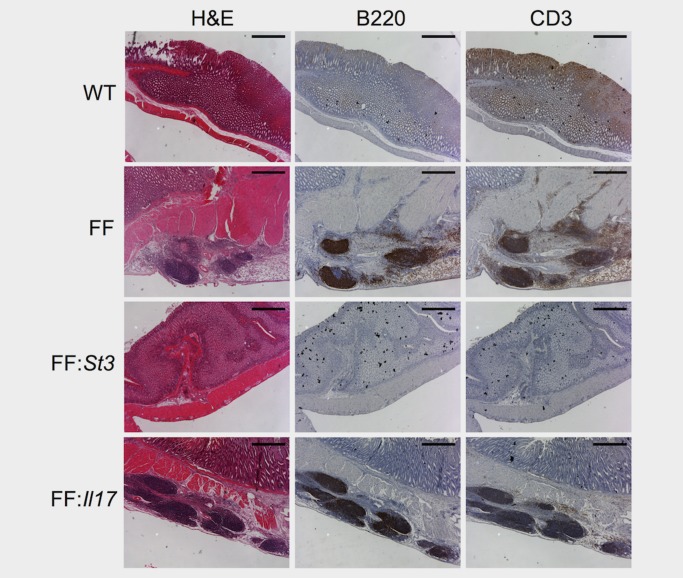
Tertiary lymphoid structures (TLSs) display phenotypic and functional characteristics of secondary lymphoid organs, and often develop in tissues affected by chronic inflammation, as well as in certain inflammation-associated cancers where they are prognostic of improved patient survival. However, the mechanisms that govern the development of tumour-associated TLSs remain ill-defined. Here, we observed tumour-associated TLSs in a preclinical mouse model (gp130 ) of gastric cancer, where tumourigenesis is dependent on hyperactive STAT3 signalling through the common IL-6 family signalling receptor, gp130. Gastric tumourigenesis was associated with the development of B and T cell-rich submucosal lymphoid aggregates, containing CD21 cellular networks and high endothelial venules. Temporally, TLS formation coincided with the development of gastric adenomas and induction of homeostatic chemokines including Cxcl13, Ccl19 and Ccl21. Reflecting the requirement of gp130-driven STAT3 signalling for gastric tumourigenesis, submucosal TLS development was also STAT3-dependent, but independent of the cytokine IL-17 which has been linked with lymphoid neogenesis in chronic inflammation and autoimmunity. Interestingly, upregulated lymphoid chemokine expression and TLS formation were also observed in a chronic gastritis model induced by Helicobacter felis infection. Tumour-associated TLSs were also observed in patients with intestinal-type gastric cancer, and a gene signature linked with TLS development in gp130 mice was associated with advanced clinical disease, but was not prognostic of patient survival. Collectively, our in vivo data reveal that hyperactive gp130-STAT3 signalling closely links gastric tumourigenesis with lymphoid neogenesis, and while a TLS gene signature was associated with advanced gastric cancer in patients, it did not indicate a favourable prognosis.
三级淋巴结构 (TLSs) 表现出次级淋巴器官的表型和功能特征,并且经常在受慢性炎症影响的组织中以及在某些与炎症相关的癌症中发展,在这些癌症中,它们预示着患者生存的改善。然而,控制肿瘤相关 TLS 发展的机制仍不清楚。在这里,我们在胃癌的临床前小鼠模型 (gp130) 中观察到肿瘤相关的 TLSs,其中肿瘤发生依赖于通过常见的 IL-6 家族信号受体 gp130 过度活跃的 STAT3 信号。胃肿瘤发生与 B 和 T 细胞丰富的黏膜下淋巴聚集的发展有关,其中包含 CD21 细胞网络和高内皮静脉。从时间上看,TLS 的形成与胃腺瘤的发展以及包括 Cxcl13、Ccl19 和 Ccl21 在内的稳态趋化因子的诱导同时发生。反映 gp130 驱动的 STAT3 信号对胃肿瘤发生的要求,黏膜下 TLS 的发展也依赖于 STAT3,但独立于与慢性炎症和自身免疫中的淋巴新生有关的细胞因子 IL-17。有趣的是,在由 Helicobacter felis 感染诱导的慢性胃炎模型中也观察到上调的淋巴趋化因子表达和 TLS 形成。在肠型胃癌患者中也观察到肿瘤相关的 TLSs,与 gp130 小鼠中 TLS 发展相关的基因特征与晚期临床疾病相关,但不能预测患者的生存。总的来说,我们的体内数据表明,过度活跃的 gp130-STAT3 信号密切将胃肿瘤发生与淋巴新生联系起来,尽管 TLS 基因特征与患者的晚期胃癌相关,但它并不预示着良好的预后。