Gutiérrez-Fonseca Pablo E, Ramírez Alonso, Pringle Catherine M
Department of Biology, University of Puerto Rico- Rio Piedras, San Juan, Puerto Rico.
Department of Environmental Sciences, University of Puerto Rico- Rio Piedras, San Juan, Puerto Rico.
PLoS One. 2018 Feb 8;13(2):e0191781. doi: 10.1371/journal.pone.0191781. eCollection 2018.
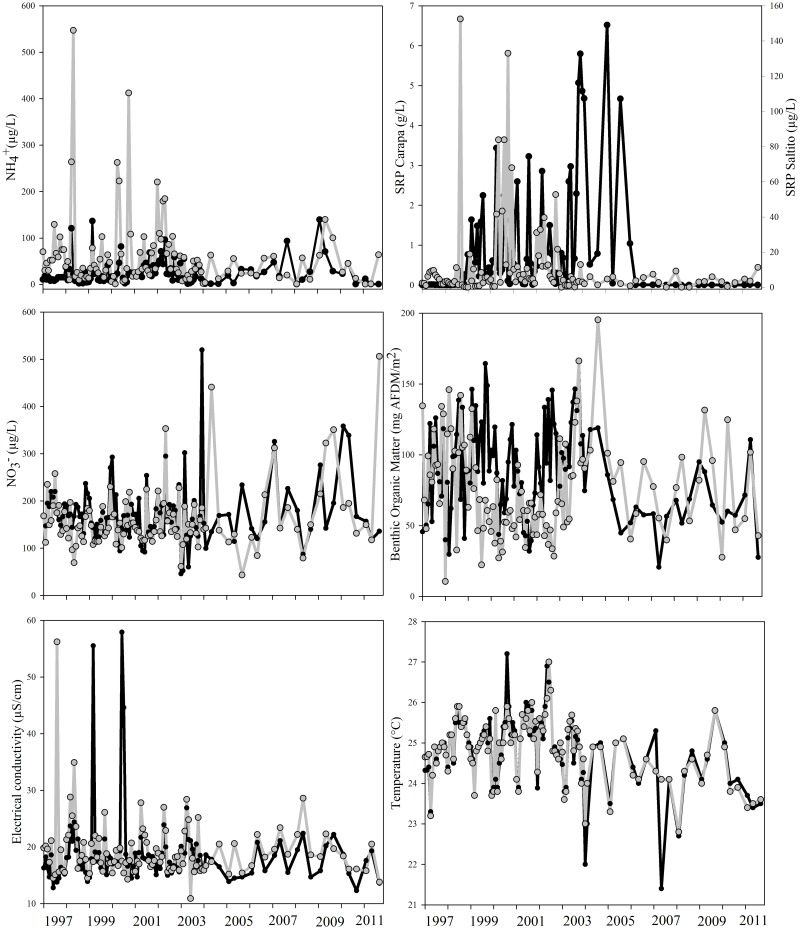
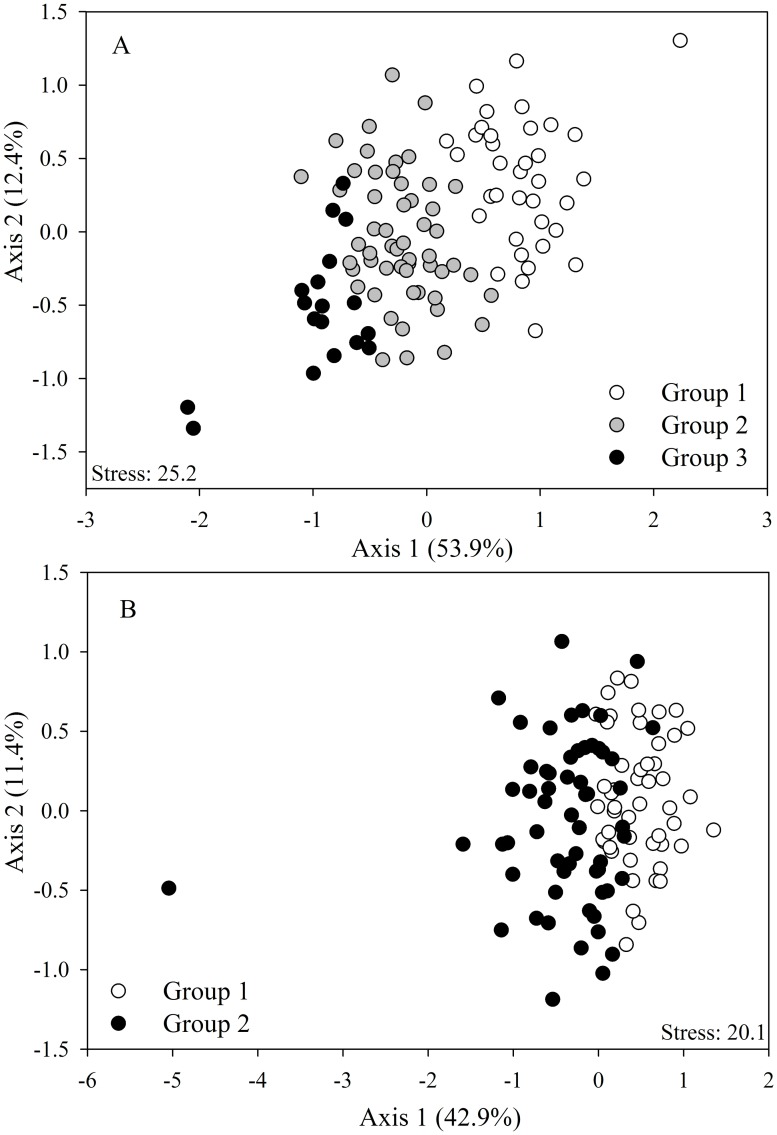
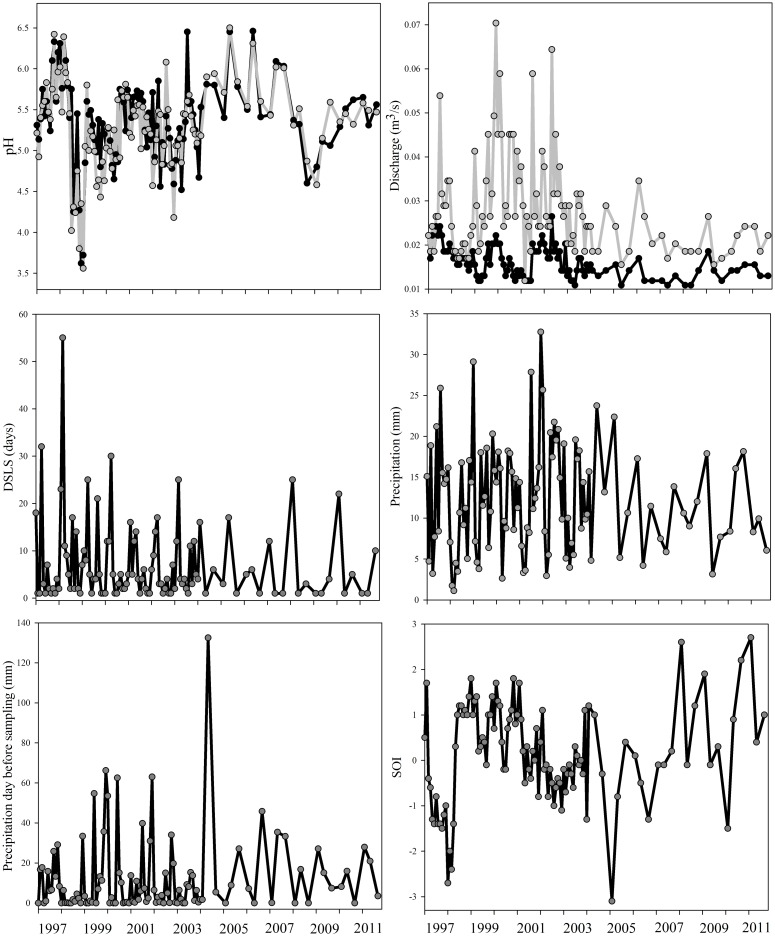
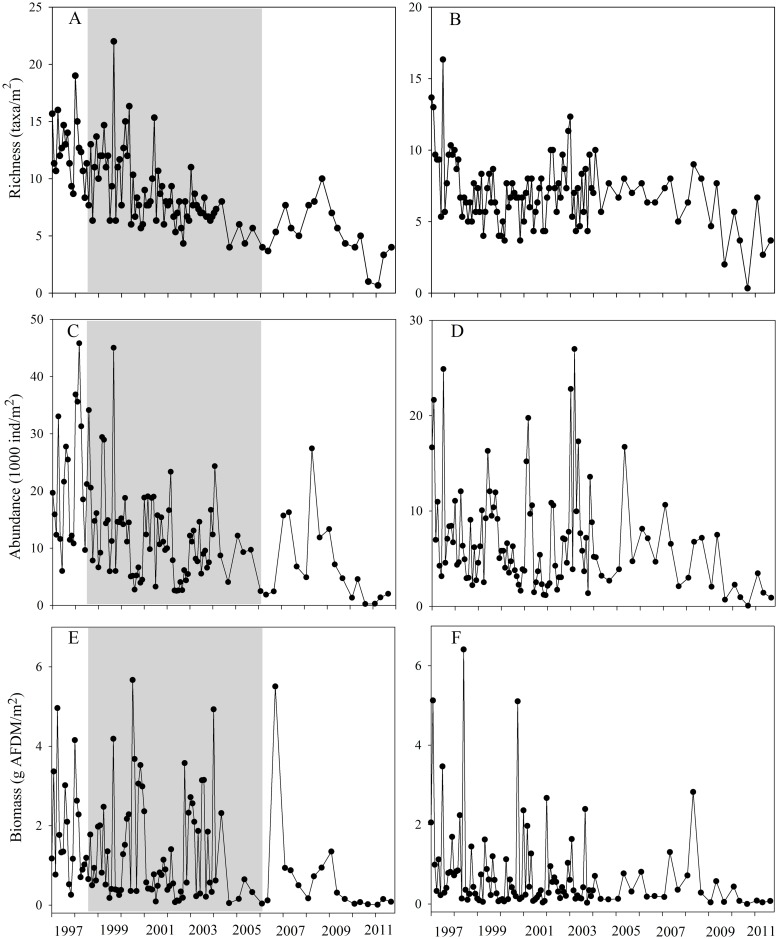
Understanding how environmental variables influence the distribution and density of organisms over relatively long temporal scales is a central question in ecology given increased climatic variability (e.g., precipitation, ENSO events). The primary goal of our study was to evaluate long-term (15y time span) patterns of climate, as well as environmental parameters in two Neotropical streams in lowland Costa Rica, to assess potential effects on aquatic macroinvertebrates. We also examined the relative effects of an 8y whole-stream P-enrichment experiment on macroinvertebrate assemblages against the backdrop of this long-term study. Climate, environmental variables and macroinvertebrate samples were measured monthly for 7y and then quarterly for an additional 8y in each stream. Temporal patterns in climatic and environmental variables showed high variability over time, without clear inter-annual or intra-annual patterns. Macroinvertebrate richness and abundance decreased with increasing discharge and was positively related to the number of days since the last high discharge event. Findings show that fluctuations in stream physicochemistry and macroinvertebrate assemblage structure are ultimately the result of large-scale climatic phenomena, such as ENSO events, while the 8y P-enrichment did not appear to affect macroinvertebrates. Our study demonstrates that Neotropical lowland streams are highly dynamic and not as stable as is commonly presumed, with high intra- and inter-annual variability in environmental parameters that change the structure and composition of freshwater macroinvertebrate assemblages.
鉴于气候变率增加(如降水、厄尔尼诺事件),了解环境变量如何在相对较长的时间尺度上影响生物的分布和密度是生态学中的一个核心问题。我们研究的主要目标是评估哥斯达黎加低地两条新热带溪流的长期(15年时间跨度)气候模式以及环境参数,以评估对水生大型无脊椎动物的潜在影响。在这项长期研究的背景下,我们还研究了一项为期8年的全溪流磷富集实验对大型无脊椎动物群落的相对影响。在每条溪流中,每月测量7年的气候、环境变量和大型无脊椎动物样本,然后每季度测量额外的8年。气候和环境变量的时间模式随时间显示出高度变异性,没有明显的年际或年内模式。大型无脊椎动物的丰富度和丰度随着流量增加而降低,并且与自上次高流量事件以来的天数呈正相关。研究结果表明,溪流物理化学和大型无脊椎动物群落结构的波动最终是诸如厄尔尼诺事件等大规模气候现象的结果,而8年的磷富集似乎并未影响大型无脊椎动物。我们的研究表明,新热带低地溪流具有高度动态性,并不像通常认为的那样稳定,环境参数具有高年内和年际变异性,这会改变淡水大型无脊椎动物群落的结构和组成。