Yu Jun Myoung, Wang Dongping, Pierson Leland S, Pierson Elizabeth A
Department of Horticultural Sciences, Texas A&M University, College Station, TX 77943-2133, USA.
Department of Plant Pathology and Microbiology, Texas A&M University, College Station, TX 77943-2133, USA.
Plant Pathol J. 2018 Feb;34(1):44-58. doi: 10.5423/PPJ.FT.12.2017.0277. Epub 2018 Feb 1.
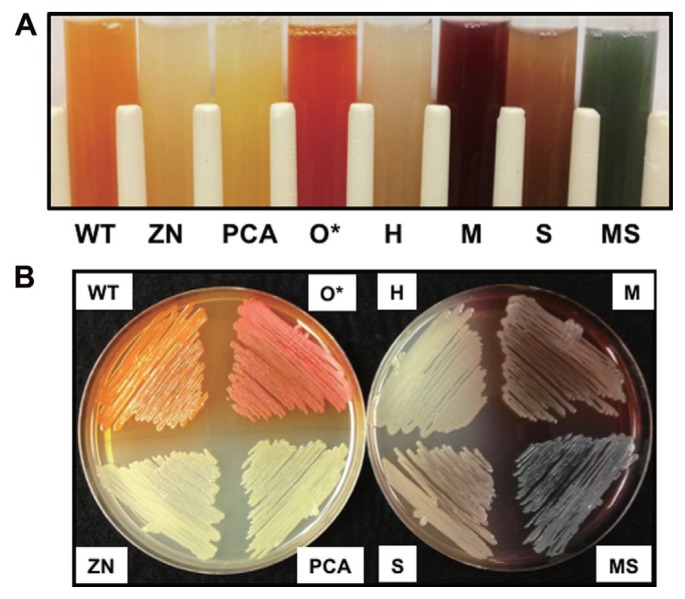
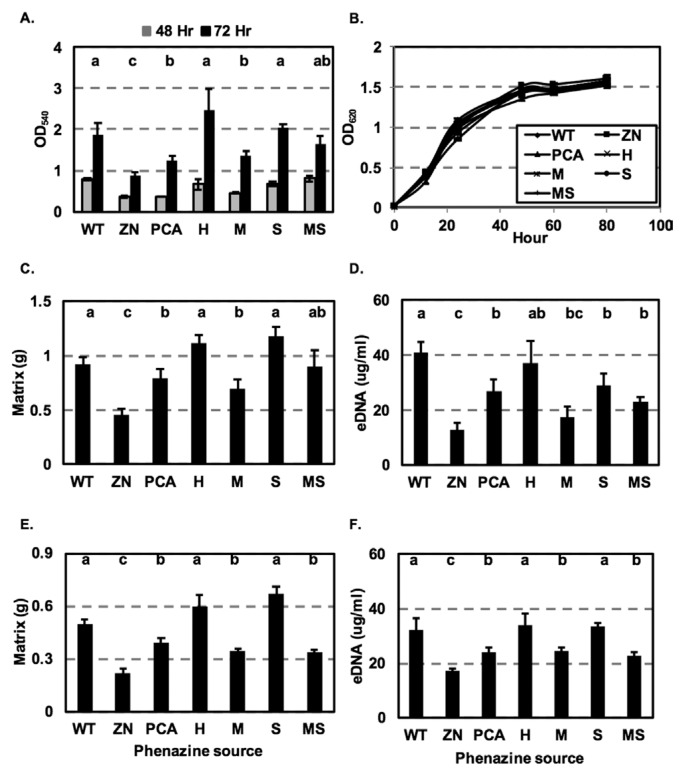
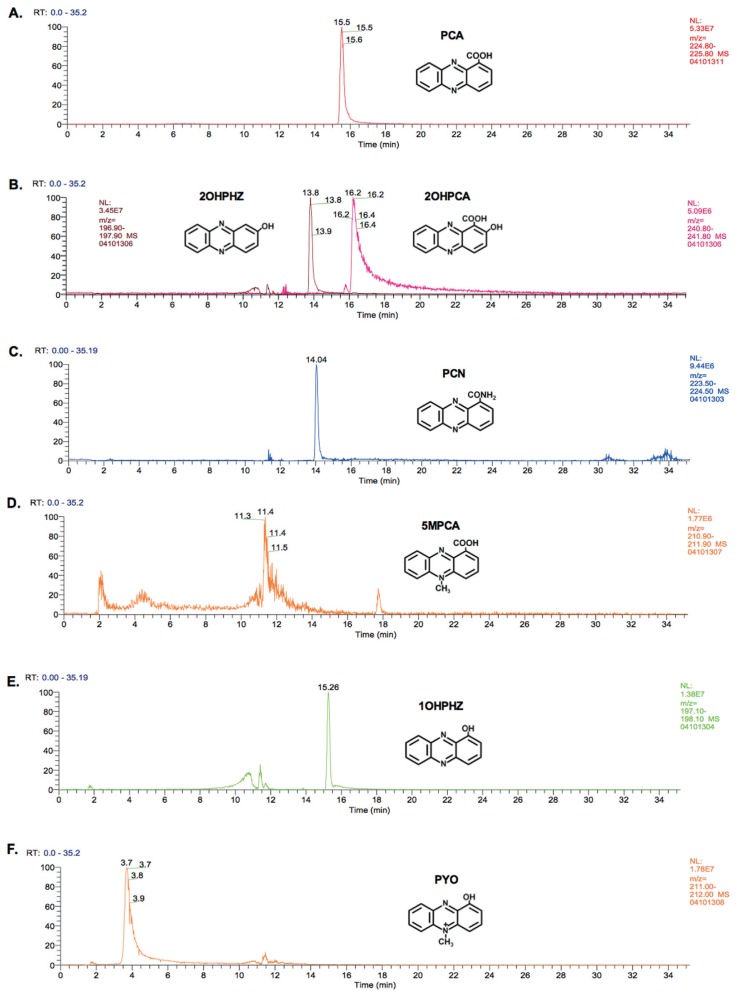
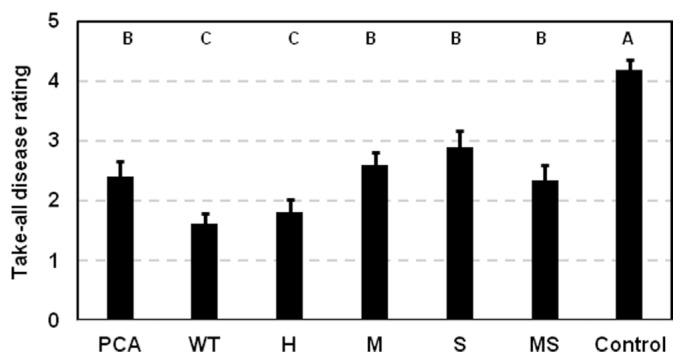
30-84 is a biological control agent selected for its ability to suppress diseases caused by fungal pathogens. 30-84 produces three phenazines: phenazine-1-carboxylic acid (PCA), 2-hydroxy-phenazine-1-carboxylic acid (2OHPCA) and a small amount of 2-hydroxy-phenazine (2OHPHZ), and these are required for fungal pathogen inhibition and wheat rhizosphere competence. The two, 2-hydroxy derivatives are produced from PCA via the activity of a phenazine-modifying enzyme encoded by . In addition to the seven biosynthetic genes responsible for the production of PCA, many other strains possess one or more modifying genes, which encode enzymes that act independently or together to convert PCA into other phenazine derivatives. In order to understand the fitness effects of producing different phenazines, we constructed isogenic derivatives of 30-84 that differed only in the type of phenazines produced. Altering the type of phenazines produced by 30-84 enhanced the spectrum of fungal pathogens inhibited and altered the degree of take-all disease suppression. These strains also differed in their ability to promote extracellular DNA release, which may contribute to the observed differences in the amount of biofilm produced. All derivatives were equally important for survival over repeated plant/harvest cycles, indicating that the type of phenazines produced is less important for persistence in the wheat rhizosphere than whether or not cells produce phenazines. These findings provide a better understanding of the effects of different phenazines on functions important for biological control activity with implications for applications that rely on introduced or native phenazine producing populations.
30-84是一种生物防治剂,因其能够抑制由真菌病原体引起的疾病而被选中。30-84产生三种吩嗪:吩嗪-1-羧酸(PCA)、2-羟基-吩嗪-1-羧酸(2OHPCA)和少量的2-羟基吩嗪(2OHPHZ),这些是抑制真菌病原体和小麦根际竞争力所必需的。这两种2-羟基衍生物是通过由……编码的吩嗪修饰酶的活性从PCA产生的。除了负责PCA产生的七个生物合成基因外,许多其他菌株还拥有一个或多个修饰基因,这些基因编码的酶单独或共同作用将PCA转化为其他吩嗪衍生物。为了了解产生不同吩嗪的适应性影响,我们构建了30-84的同基因衍生物,它们仅在产生的吩嗪类型上有所不同。改变30-84产生的吩嗪类型增强了被抑制的真菌病原体谱,并改变了全蚀病抑制程度。这些菌株在促进细胞外DNA释放的能力上也有所不同,这可能导致观察到的生物膜产生量的差异。所有衍生物对于在重复的植物/收获周期中的存活同样重要,这表明产生的吩嗪类型对于在小麦根际中的持久性不如细胞是否产生吩嗪重要。这些发现为不同吩嗪对生物防治活性重要功能的影响提供了更好的理解,对依赖引入或本地产生吩嗪群体的应用具有启示意义。