Roux Clémence, Saviane Gaëlle, Pini Jonathan, Belaïd Nourhène, Dhib Gihen, Voha Christine, Ibáñez Lidia, Boutin Antoine, Mazure Nathalie M, Wakkach Abdelilah, Blin-Wakkach Claudine, Rouleau Matthieu
LP2M, CNRS-UMR 7370, Faculty of Medicine, Nice, France.
Université Nice-Sophia Antipolis, Nice, France.
Front Immunol. 2018 Jan 25;8:1991. doi: 10.3389/fimmu.2017.01991. eCollection 2017.
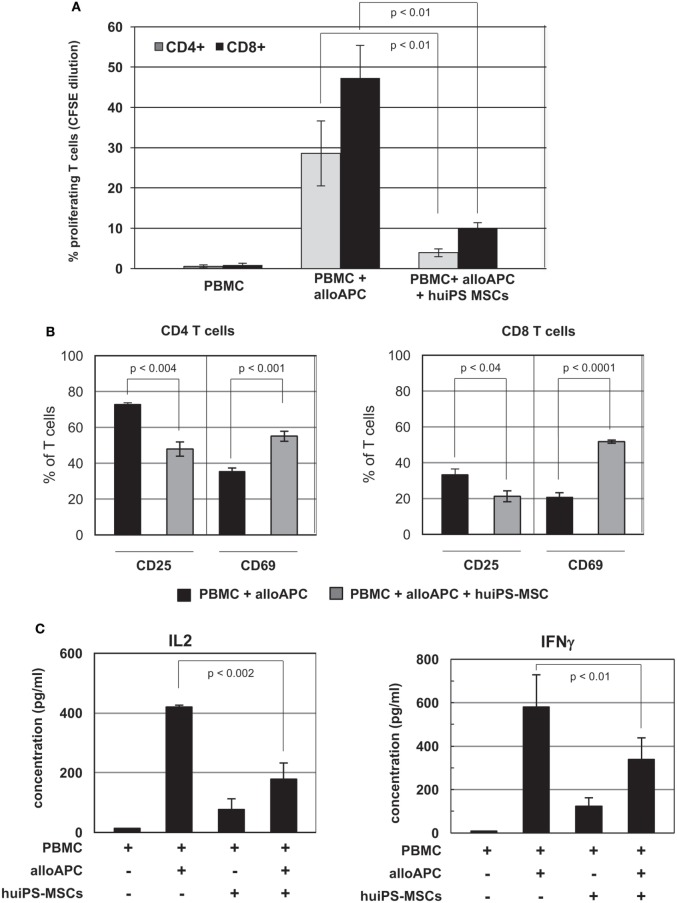
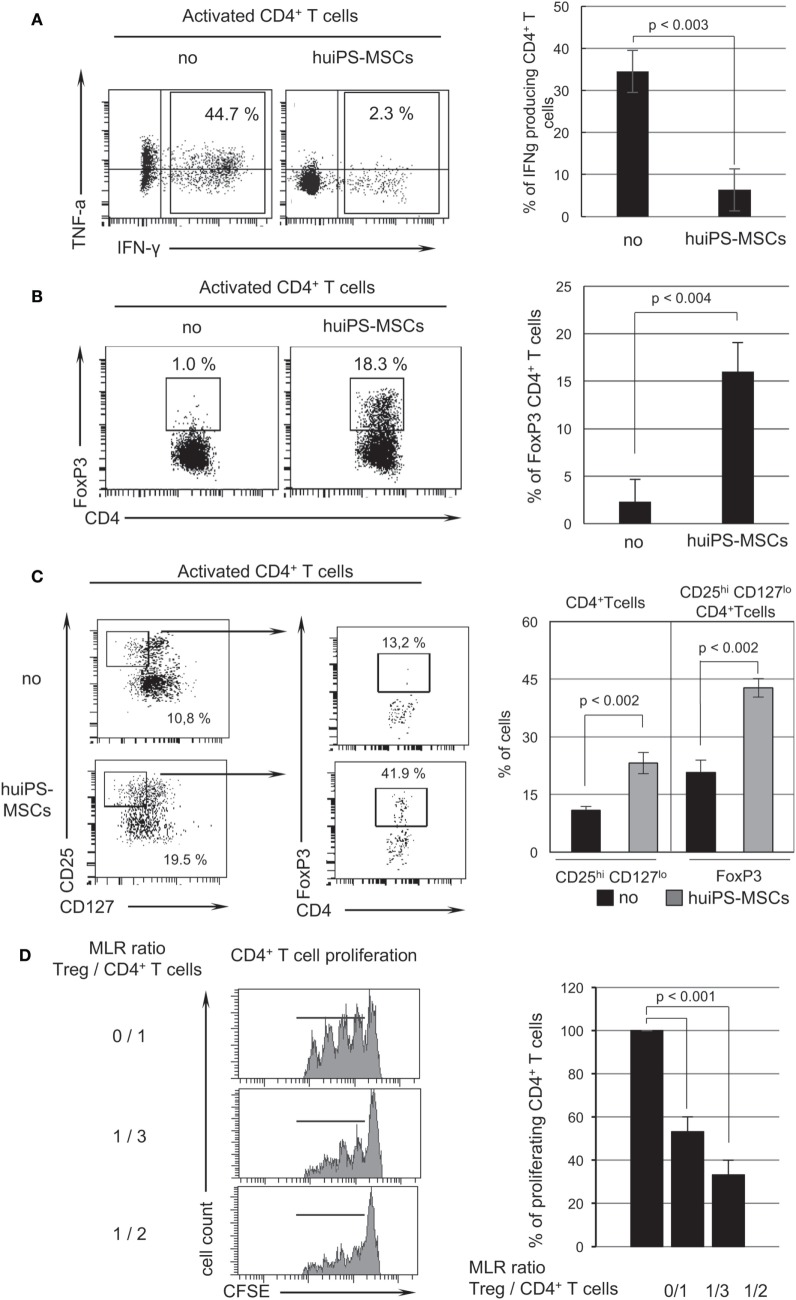
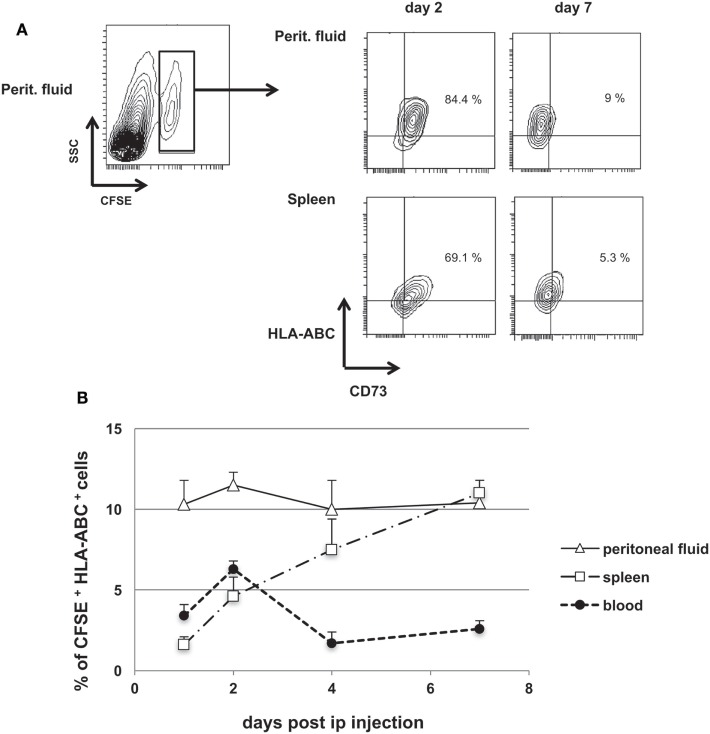
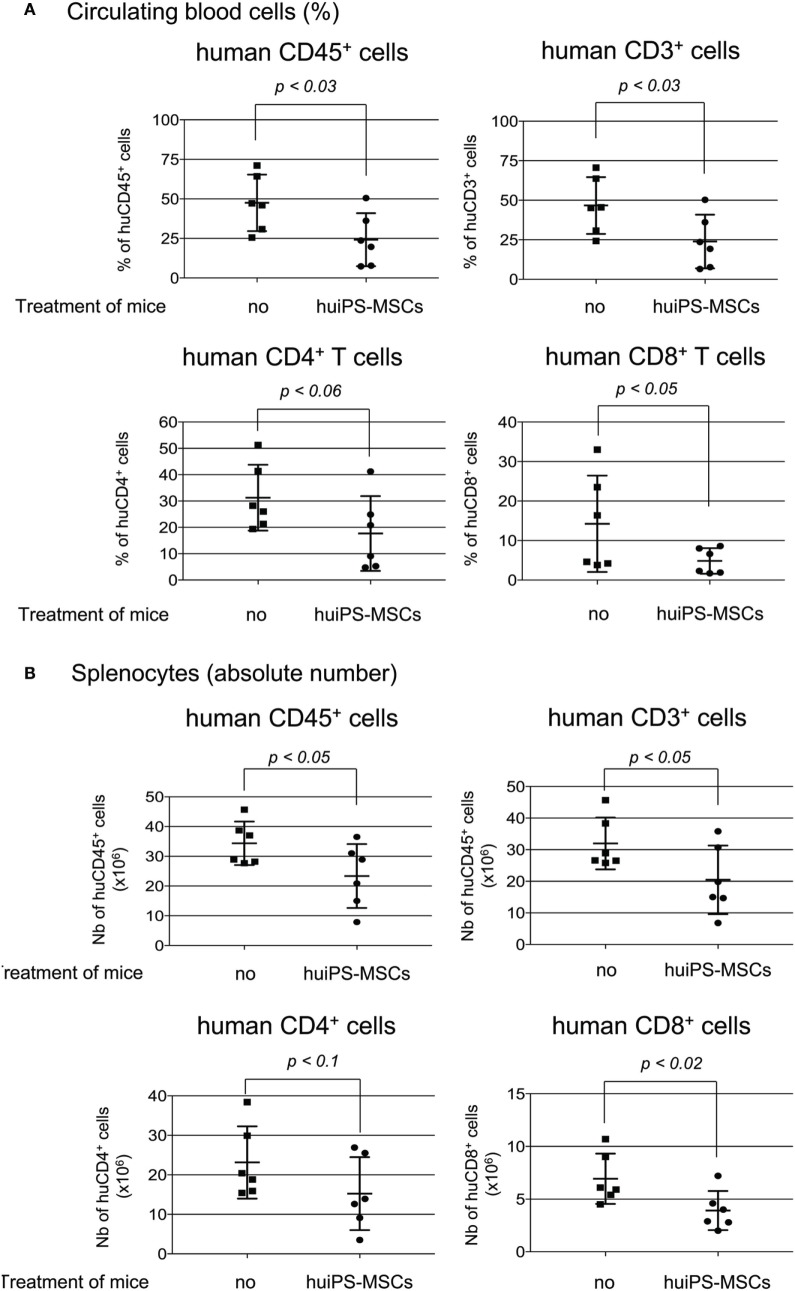
Despite mesenchymal stromal cells (MSCs) are considered as a promising source of cells to modulate immune functions on cells from innate and adaptive immune systems, their clinical use remains restricted (few number, limited expansion, absence of a full phenotypic characterization, few insights on their fate). Standardized MSCs derived from human-induced pluripotent stem (huIPS) cells, remediating part of these issues, are considered as well as a valuable tool for therapeutic approaches, but their functions remained to be fully characterized. We generated multipotent MSCs derived from huiPS cells (huiPS-MSCs), and focusing on their immunosuppressive activity, we showed that human T-cell activation in coculture with huiPS-MSCs was significantly reduced. We also observed the generation of functional CD4 FoxP3 regulatory T (Treg) cells. Further tested in a model of human T-cell expansion in immune-deficient NSG mice, huiPS-MSCs immunosuppressive activity prevented the circulation and the accumulation of activated human T cells. Intracytoplasmic labeling of cytokines produced by the recovered T cells showed reduced percentages of human-differentiated T cells producing Th1 inflammatory cytokines. By contrast, T cells producing IL-10 and FoxP3-Treg cells, absent in non-treated animals, were detected in huiPS-MSCs treated mice. For the first time, these results highlight the immunosuppressive activity of the huiPS-MSCs on human T-cell stimulation with a concomitant generation of human Treg cells . They may favor the development of new tools and strategies based on the use of huiPS cells and their derivatives for the induction of immune tolerance.
尽管间充质基质细胞(MSCs)被认为是调节先天性和适应性免疫系统细胞免疫功能的一种很有前景的细胞来源,但其临床应用仍然受到限制(数量少、扩增有限、缺乏完整的表型特征、对其命运了解甚少)。源自人诱导多能干细胞(huIPS)的标准化MSCs弥补了部分这些问题,被认为是治疗方法的一种有价值的工具,但其功能仍有待充分表征。我们从huIPS细胞中生成了多能MSCs(huiPS-MSCs),并专注于它们的免疫抑制活性,结果表明与huiPS-MSCs共培养时人T细胞的活化显著降低。我们还观察到功能性CD4 FoxP3调节性T(Treg)细胞的产生。在免疫缺陷NSG小鼠的人T细胞扩增模型中进一步测试发现,huiPS-MSCs的免疫抑制活性阻止了活化的人T细胞的循环和积累。对回收的T细胞产生的细胞因子进行胞内标记显示,产生Th1炎性细胞因子的人分化T细胞百分比降低。相比之下,在未处理动物中不存在的产生IL-10的T细胞和FoxP3-Treg细胞在huiPS-MSCs处理的小鼠中被检测到。这些结果首次突出了huiPS-MSCs对人T细胞刺激的免疫抑制活性,并伴随产生人Treg细胞。它们可能有利于基于huiPS细胞及其衍生物诱导免疫耐受的新工具和新策略的开发。