Erol Ayse, Acikgoz Eda, Guven Ummu, Duzagac Fahriye, Turkkani Ayten, Colcimen Nese, Oktem Gulperi
Department of Medical Pharmacology, School of Medicine, Ege University, 35100 Izmir, Turkey.
Department of Histology and Embryology, School of Medicine, Yuzuncu Yil University, 65000 Van, Turkey.
Oncol Lett. 2017 Dec;14(6):6433-6440. doi: 10.3892/ol.2017.7029. Epub 2017 Sep 22.
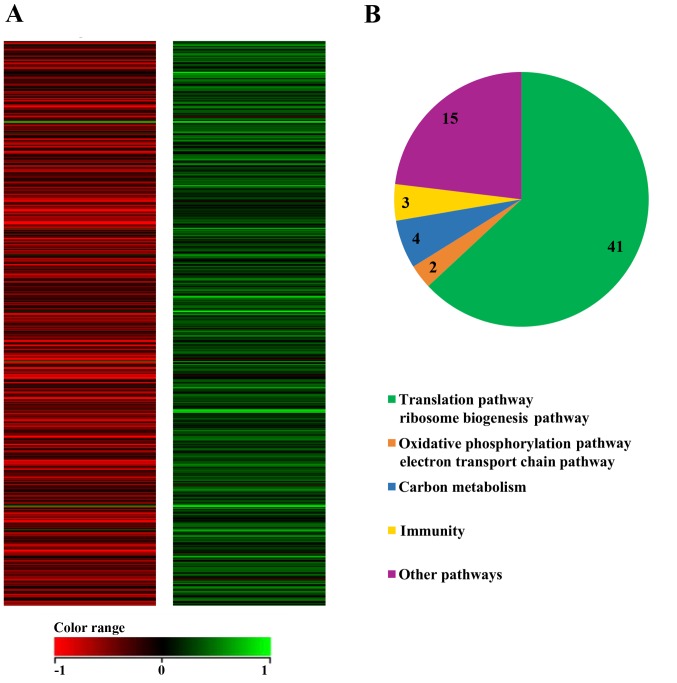
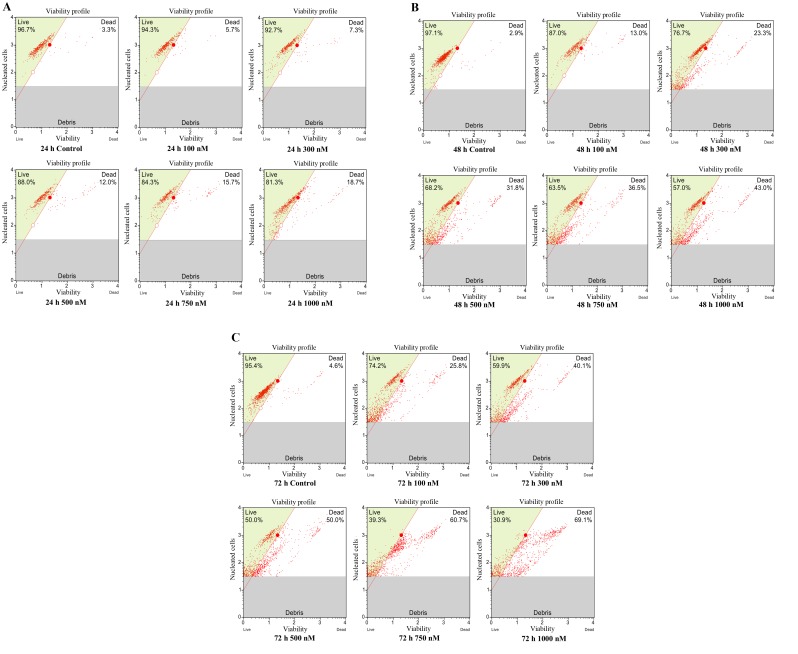
Flavopiridol is a synthetically produced flavonoid that potently inhibits the proliferation of human tumor cell lines. Flavopiridol exerts strong antitumor activity via several mechanisms, including the induction of cell cycle arrest and apoptosis, and the modulation of transcriptional regulation. The aim of the present study was to determine the effect of flavopiridol on a subpopulation of cluster of differentiation (CD)44/CD24 human breast cancer MCF7 stem cells. The CD44/CD24 cells were isolated from the MCF7 cell line by fluorescence-activated cell sorting and treated with 100, 300, 500, 750 and 1,000 nM flavopiridol for 24, 48 and 72 h. Cell viability and proliferation assays were performed to determine the inhibitory effect of flavopiridol. Gene expression profiling was analyzed using Illumina Human HT-12 v4 Expression BeadChip microarray. According to the results, the half maximal inhibitory concentration (IC) value of flavopiridol was 500 nM in monolayer cells. Flavopiridol induced growth inhibition and cytotoxicity in breast cancer stem cells (BCSCs) at the IC dose. The present study revealed several differentially regulated genes between flavopiridol-treated and untreated cells. The result of the pathway analysis revealed that flavopiridol serves an important role in translation, the ribosome biogenesis pathway, oxidative phosphorylation, the electron transport chain pathway, carbon metabolism and cell cycle. A notable result from the present study is that ribosome-associated gene expression is significantly affected by flavopiridol treatment. The data of the present study indicate that flavopiridol exhibits antitumor activity against CD44/CD24 MCF7 BCSCs through different mechanisms, mainly by inhibiting translation and the ribosome biogenesis pathway, and could be an effective chemotherapeutic molecule to target and kill BCSCs.
黄酮哌啶醇是一种人工合成的类黄酮,它能有效抑制人类肿瘤细胞系的增殖。黄酮哌啶醇通过多种机制发挥强大的抗肿瘤活性,包括诱导细胞周期停滞和凋亡,以及调节转录调控。本研究的目的是确定黄酮哌啶醇对分化簇(CD)44/CD24人乳腺癌MCF7干细胞亚群的影响。通过荧光激活细胞分选从MCF7细胞系中分离出CD44/CD24细胞,并用100、300、500、750和1000 nM黄酮哌啶醇处理24、48和72小时。进行细胞活力和增殖测定以确定黄酮哌啶醇的抑制作用。使用Illumina Human HT-12 v4表达珠芯片微阵列分析基因表达谱。根据结果,黄酮哌啶醇在单层细胞中的半数最大抑制浓度(IC)值为500 nM。黄酮哌啶醇在IC剂量下诱导乳腺癌干细胞(BCSCs)的生长抑制和细胞毒性。本研究揭示了黄酮哌啶醇处理组和未处理组细胞之间的几个差异调节基因。通路分析结果表明,黄酮哌啶醇在翻译、核糖体生物发生途径、氧化磷酸化、电子传递链途径、碳代谢和细胞周期中起重要作用。本研究的一个显著结果是,黄酮哌啶醇处理显著影响核糖体相关基因的表达。本研究数据表明,黄酮哌啶醇通过不同机制对CD44/CD24 MCF7 BCSCs表现出抗肿瘤活性,主要是通过抑制翻译和核糖体生物发生途径,并且可能是一种靶向和杀死BCSCs的有效化疗分子。