Vilasi Silvia, Bulone Donatella, Caruso Bavisotto Celeste, Campanella Claudia, Marino Gammazza Antonella, San Biagio Pier L, Cappello Francesco, Conway de Macario Everly, Macario Alberto J L
Institute of Biophysics, National Research Council, Palermo, Italy.
Section of Human Anatomy, Department of Experimental Biomedicine and Clinical Neuroscience (BIONEC), University of Palermo, Palermo, Italy.
Front Mol Biosci. 2018 Jan 25;4:99. doi: 10.3389/fmolb.2017.00099. eCollection 2017.
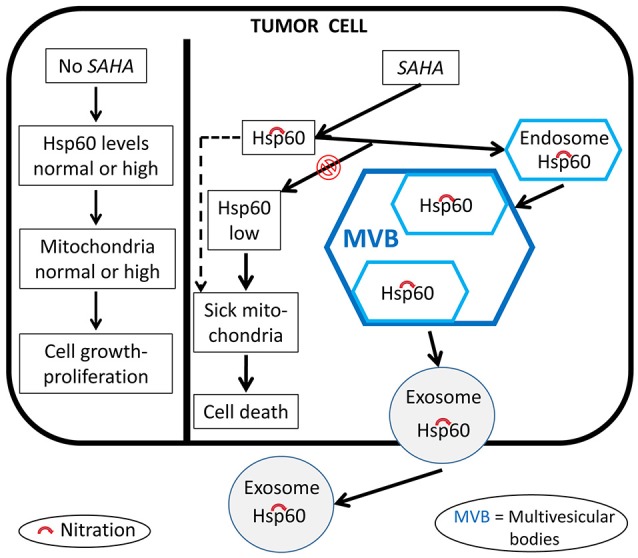
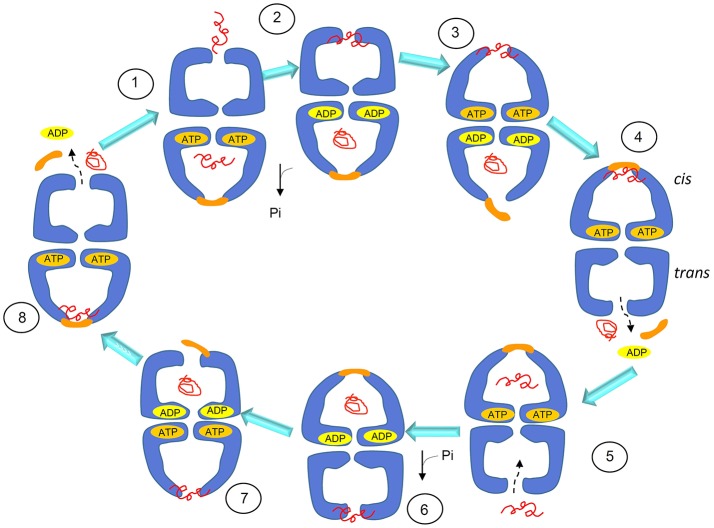
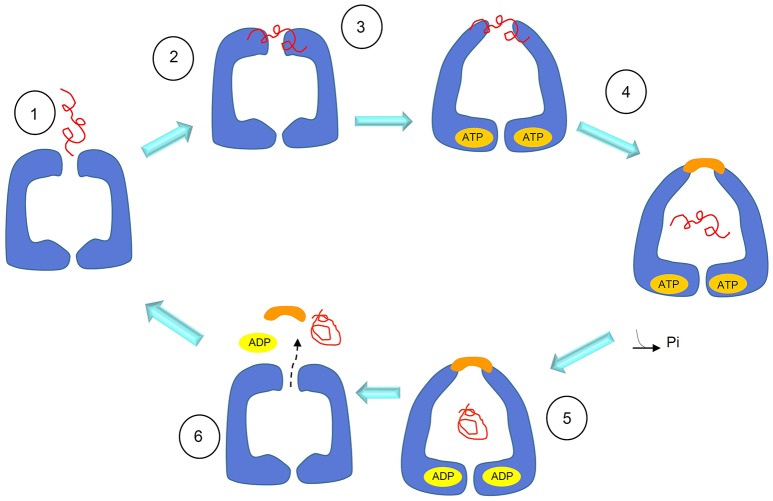
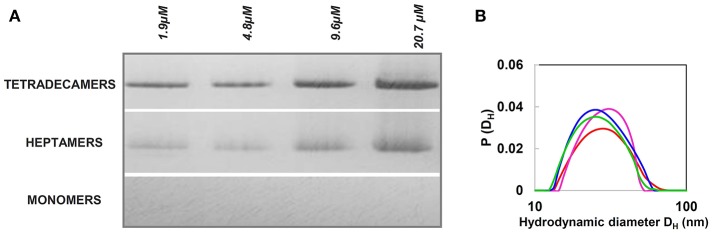
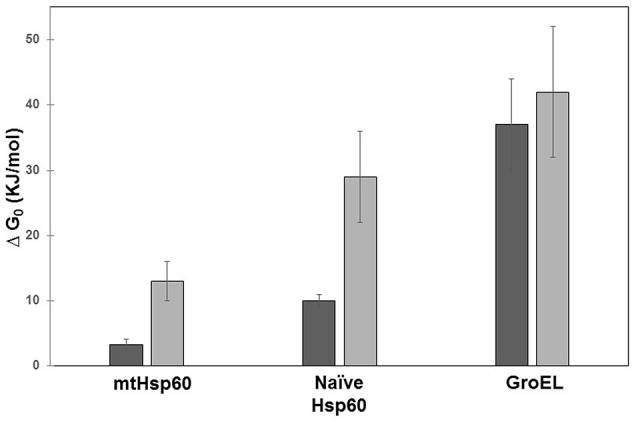
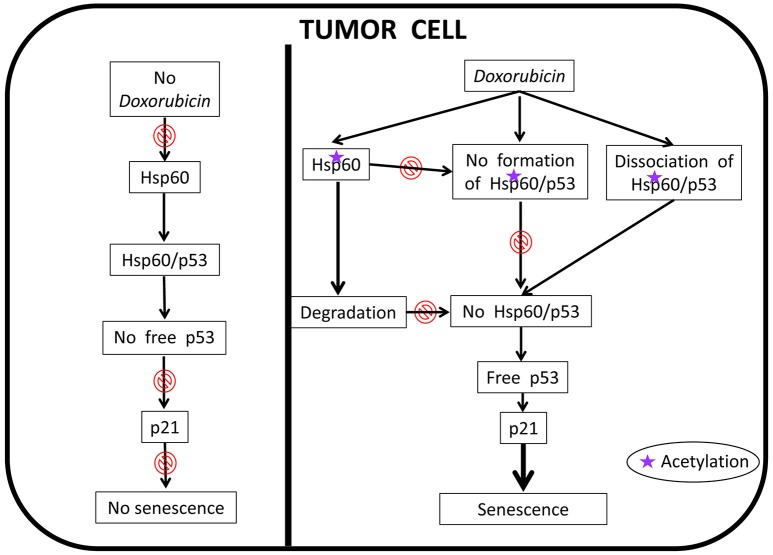
Chaperonins play various physiological roles and can also be pathogenic. Elucidation of their structure, e.g., oligomeric status and post-translational modifications (PTM), is necessary to understand their functions and mechanisms of action in health and disease. Group I chaperonins form tetradecamers with two stacked heptameric rings. The tetradecamer is considered the typical functional complex for folding of client polypeptides. However, other forms such as the monomer and oligomers with smaller number of subunits than the classical tetradecamer, also occur in cells. The properties and functions of the monomer and oligomers, and their roles in chaperonin-associated diseases are still incompletely understood. Chaperonin I in eukaryotes occurs in various locations, not just the mitochondrion, which is its canonical place of residence and function. Eukaryotic Chaperonin I, namely Hsp60 (designated HSP60 or HSPD1 in humans) has, indeed, been found in the cytosol; the plasma-cell membrane; on the outer surface of cells; in the intercellular space; in biological liquids such as lymph, blood, and cerebrospinal fluid; and in secretions, for instance saliva and urine. Hsp60 has also been found in cell-derived vesicles such as exosomes. The functions of Hsp60 in all these non-canonical locales are still poorly characterized and one of the questions not yet answered is in what form, i.e., monomer or oligomer, is the chaperonin present in these non-canonical locations. In view of the steady increase in interest on chaperonopathies over the last several years, we have studied human HSP60 to determine its role in various diseases, its locations in cells and tissues and migrations in the body, and its post-translational modifications that might have an impact on its location and function. We also carried out experiments to characterize the oligomeric status of extramitochondrial of HSP60 in solution. Here, we provide an overview of our results, focusing on the oligomeric equilibrium and stability of the various forms of HSP60 in comparison with GroEL. We also discuss post-translational modifications associated with anti-cancer drugs to indicate the potential of Hsp60 in Medicine, as a biomarker and etiopathogenic factor.
伴侣蛋白发挥着多种生理作用,也可能具有致病性。阐明其结构,如寡聚状态和翻译后修饰(PTM),对于理解它们在健康和疾病中的功能及作用机制至关重要。第一类伴侣蛋白形成由两个堆叠的七聚体环组成的十四聚体。十四聚体被认为是折叠客户多肽的典型功能复合物。然而,细胞中也存在其他形式,如单体以及亚基数量少于经典十四聚体的寡聚体。单体和寡聚体的性质与功能,以及它们在伴侣蛋白相关疾病中的作用仍未完全明确。真核生物中的伴侣蛋白I存在于多个位置,不仅仅是线粒体,线粒体是其典型的驻留和发挥功能的场所。事实上,真核生物伴侣蛋白I,即热休克蛋白60(在人类中称为HSP60或HSPD1),已在细胞质、质膜、细胞外表面、细胞间空间、生物液体如淋巴、血液和脑脊液以及分泌物如唾液和尿液中被发现。热休克蛋白60也存在于细胞衍生的囊泡如外泌体中。热休克蛋白60在所有这些非典型位置的功能仍未得到充分表征,尚未解答的问题之一是伴侣蛋白在这些非典型位置以何种形式存在,即单体还是寡聚体。鉴于在过去几年中对伴侣蛋白病的关注度不断增加,我们研究了人类热休克蛋白60,以确定其在各种疾病中的作用、在细胞和组织中的位置以及在体内的迁移情况,以及可能影响其位置和功能的翻译后修饰。我们还进行了实验以表征溶液中热休克蛋白60线粒体外形式的寡聚状态。在此,我们概述我们的研究结果,重点是与GroEL相比热休克蛋白60各种形式的寡聚平衡和稳定性。我们还讨论了与抗癌药物相关的翻译后修饰,以表明热休克蛋白60作为生物标志物和病因致病因素在医学中的潜力。