Institute of Microbiology, Universität Innsbruck, Technikerstr. 25d, 6020, Innsbruck, Austria.
Institute of Biological, Environmental and Rural Sciences (IBERS), Aberystwyth University, Aberystwyth, Wales, SY23 3DD, UK.
Appl Microbiol Biotechnol. 2018 Mar;102(6):2885-2898. doi: 10.1007/s00253-018-8786-y. Epub 2018 Feb 8.
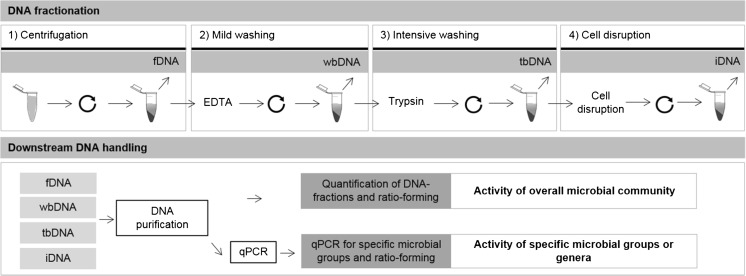
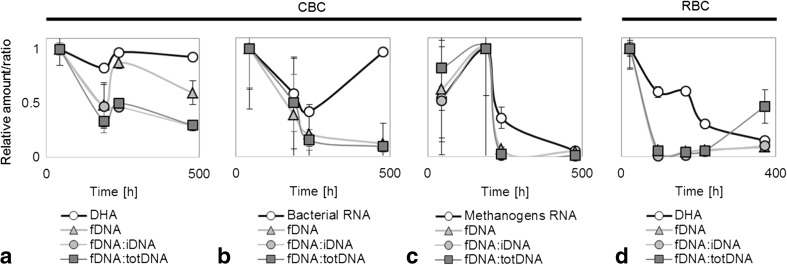
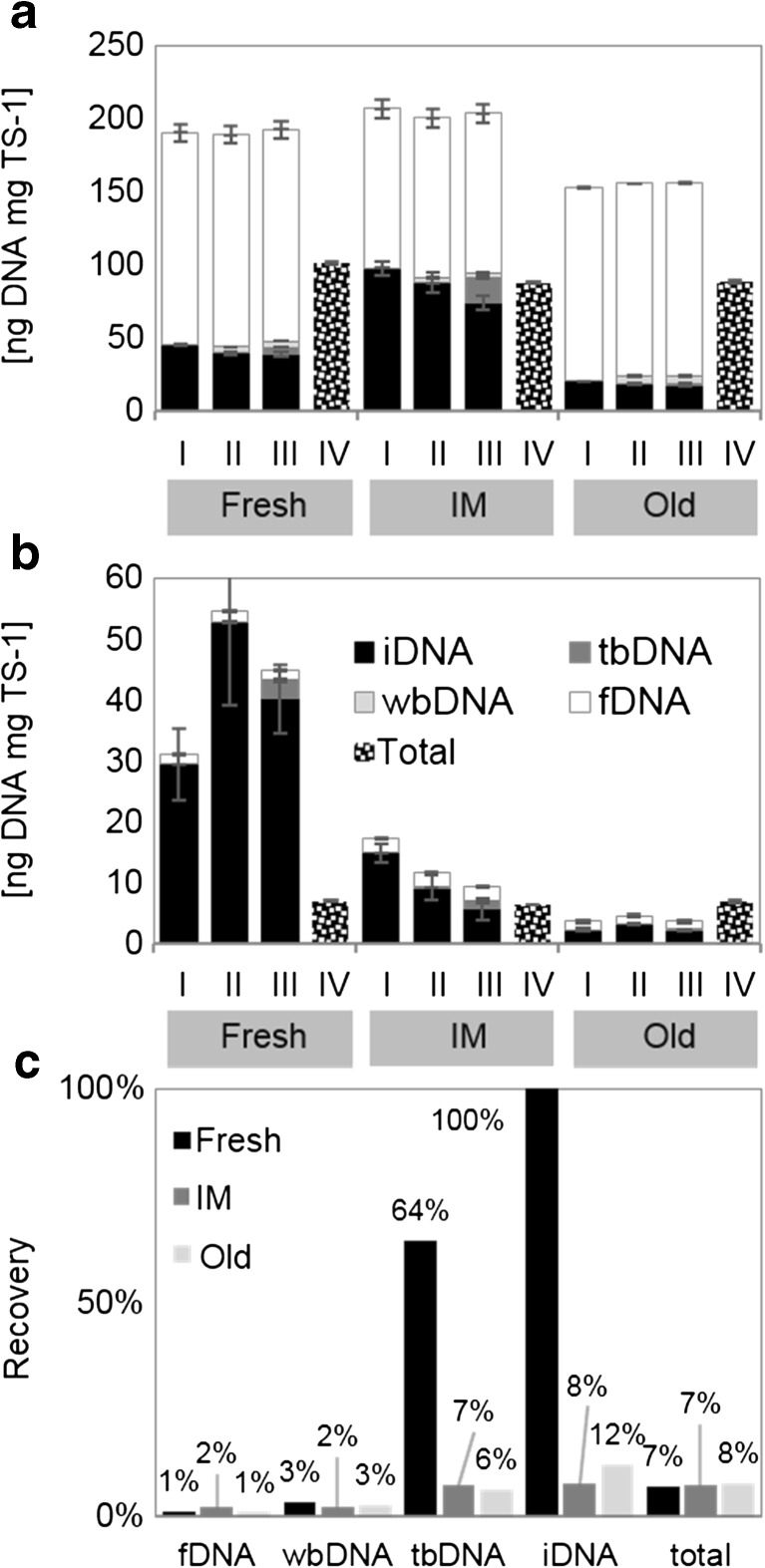
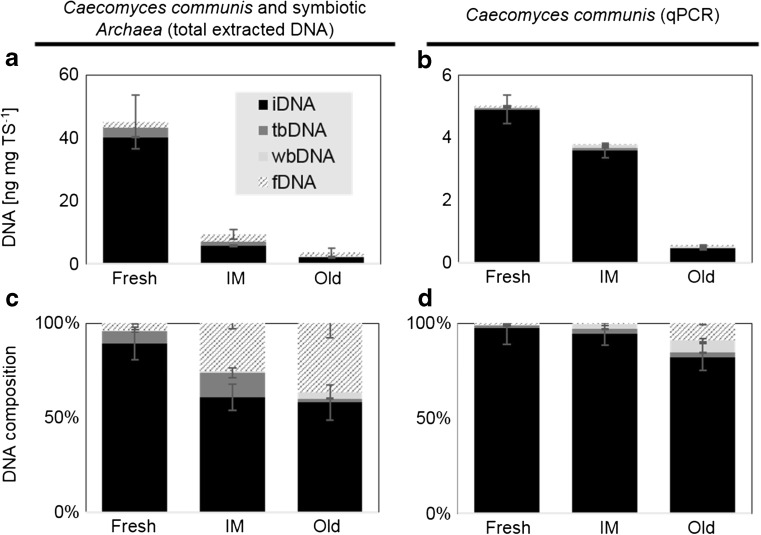
The ubiquity and relevance of extracellular DNA (exDNA) are well-known and increasingly gaining importance in many fields of application such as medicine and environmental microbiology. Although sources and types of exDNA are manifold, ratios of specific DNA-molecules inside and outside of living cells can give reliable information about the activity of entire systems and of specific microbial groups or species. Here, we introduce a method to discriminate between internal (iDNA), as well as bound and free exDNA, and evaluate various DNA fractions and related ratios (ex:iDNA) regarding their applicability to be used as a fast, convenient, and reliable alternative to more tedious RNA-based activity measurements. In order to deal with microbial consortia that can be regulated regarding their activity, we tested and evaluated the proposed method in comparison to sophisticated dehydrogenase- and RNA-based activity measurements with two anaerobic microbial consortia (anaerobic fungi and syntrophic archaea and a microbial rumen consortium) and three levels of resolution (overall activity, total bacteria, methanogenic archaea). Furthermore, we introduce a 28S rRNA gene-specific primer set and qPCR protocol, targeting anaerobic fungi (Neocallimastigomycota). Our findings show that the amount of actively released free exDNA (fDNA) strongly correlates with different activity measurements and is thus suggested to serve as a proxy for microbial activity.
细胞外 DNA(exDNA)无处不在且具有重要意义,在医学和环境微生物学等多个应用领域的重要性日益增加。尽管 exDNA 的来源和类型多种多样,但活细胞内外特定 DNA 分子的比例可以为整个系统以及特定微生物群体或物种的活性提供可靠的信息。在这里,我们介绍了一种区分内部(iDNA)以及结合和游离 exDNA 的方法,并评估了各种 DNA 分数及其相关比率(ex:iDNA),以确定它们是否可作为一种快速、方便和可靠的替代方法,替代更繁琐的基于 RNA 的活性测量。为了处理可以调节其活性的微生物群落,我们用两种厌氧微生物群落(厌氧真菌和产甲烷菌以及微生物瘤胃群落)和三种分辨率水平(整体活性、总细菌、产甲烷古菌),对所提出的方法进行了测试和评估,与复杂的脱氢酶和基于 RNA 的活性测量进行了比较。此外,我们还引入了一种针对厌氧真菌(Neocallimastigomycota)的 28S rRNA 基因特异性引物和 qPCR 方案。我们的研究结果表明,活跃释放的游离 exDNA(fDNA)的数量与不同的活性测量密切相关,因此可作为微生物活性的替代指标。