Department of Animal and Plant Sciences, University of Sheffield, Sheffield, S10 2TN, UK.
P3 Institute for Translational Soil and Plant Biology, Department of Animal and Plant Sciences, University of Sheffield, Sheffield, S10 2TN, UK.
New Phytol. 2018 Apr;218(2):752-761. doi: 10.1111/nph.15018. Epub 2018 Feb 9.
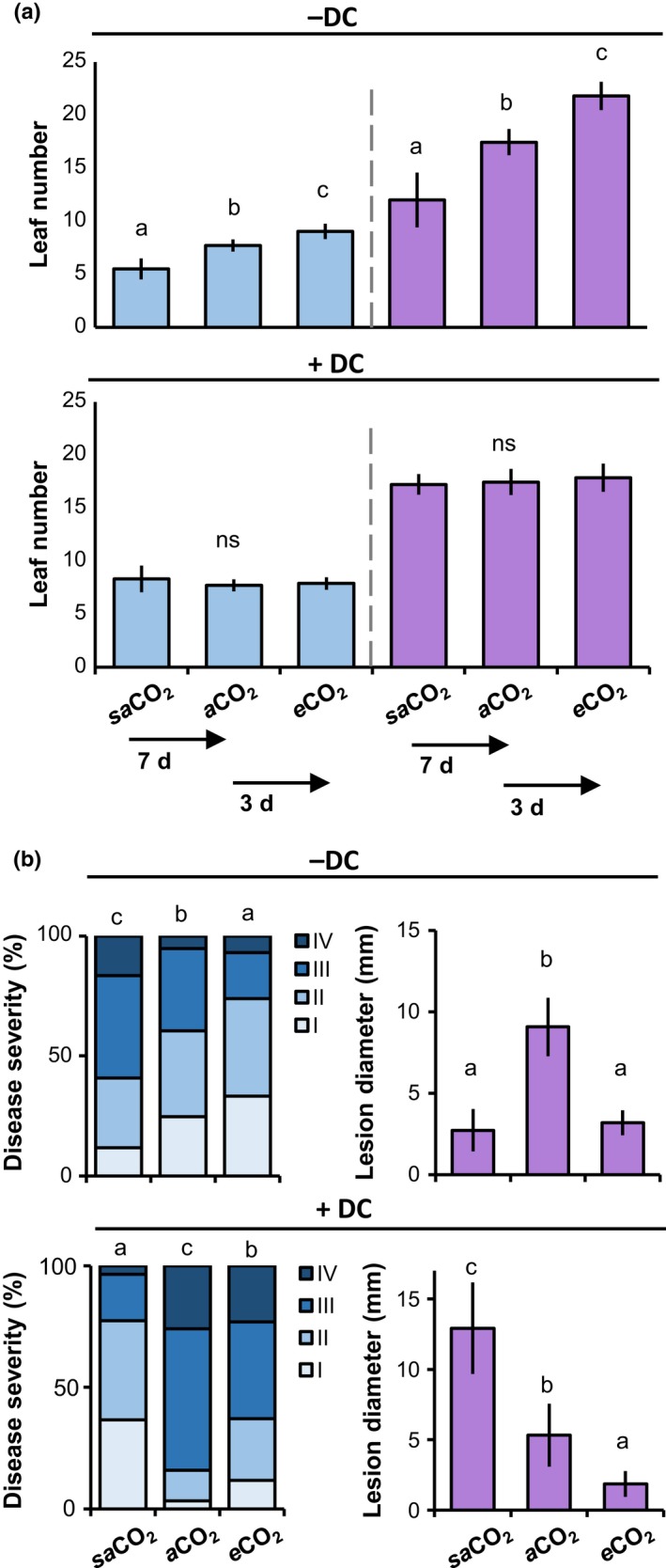
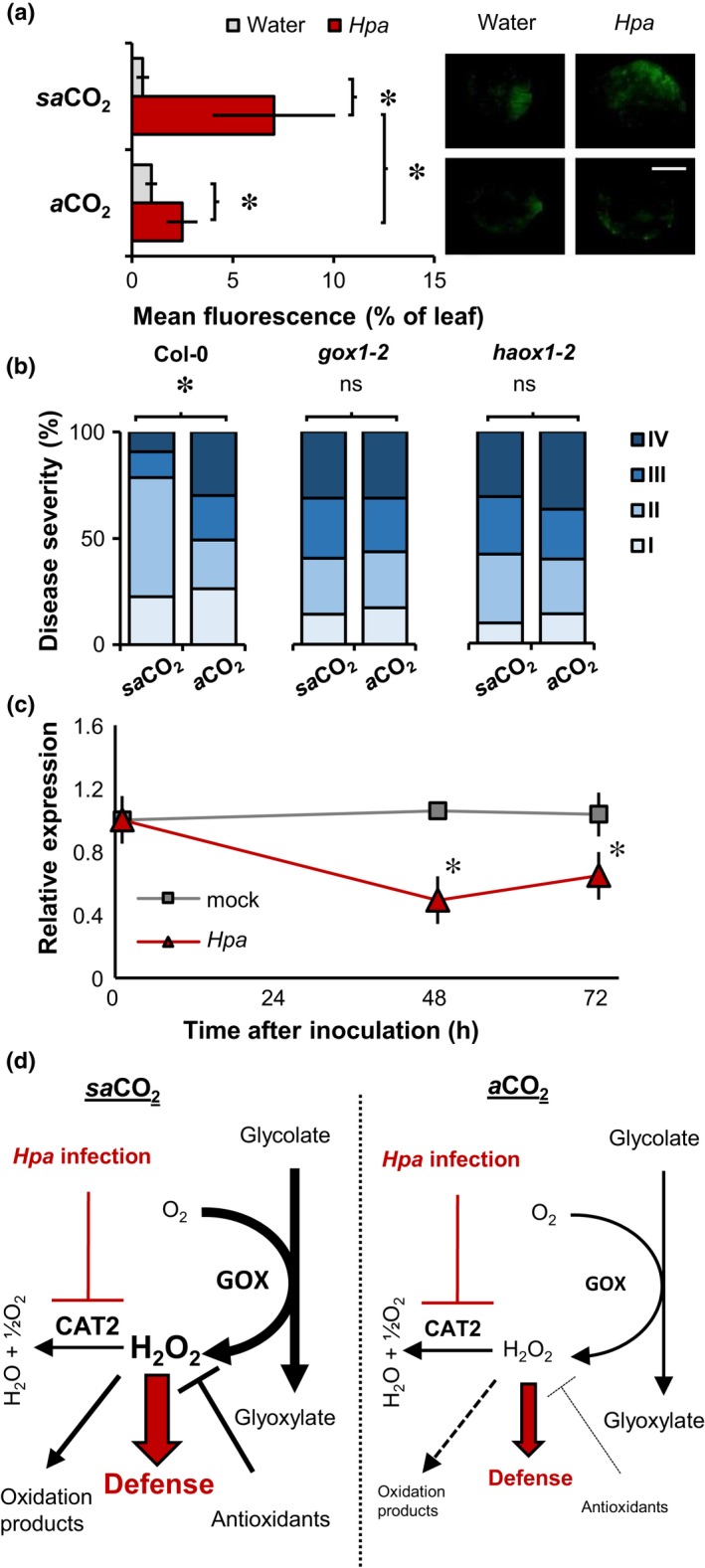
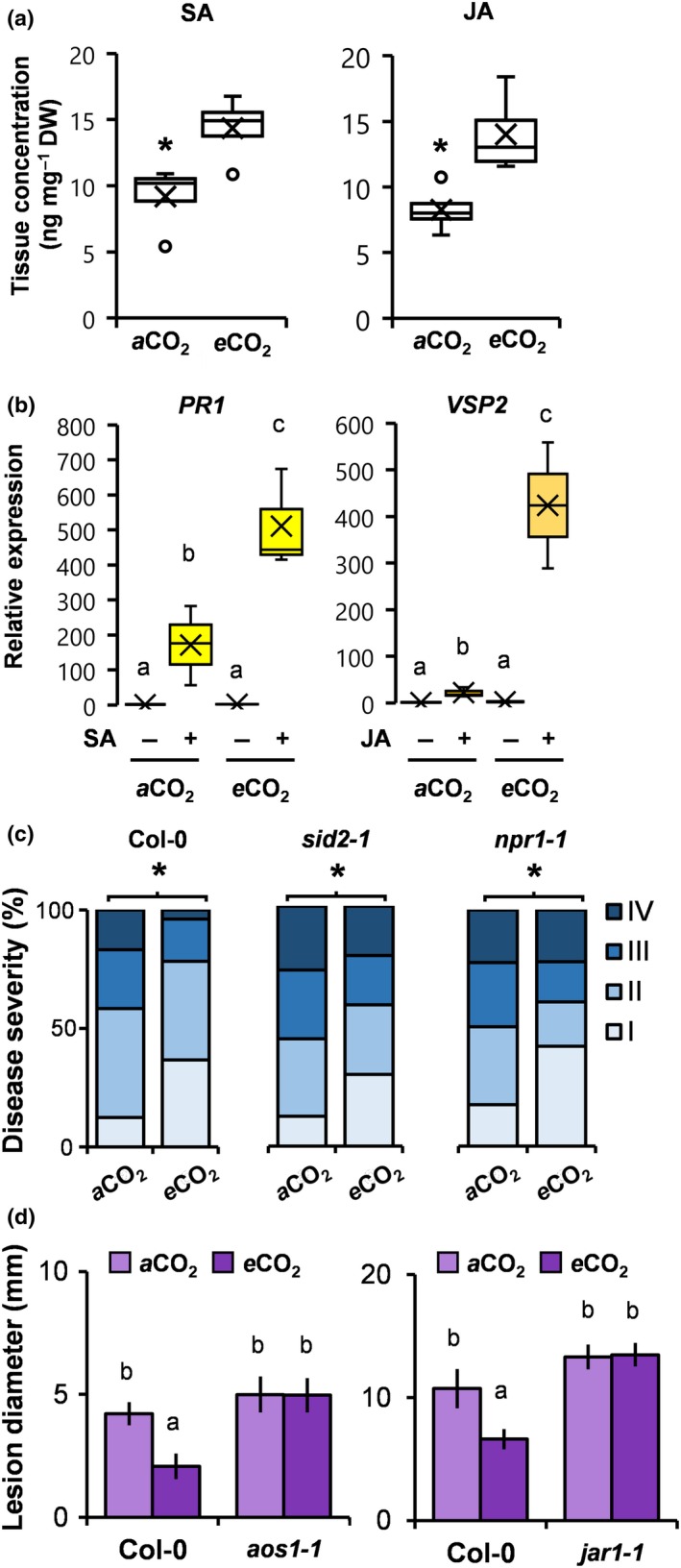
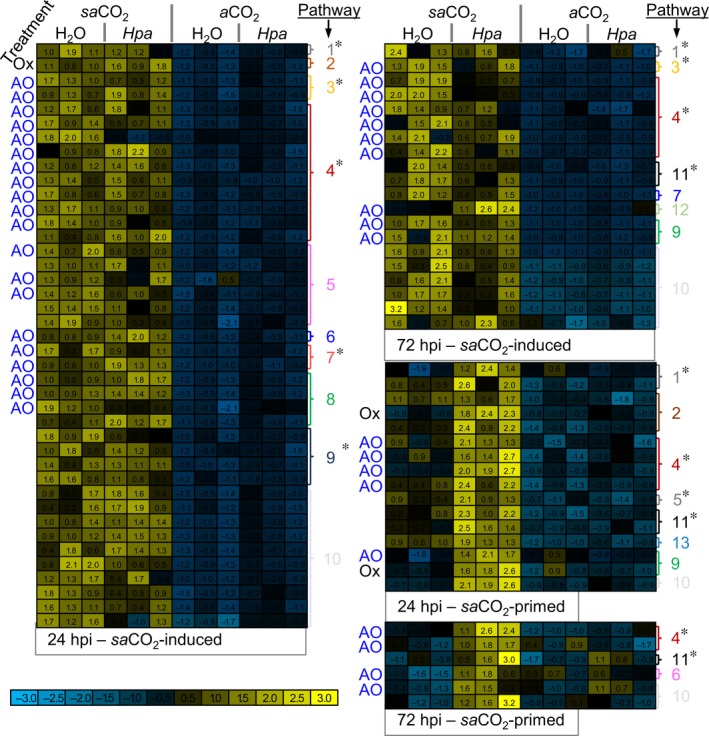
The impacts of rising atmospheric CO concentrations on plant disease have received increasing attention, but with little consensus emerging on the direct mechanisms by which CO shapes plant immunity. Furthermore, the impact of sub-ambient CO concentrations, which plants have experienced repeatedly over the past 800 000 yr, has been largely overlooked. A combination of gene expression analysis, phenotypic characterisation of mutants and mass spectrometry-based metabolic profiling was used to determine development-independent effects of sub-ambient CO (saCO ) and elevated CO (eCO ) on Arabidopsis immunity. Resistance to the necrotrophic Plectosphaerella cucumerina (Pc) was repressed at saCO and enhanced at eCO . This CO -dependent resistance was associated with priming of jasmonic acid (JA)-dependent gene expression and required intact JA biosynthesis and signalling. Resistance to the biotrophic oomycete Hyaloperonospora arabidopsidis (Hpa) increased at both eCO and saCO . Although eCO primed salicylic acid (SA)-dependent gene expression, mutations affecting SA signalling only partially suppressed Hpa resistance at eCO , suggesting additional mechanisms are involved. Induced production of intracellular reactive oxygen species (ROS) at saCO corresponded to a loss of resistance in glycolate oxidase mutants and increased transcription of the peroxisomal catalase gene CAT2, unveiling a mechanism by which photorespiration-derived ROS determined Hpa resistance at saCO . By separating indirect developmental impacts from direct immunological effects, we uncover distinct mechanisms by which CO shapes plant immunity and discuss their evolutionary significance.
大气中 CO 浓度升高对植物病害的影响受到越来越多的关注,但对于 CO 如何影响植物免疫的直接机制尚未达成共识。此外,植物在过去 80 万年中反复经历的亚环境 CO 浓度的影响在很大程度上被忽视了。本研究采用基因表达分析、突变体表型特征和基于质谱的代谢谱分析相结合的方法,确定了亚环境 CO(saCO)和高浓度 CO(eCO)对拟南芥免疫的非发育依赖性影响。在 saCO 条件下,拟南芥对坏死性病原菌尖孢镰刀菌(Pc)的抗性受到抑制,而在 eCO 条件下则增强。这种 CO 依赖性抗性与茉莉酸(JA)依赖性基因表达的激活有关,需要完整的 JA 生物合成和信号转导。在 eCO 和 saCO 条件下,拟南芥对生物性卵菌病原菌 Hyaloperonospora arabidopsidis(Hpa)的抗性增加。尽管 eCO 可以激活水杨酸(SA)依赖性基因表达,但影响 SA 信号转导的突变仅部分抑制了 eCO 条件下对 Hpa 的抗性,这表明还涉及其他机制。在 saCO 条件下,细胞内活性氧(ROS)的诱导产生与糖酵解氧化酶突变体抗性的丧失以及过氧化物酶体过氧化氢酶基因 CAT2 的转录增加相对应,揭示了光呼吸衍生的 ROS 决定 saCO 条件下 Hpa 抗性的机制。通过将间接的发育影响与直接的免疫效应分开,我们揭示了 CO 影响植物免疫的不同机制,并讨论了它们的进化意义。