Departamento de Bioquímica e Imunologia, Instituto de Ciências Biológicas, Universidade Federal de Minas Gerais, Belo Horizonte, Minas Gerais, Brazil.
Instituto Nacional de Ciência e Tecnologia em Doenças Tropicais (INCT-DT), Conselho Nacional de Desenvolvimento Científico e Tecnológico, Ministério de Ciência Tecnologia e Inovação Salvador, Bahia, Brazil.
PLoS Pathog. 2018 Feb 9;14(2):e1006870. doi: 10.1371/journal.ppat.1006870. eCollection 2018 Feb.
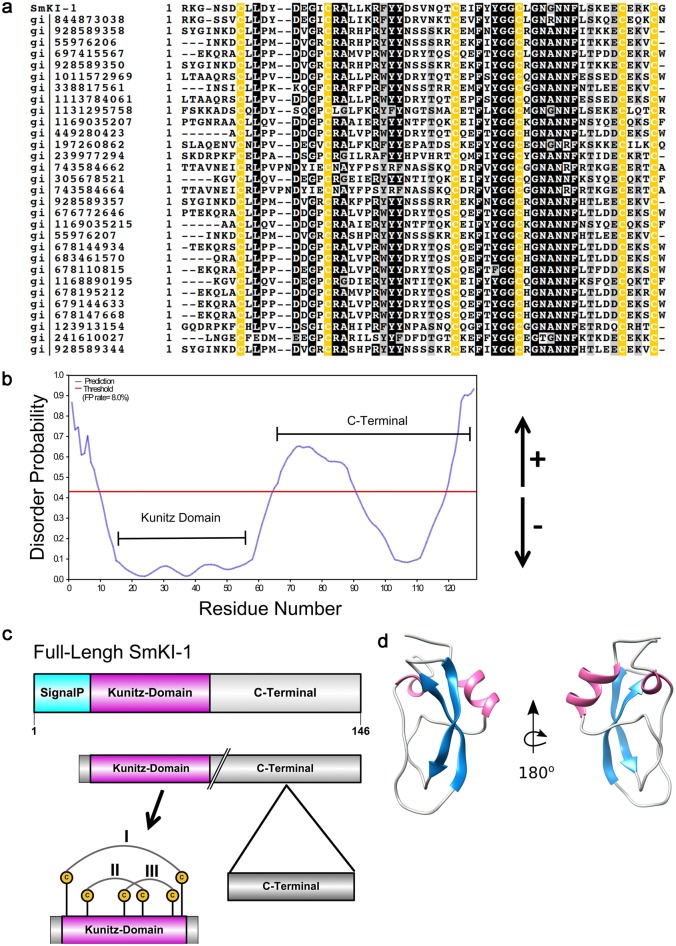
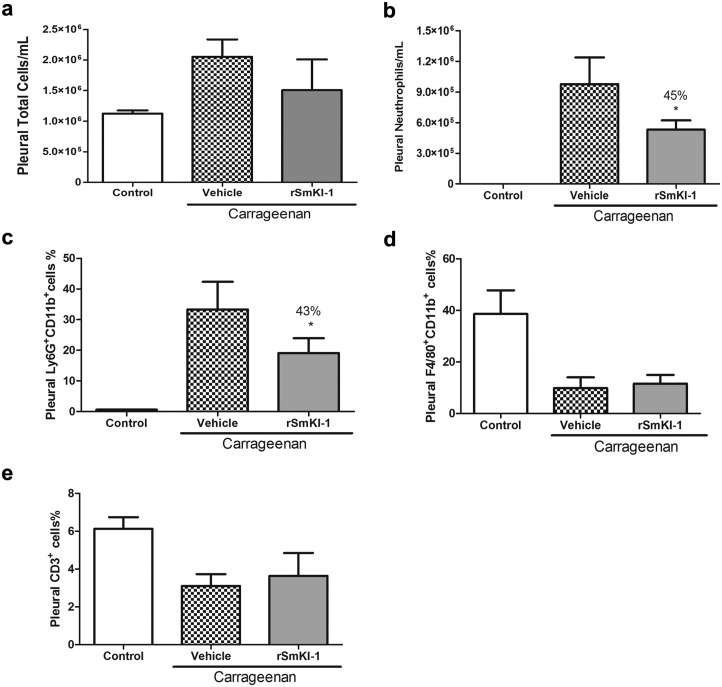
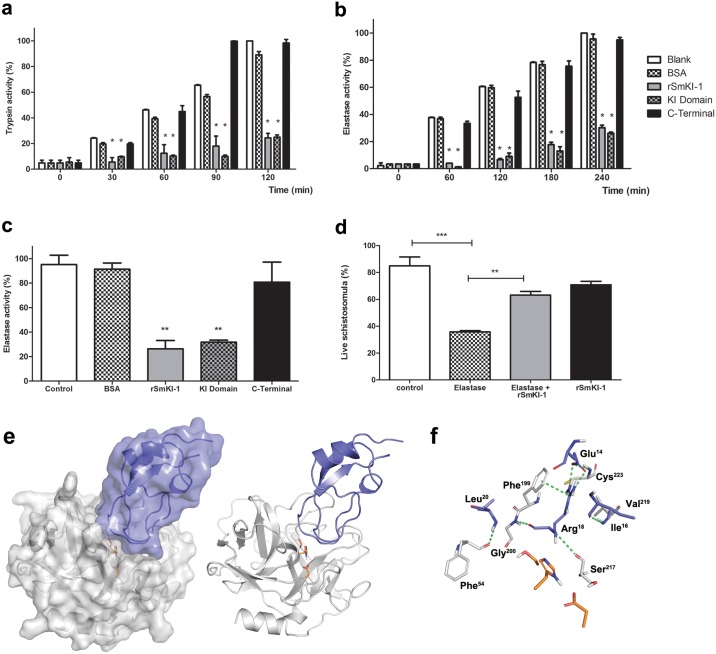
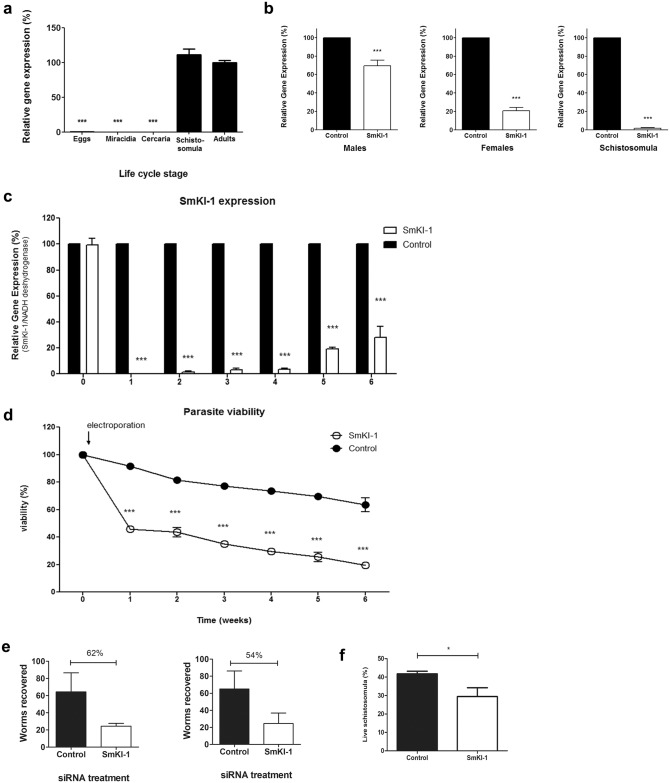
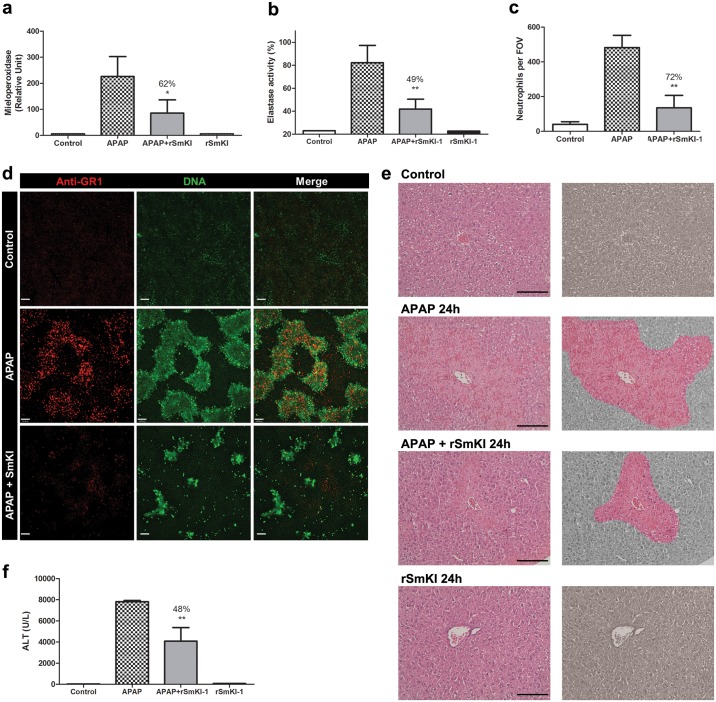
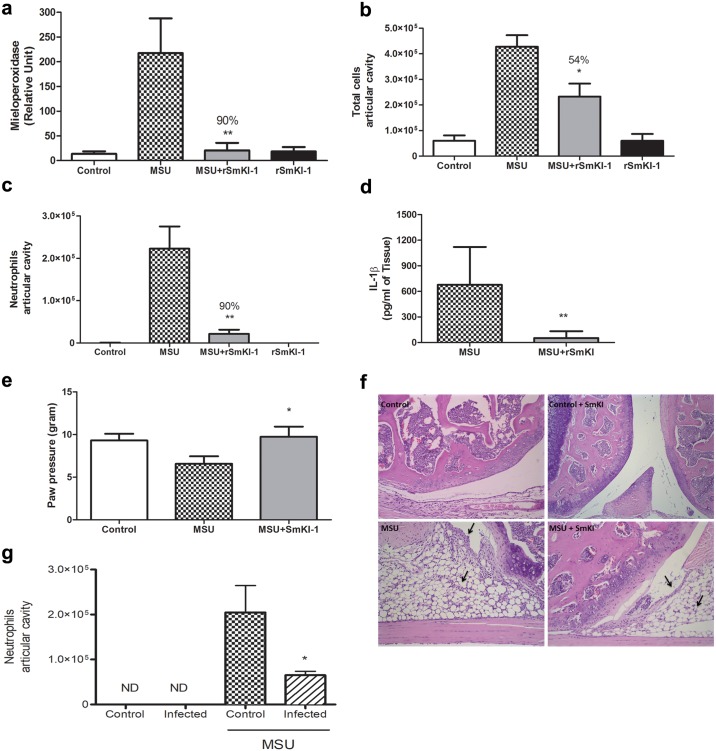
Protease inhibitors have important function during homeostasis, inflammation and tissue injury. In this study, we described the role of Schistosoma mansoni SmKI-1 serine protease inhibitor in parasite development and as a molecule capable of regulating different models of inflammatory diseases. First, we determine that recombinant (r) SmKI-1 and its Kunitz domain but not the C-terminal region possess inhibitory activity against trypsin and neutrophil elastase (NE). To better understand the molecular basis of NE inhibition by SmKI-1, molecular docking studies were also conducted. Docking results suggest a complete blockage of NE active site by SmKI-1 Kunitz domain. Additionally, rSmKI-1 markedly inhibited the capacity of NE to kill schistosomes. In order to further investigate the role of SmKI-1 in the parasite, we designed specific siRNA to knockdown SmKI-1 in S. mansoni. SmKI-1 gene suppression in larval stage of S. mansoni robustly impact in parasite development in vitro and in vivo. To determine the ability of SmKI-1 to interfere with neutrophil migration and function, we tested SmKI-1 anti-inflammatory potential in different murine models of inflammatory diseases. Treatment with SmKI-1 rescued acetaminophen (APAP)-mediated liver damage, with a significant reduction in both neutrophil recruitment and elastase activity. In the model of gout arthritis, this protein reduced neutrophil accumulation, IL-1β secretion, hypernociception, and overall pathological score. Finally, we demonstrated the ability of SmKI-1 to inhibit early events that trigger neutrophil recruitment in pleural cavities of mice in response to carrageenan. In conclusion, SmKI-1 is a key protein in S. mansoni survival and it has the ability to inhibit neutrophil function as a promising therapeutic molecule against inflammatory diseases.
蛋白酶抑制剂在体内平衡、炎症和组织损伤中具有重要作用。在这项研究中,我们描述了曼氏血吸虫 SmKI-1 丝氨酸蛋白酶抑制剂在寄生虫发育中的作用,以及作为一种能够调节不同炎症疾病模型的分子。首先,我们确定重组(r)SmKI-1 及其 Kunitz 结构域而不是 C 末端区域具有抑制胰蛋白酶和中性粒细胞弹性蛋白酶(NE)的活性。为了更好地理解 SmKI-1 抑制 NE 的分子基础,还进行了分子对接研究。对接结果表明 SmKI-1 Kunitz 结构域完全阻止了 NE 的活性位点。此外,rSmKI-1 显著抑制了 NE 杀死血吸虫的能力。为了进一步研究 SmKI-1 在寄生虫中的作用,我们设计了特异性 siRNA 来敲低 S. mansoni 中的 SmKI-1。SmKI-1 基因在曼氏血吸虫幼虫阶段的抑制强烈影响寄生虫在体外和体内的发育。为了确定 SmKI-1 干扰中性粒细胞迁移和功能的能力,我们在不同的炎症性疾病的小鼠模型中测试了 SmKI-1 的抗炎潜力。SmKI-1 治疗挽救了对乙酰氨基酚(APAP)介导的肝损伤,同时显著减少了中性粒细胞的募集和弹性酶活性。在痛风性关节炎模型中,该蛋白减少了中性粒细胞的聚集、IL-1β 的分泌、超敏反应和整体病理评分。最后,我们证明了 SmKI-1 抑制了在对卡拉胶的响应中引发小鼠胸腔中中性粒细胞募集的早期事件的能力。总之,SmKI-1 是 S. mansoni 生存的关键蛋白,它具有抑制中性粒细胞功能的能力,是一种有前途的抗炎疾病治疗分子。