Neuroscience Institute, Department of Neuroscience and Physiology, NYU School of Medicine, New York, NY 10016, USA.
Department of Environment and Agriculture, Curtin University, Bentley, WA 6102, Australia; Australian Regenerative Medicine Institute (ARMI), Monash University, Clayton, VIC 3800, Australia.
Cell. 2018 Feb 8;172(4):667-682.e15. doi: 10.1016/j.cell.2018.01.013.
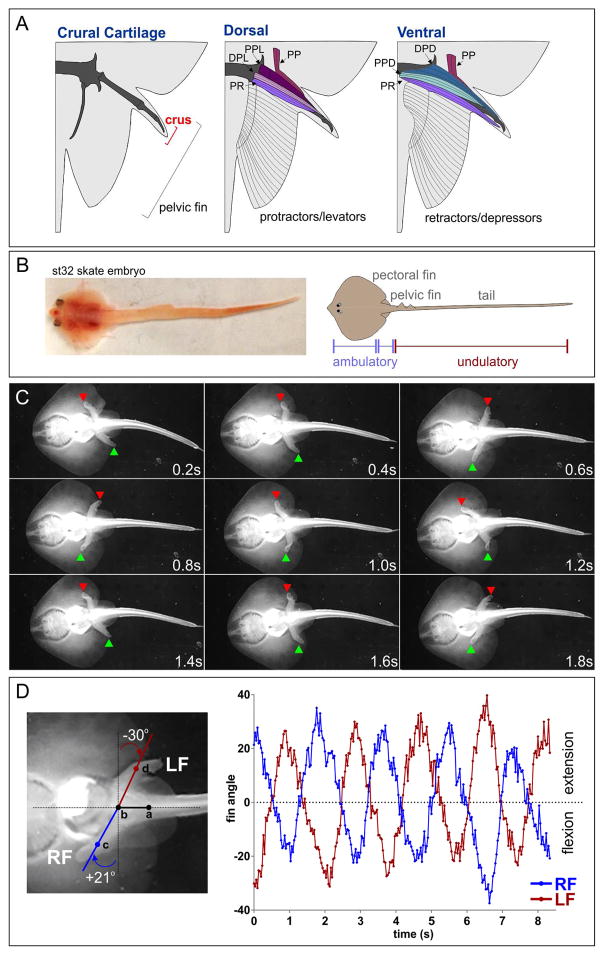
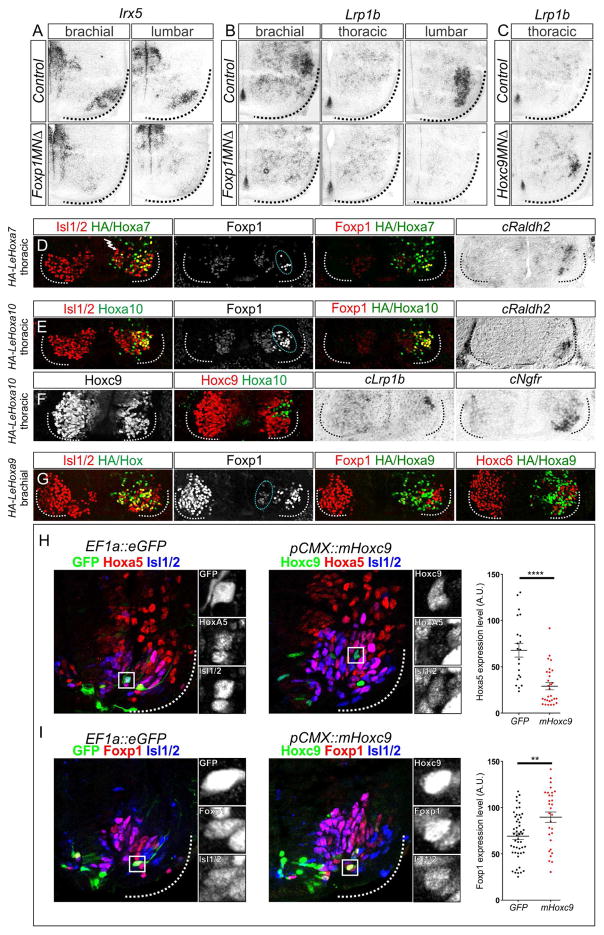
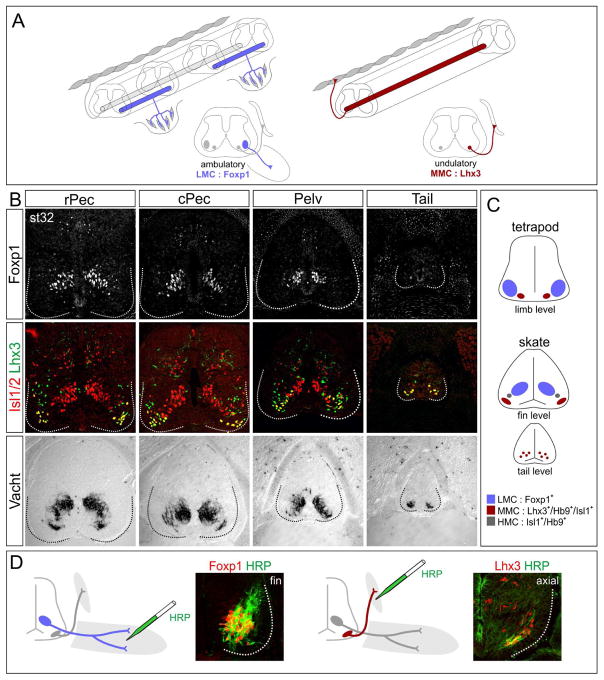
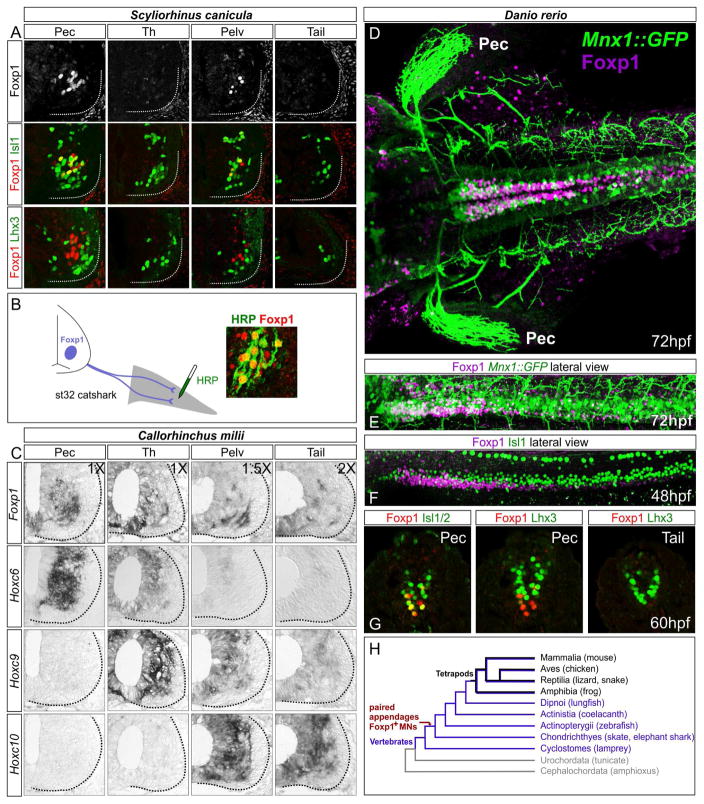
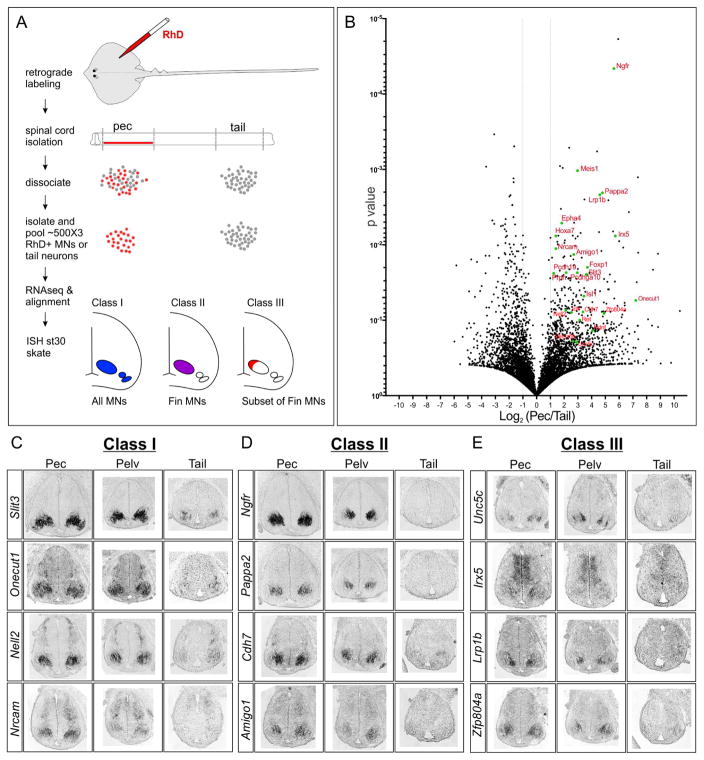
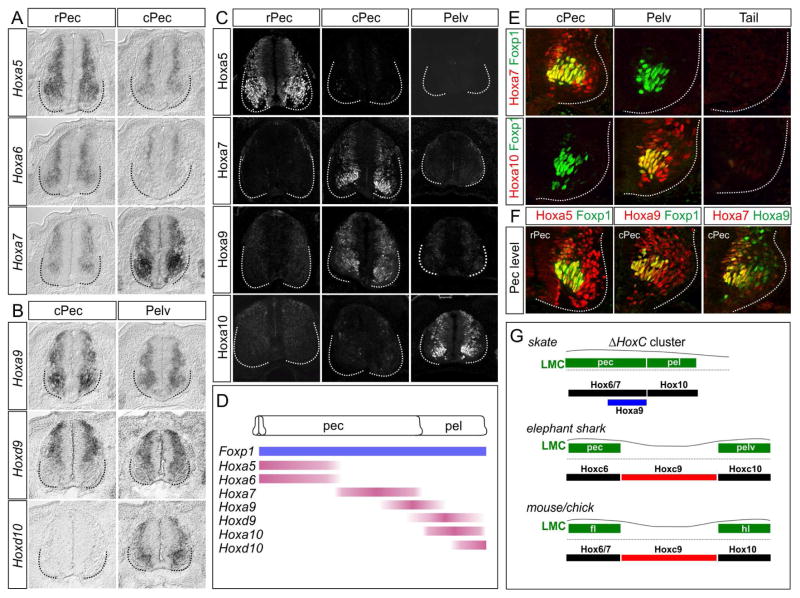
Walking is the predominant locomotor behavior expressed by land-dwelling vertebrates, but it is unknown when the neural circuits that are essential for limb control first appeared. Certain fish species display walking-like behaviors, raising the possibility that the underlying circuitry originated in primitive marine vertebrates. We show that the neural substrates of bipedalism are present in the little skate Leucoraja erinacea, whose common ancestor with tetrapods existed ∼420 million years ago. Leucoraja exhibits core features of tetrapod locomotor gaits, including left-right alternation and reciprocal extension-flexion of the pelvic fins. Leucoraja also deploys a remarkably conserved Hox transcription factor-dependent program that is essential for selective innervation of fin/limb muscle. This network encodes peripheral connectivity modules that are distinct from those used in axial muscle-based swimming and has apparently been diminished in most modern fish. These findings indicate that the circuits that are essential for walking evolved through adaptation of a genetic regulatory network shared by all vertebrates with paired appendages. VIDEO ABSTRACT.
行走是陆地脊椎动物主要的运动行为,但控制肢体的神经回路最初是何时出现的还不得而知。某些鱼类表现出类似行走的行为,这使得人们产生了这样一种可能性,即这种潜在的回路起源于原始的海洋脊椎动物。我们发现,在小鲨鱼 Leucoraja erinacea 中存在着两足动物行走的神经基础,它与四足动物的共同祖先存在于约 4.2 亿年前。Leucoraja 表现出四足动物运动步态的核心特征,包括左右交替和骨盆鳍的相互伸展-弯曲。Leucoraja 还采用了一种非常保守的 Hox 转录因子依赖性程序,该程序对于鳍/肢体肌肉的选择性神经支配至关重要。这个网络编码了外围连接模块,这些模块与用于基于轴向肌肉的游泳的模块不同,并且在大多数现代鱼类中显然已经减少。这些发现表明,对于行走至关重要的回路是通过适应所有具有成对附肢的脊椎动物共享的遗传调控网络而进化而来的。