Department of Limnology and Bio-Oceanography, University of Vienna, Vienna, Austria.
Department of Microbiology and Ecosystem Science, Research Network "Chemistry meets Microbiology" and Large-Instrument Facility for Advanced Isotope Research, University of Vienna, Vienna, Austria.
ISME J. 2018 Mar;12(3):714-727. doi: 10.1038/s41396-018-0069-1. Epub 2018 Feb 9.
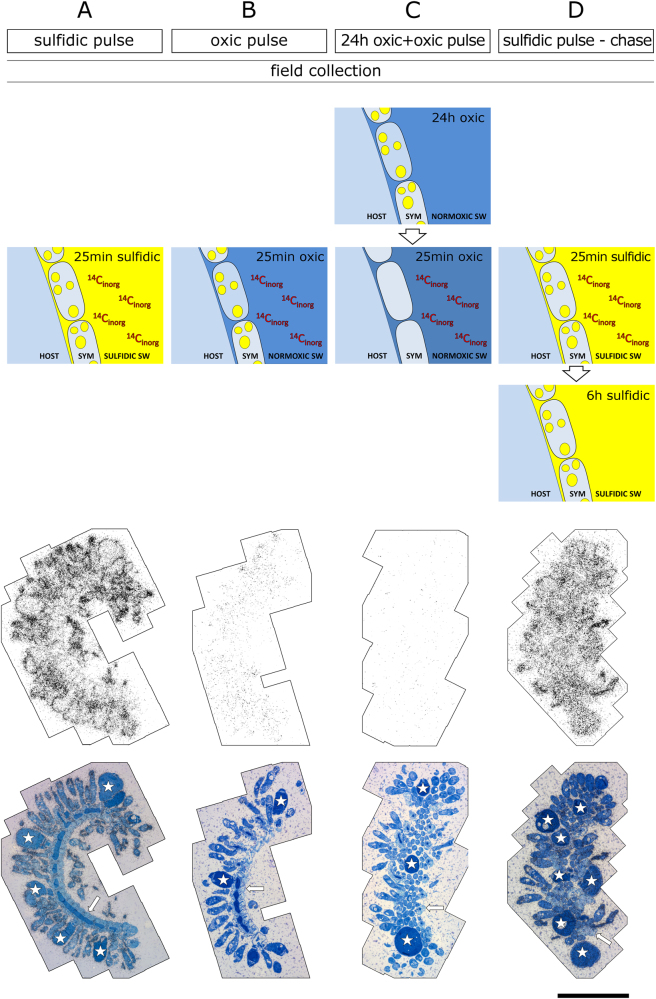
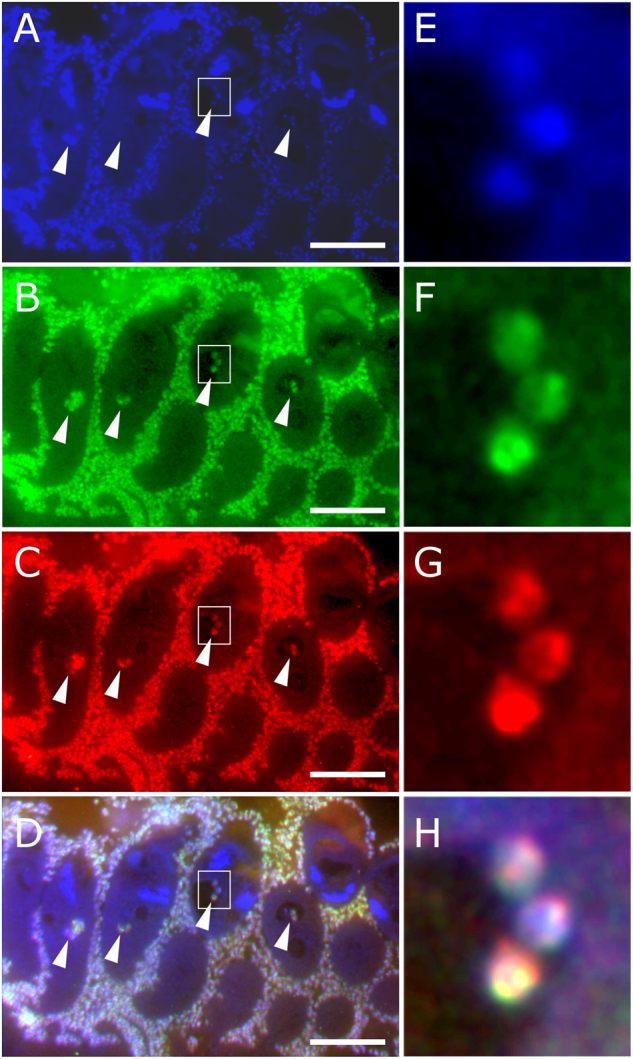
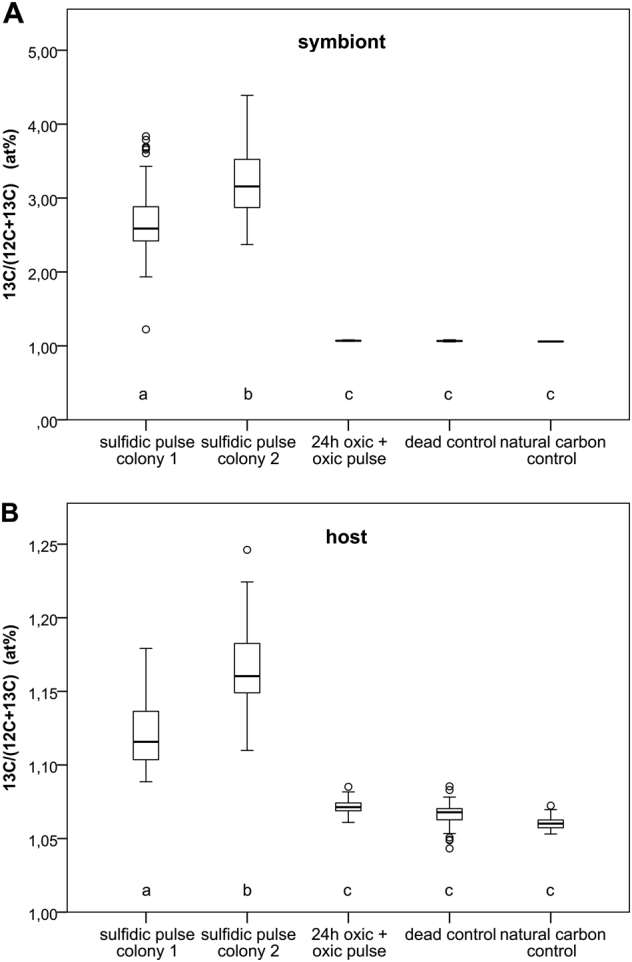
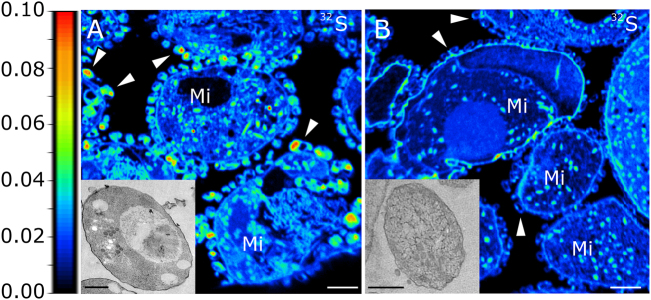
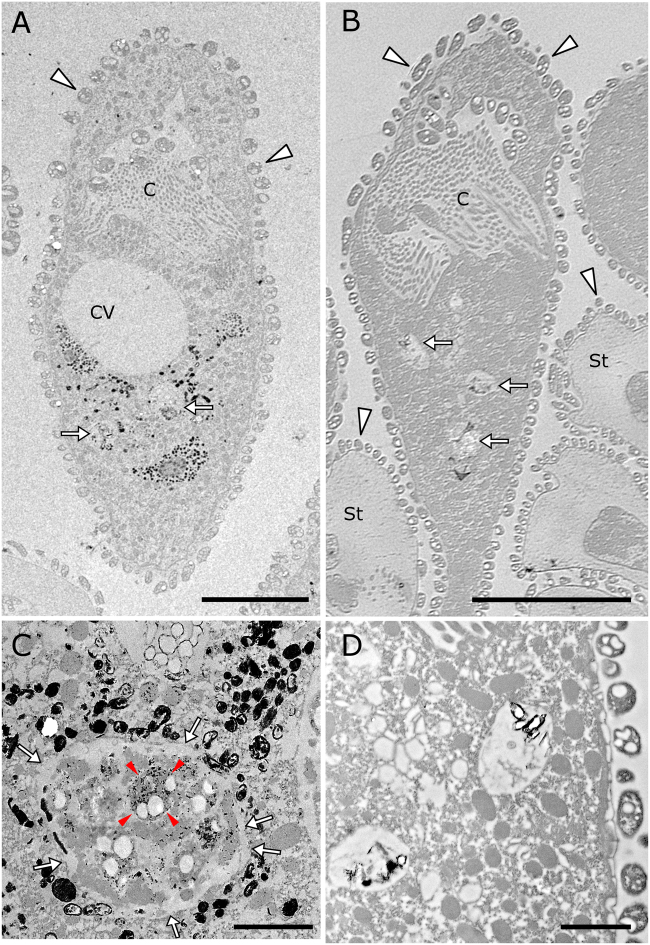
The giant colonial ciliate Zoothamnium niveum harbors a monolayer of the gammaproteobacteria Cand. Thiobios zoothamnicoli on its outer surface. Cultivation experiments revealed maximal growth and survival under steady flow of high oxygen and low sulfide concentrations. We aimed at directly demonstrating the sulfur-oxidizing, chemoautotrophic nature of the symbionts and at investigating putative carbon transfer from the symbiont to the ciliate host. We performed pulse-chase incubations with C- and C-labeled bicarbonate under varying environmental conditions. A combination of tissue autoradiography and nanoscale secondary ion mass spectrometry coupled with transmission electron microscopy was used to follow the fate of the radioactive and stable isotopes of carbon, respectively. We show that symbiont cells fix substantial amounts of inorganic carbon in the presence of sulfide, but also (to a lesser degree) in the absence of sulfide by utilizing internally stored sulfur. Isotope labeling patterns point to translocation of organic carbon to the host through both release of these compounds and digestion of symbiont cells. The latter mechanism is also supported by ultracytochemical detection of acid phosphatase in lysosomes and in food vacuoles of ciliate cells. Fluorescence in situ hybridization of freshly collected ciliates revealed that the vast majority of ingested microbial cells were ectosymbionts.
巨型群体纤毛虫 Zoothamnium niveum 的外表面上栖息着一层 γ 变形菌 Cand. Thiobios zoothamnicoli。培养实验表明,在高氧和低硫化物浓度稳定流动的条件下,共生体能够实现最大程度的生长和存活。我们旨在直接证明共生体的硫氧化、化能自养性质,并研究共生体向纤毛虫宿主可能的碳转移。我们在不同的环境条件下进行了 C 和 C 标记的碳酸氢盐脉冲追踪孵育。我们结合组织放射自显影和纳米级二次离子质谱与透射电子显微镜联用,分别追踪放射性和稳定同位素碳的命运。我们表明,在有硫化物存在的情况下,共生体细胞能够固定大量的无机碳,但在没有硫化物的情况下,也可以通过利用内部储存的硫来固定碳。同位素标记模式表明,通过释放这些化合物和消化共生体细胞,将有机碳转移到宿主中。溶酶体和纤毛虫细胞的食物泡中酸性磷酸酶的超微细胞化学检测也支持后一种机制。对新收集的纤毛虫进行荧光原位杂交显示,绝大多数摄入的微生物细胞都是外共生体。