Dou Xiujing, Li Yang, Han Junlan, Zarlenga Dante S, Zhu Weijuan, Ren Xiaofeng, Dong Na, Li Xunliang, Li Guangxing
Northeast Agricultural University, No. 59 Mucai Street, Xiangfang District, Harbin, 150030, China.
Animal Parasitic Diseases Laboratory, Agricultural Research Service, United States Department of Agriculture, Building 1180, BARC-East, Beltsville, MD, 20705, USA.
BMC Vet Res. 2018 Feb 12;14(1):45. doi: 10.1186/s12917-018-1366-7.
Lipid rafts are major structural components in plasma membranes that play critical roles in many biological processes including virus infection. However, few reports have described the relationship between lipid rafts and porcine rotavirus (PRV) infection. In this study, we investigated whether or not the locally high concentrations (3-5 fold) of cholesterol present in lipid rafts are required for PRV infection, and further examined which stages of the infection process are most affected.
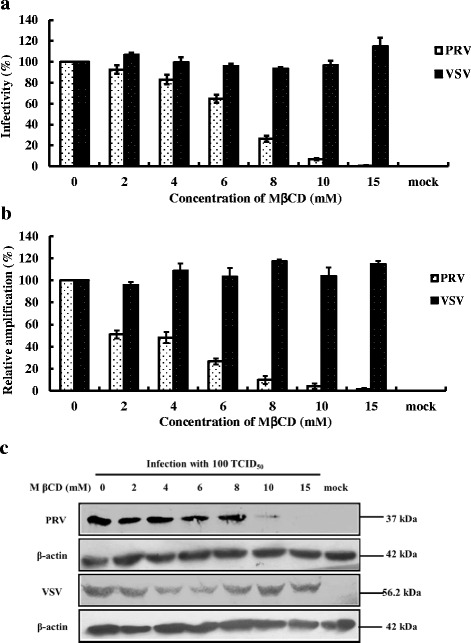
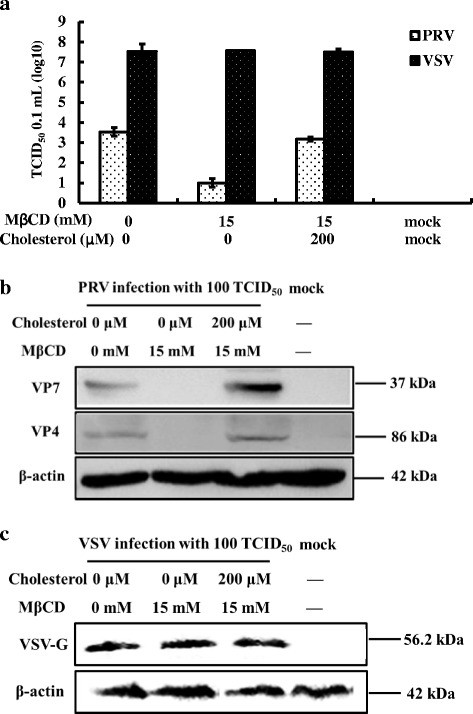
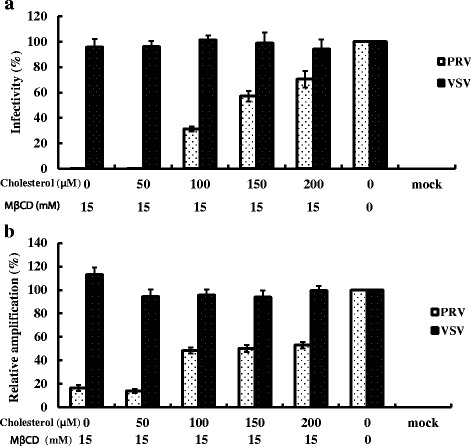
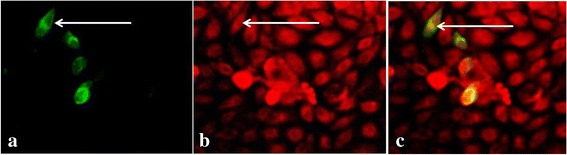
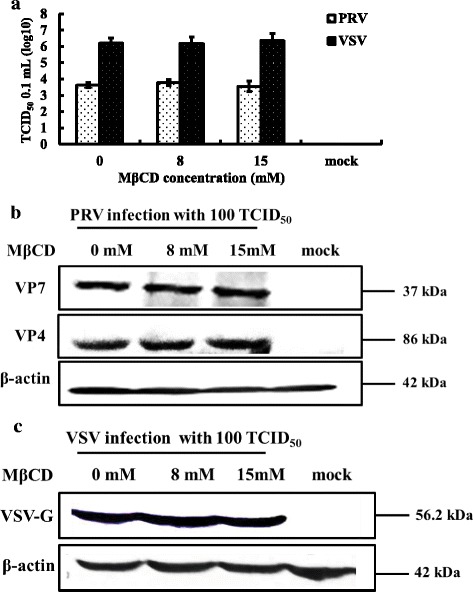
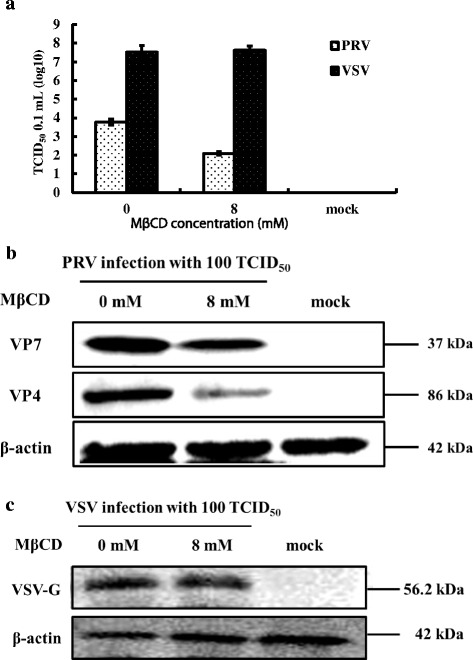
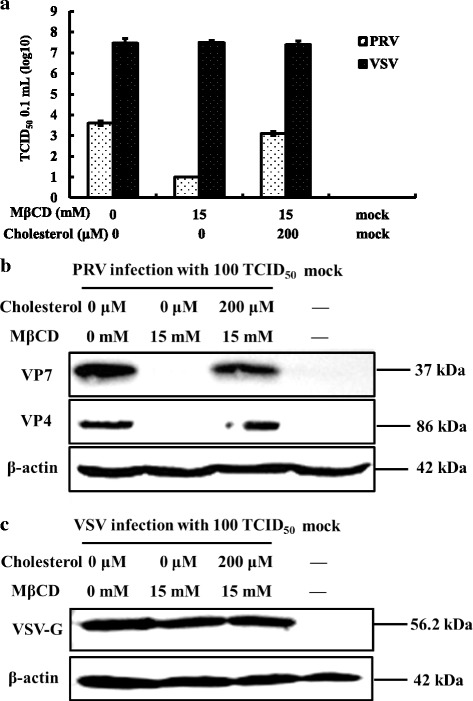
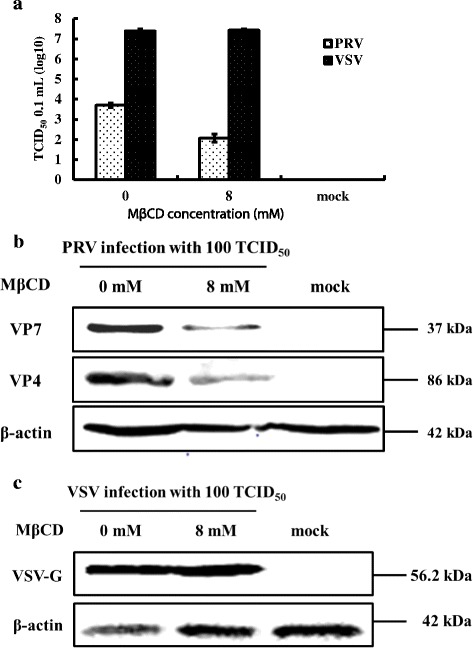
When cellular cholesterol was depleted by methyl-β-cyclodextrin (MβCD), PRV infectivity significantly declined in a dose-dependent manner. This inhibition was partially reversed upon reintroduction of cholesterol into the system. This was corroborated by the co-localization of PRV with a recombinant, GPI-anchored green fluorescent protein, which functioned as a marker for membranous regions high in cholesterol and indicative of lipid rafts. Changes in virus titer and western blot analyses indicated that depletion of cellular cholesterol with MβCD had no apparent effect on PRV adsorption; however, depletion of cholesterol significantly restricted entry and post-entry of PRV into the cell. Both points of inhibition were restored to near normal levels by the addition of exogenous cholesterol.
We conclude from these studies that membrane-based cholesterol and in particular that localized to lipid rafts, is an indispensable biomolecule for PRV infection, and that cholesterol-based control of the infection process takes place during entry and immediately post-entry into the cell.
脂筏是质膜中的主要结构成分,在包括病毒感染在内的许多生物学过程中发挥关键作用。然而,很少有报道描述脂筏与猪轮状病毒(PRV)感染之间的关系。在本研究中,我们调查了PRV感染是否需要脂筏中存在的局部高浓度(3 - 5倍)胆固醇,并且进一步研究了感染过程的哪些阶段受影响最大。
当用甲基-β-环糊精(MβCD)消耗细胞胆固醇时,PRV感染性以剂量依赖性方式显著下降。在将胆固醇重新引入系统后,这种抑制作用部分逆转。PRV与重组的糖基磷脂酰肌醇锚定绿色荧光蛋白的共定位证实了这一点,该蛋白作为胆固醇含量高的膜区域的标志物,指示脂筏。病毒滴度变化和蛋白质印迹分析表明,用MβCD消耗细胞胆固醇对PRV吸附没有明显影响;然而,胆固醇的消耗显著限制了PRV进入细胞和进入细胞后的过程。通过添加外源性胆固醇,这两个抑制点都恢复到接近正常水平。
我们从这些研究中得出结论,基于膜的胆固醇,特别是定位于脂筏的胆固醇,是PRV感染不可或缺的生物分子,并且基于胆固醇对感染过程的控制发生在进入细胞和进入细胞后立即进行的阶段。