Department of Nuclear Medicine, The Affiliated Hospital of Jiangsu University, Zhenjiang, China.
Institute of Oncology, The Affiliated Hospital of Jiangsu University, Zhenjiang, China.
Front Immunol. 2018 Jan 29;9:96. doi: 10.3389/fimmu.2018.00096. eCollection 2018.
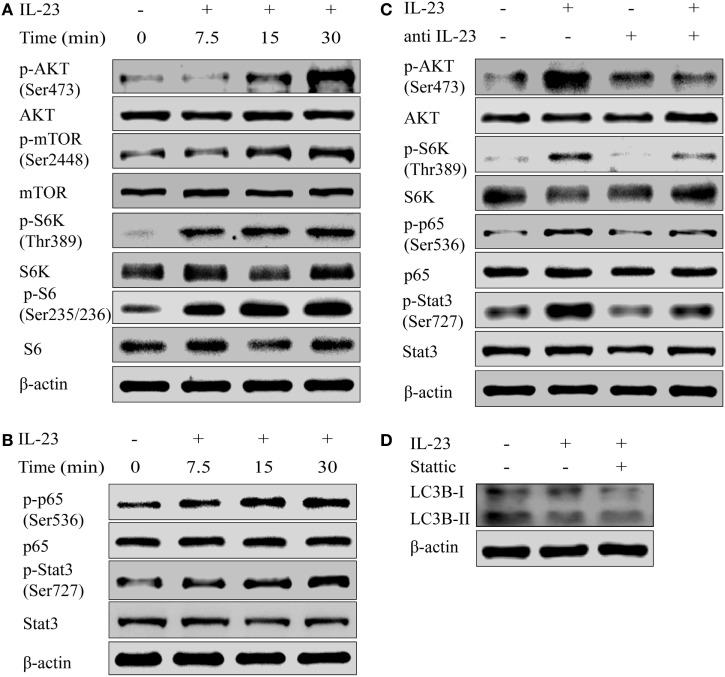
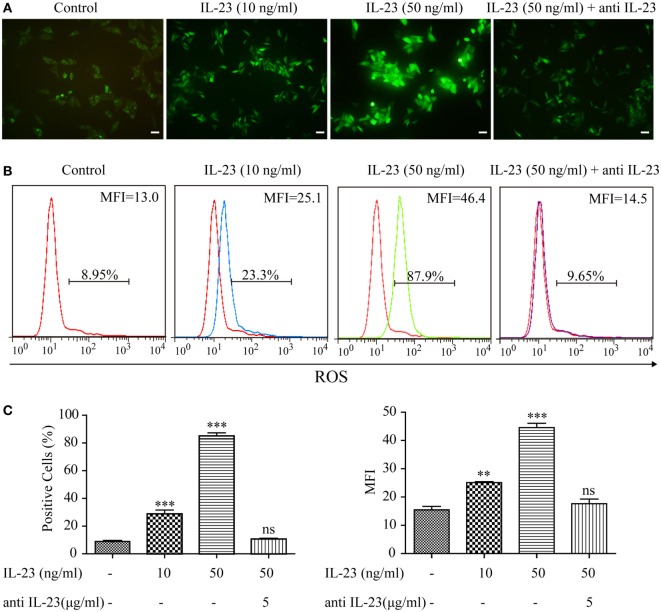
Hashimoto's thyroiditis (HT) represents the most common organ-specific autoimmune disease. Inflammatory factors and reactive oxygen species (ROS) play detrimental roles during the pathogenesis of HT. In this study, we found that thyroid follicular cells (TFCs) from HT patients expressed an elevated level of interleukin-23 (IL-23), which contributed to autophagy suppression and ROS accumulation. Additionally, IL-23-induced autophagy suppression and ROS accumulation in human TFCs was attributed to AKT/mTOR/NF-κB signaling pathway activation. Inhibition of either IL-23 by a specific neutralization antibody, or mTOR by rapamycin, or NF-κB by IKK-16, significantly reversed the autophagy suppression and ROS accumulation. These results demonstrate a key role for IL-23 in HT pathogenesis and provide a potential therapeutic strategy against IL-23 or its signaling pathway in HT.
桥本甲状腺炎(HT)是最常见的器官特异性自身免疫性疾病。在 HT 的发病机制中,炎症因子和活性氧(ROS)起着有害的作用。在这项研究中,我们发现 HT 患者的甲状腺滤泡细胞(TFCs)表达高水平的白细胞介素-23(IL-23),这导致自噬抑制和 ROS 积累。此外,IL-23 诱导的人 TFCs 中的自噬抑制和 ROS 积累归因于 AKT/mTOR/NF-κB 信号通路的激活。通过特异性中和抗体抑制 IL-23,或通过雷帕霉素抑制 mTOR,或通过 IKK-16 抑制 NF-κB,均能显著逆转自噬抑制和 ROS 积累。这些结果表明 IL-23 在 HT 的发病机制中起着关键作用,并为针对 HT 中的 IL-23 或其信号通路提供了一种潜在的治疗策略。