Zhang Yue, Wang Yaoyi, Xue Jun
Department of Mammography Surgery, The First Affiliated Hospital of Hebei North University, Zhangjiakou, Hebei 075000, P.R. China.
Department of Radiology, The First Affiliated Hospital of Hebei North University, Zhangjiakou, Hebei 075000, P.R. China.
Exp Ther Med. 2018 Feb;15(2):1269-1276. doi: 10.3892/etm.2017.5588. Epub 2017 Dec 1.
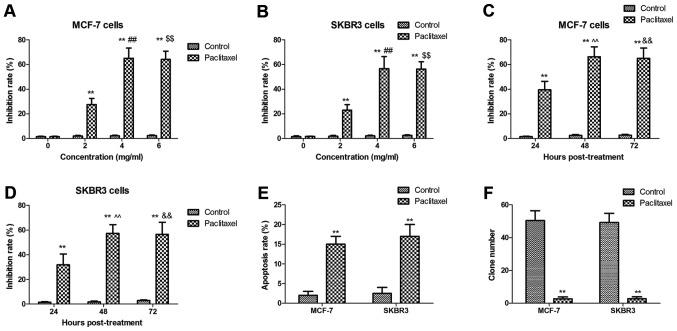
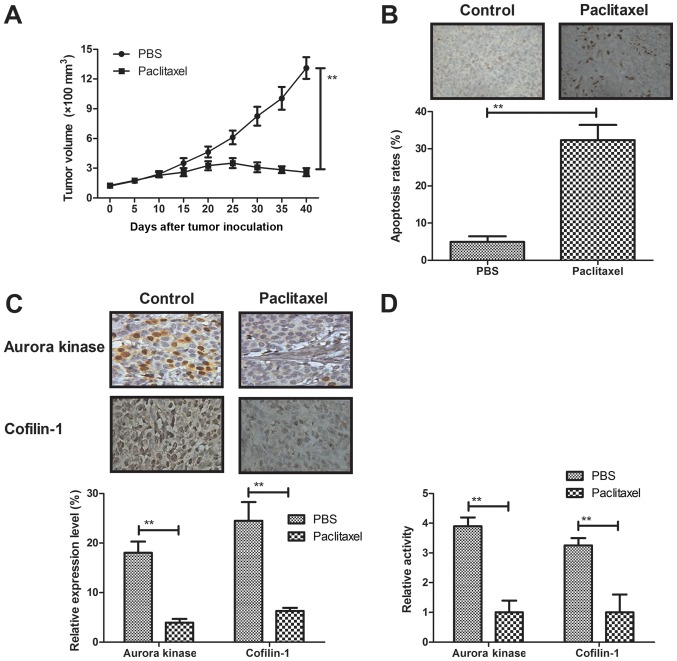
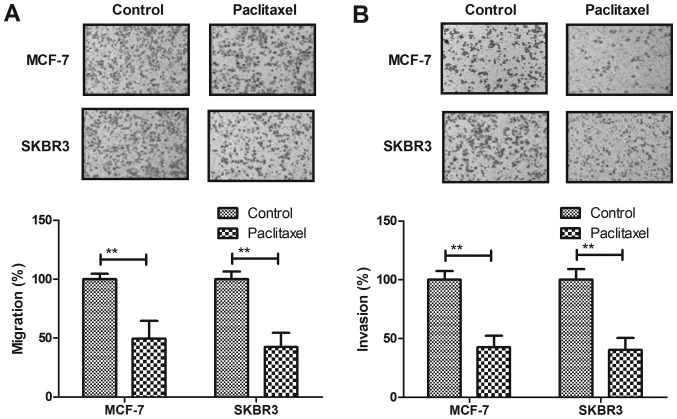
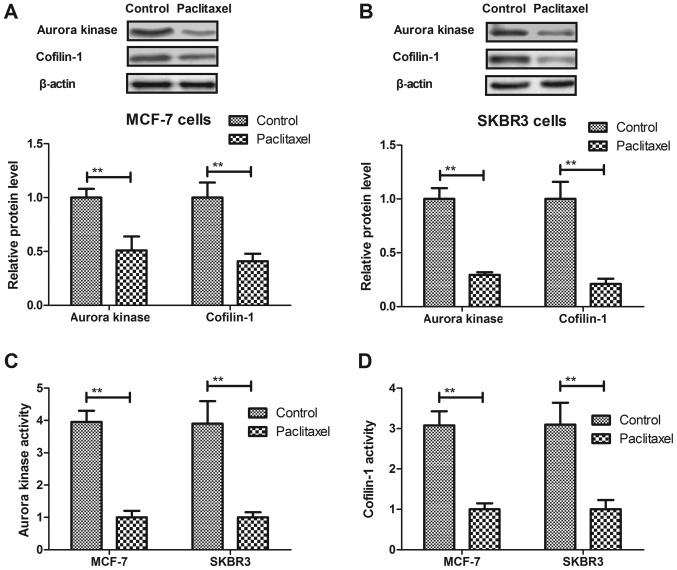
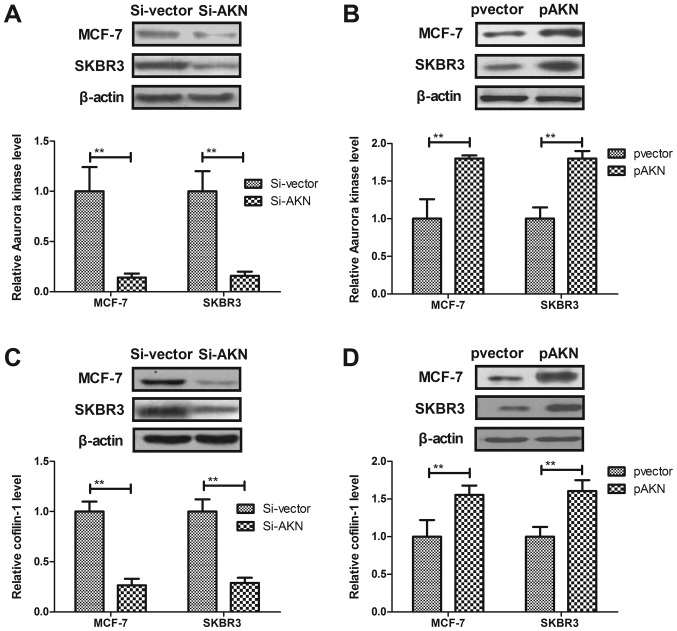
The main problem in breast cancer treatment is the recurrence of tumor growth and metastases. Previous studies have suggested that Paclitaxel is widely used to treat various cancers. The present study analyzed the potential signaling pathway of Paclitaxel-inhibited breast cancer metastasis. It was demonstrated that Paclitaxel treatment significantly inhibited growth of breast cancer cell lines including MCF-7 and SKBR3 cells. Results demonstrated that Paclitaxel significantly inhibited breast cancer cell migration and invasion. Results additionally demonstrated that Paclitaxel treatment suppressed Aurora kinase and cofilin-1 activity in breast cancer cells. The potential mechanism indicated that activation of Aurora kinase activity stimulated cofilin-1 activity, which canceled Paclitaxel-inhibited growth and aggressiveness of breast cancer cells. An assay revealed that Paclitaxel treatment significantly inhibited breast cancer growth. Immunohistochemistry demonstrated that Paclitaxel treatment increased apoptosis of tumor cells in tumor tissue. Notably, Aurora kinase and cofilin-1 activity were downregulated by Paclitaxel in tumor tissues. In conclusion, these results indicated that Paclitaxel inhibited breast cancer cell growth and metastasis via suppression of Aurora kinase-mediated cofilin-1 activity, suggesting Paclitaxel may be an efficient anticancer agent for the treatment of this disease.
乳腺癌治疗中的主要问题是肿瘤生长和转移的复发。先前的研究表明,紫杉醇被广泛用于治疗各种癌症。本研究分析了紫杉醇抑制乳腺癌转移的潜在信号通路。结果表明,紫杉醇处理显著抑制了包括MCF-7和SKBR3细胞在内的乳腺癌细胞系的生长。结果还表明,紫杉醇显著抑制乳腺癌细胞的迁移和侵袭。此外,结果显示紫杉醇处理抑制了乳腺癌细胞中极光激酶和丝切蛋白-1的活性。潜在机制表明,极光激酶活性的激活刺激了丝切蛋白-1的活性,从而抵消了紫杉醇对乳腺癌细胞生长和侵袭性的抑制作用。一项试验表明,紫杉醇处理显著抑制了乳腺癌的生长。免疫组织化学显示,紫杉醇处理增加了肿瘤组织中肿瘤细胞的凋亡。值得注意的是,在肿瘤组织中,紫杉醇下调了极光激酶和丝切蛋白-1的活性。总之,这些结果表明,紫杉醇通过抑制极光激酶介导的丝切蛋白-1活性来抑制乳腺癌细胞的生长和转移,提示紫杉醇可能是治疗该疾病的一种有效抗癌药物。