Lin Shaohuan, Lv Junhong, Peng Panli, Cai Changqing, Deng Jianming, Deng Haihong, Li Xuejun, Tang Xinyue
Thoracic Surgeons Department, Guangdong Second Provincial General Hospital, Guangzhou, Guangdong 510317, P.R. China.
Oncology No. 2 Department, Guangdong Second Provincial General Hospital, Guangzhou, Guangdong 510317, P.R. China.
Oncol Lett. 2018 Feb;15(2):1566-1572. doi: 10.3892/ol.2017.7457. Epub 2017 Nov 21.
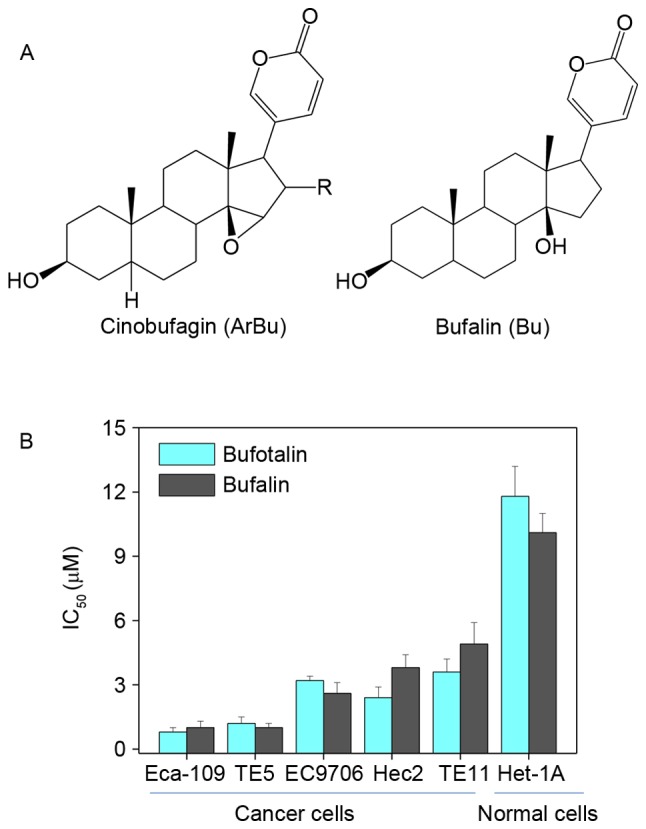
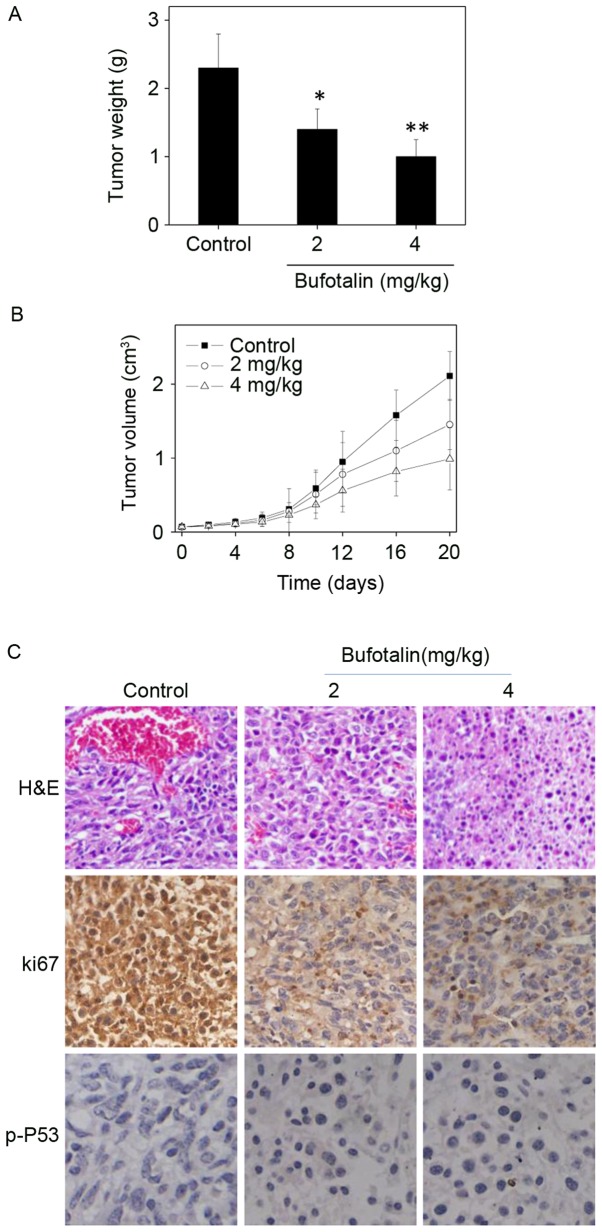
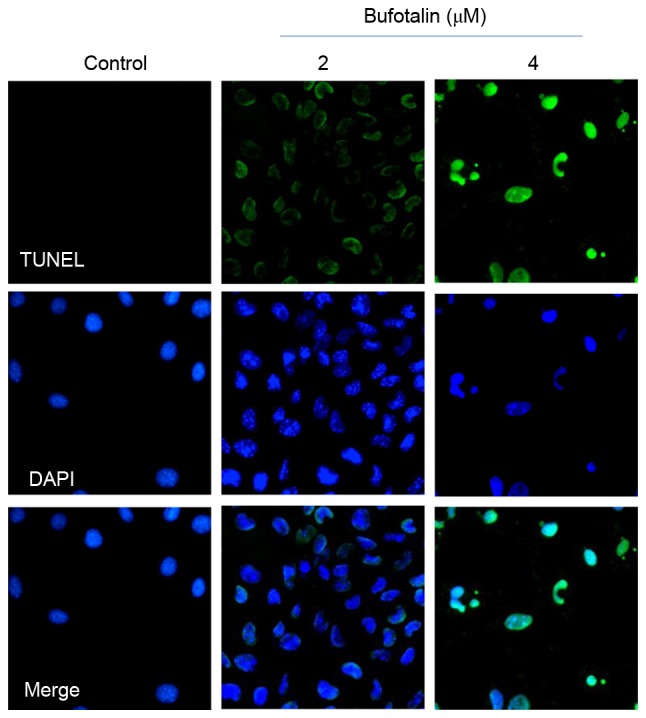
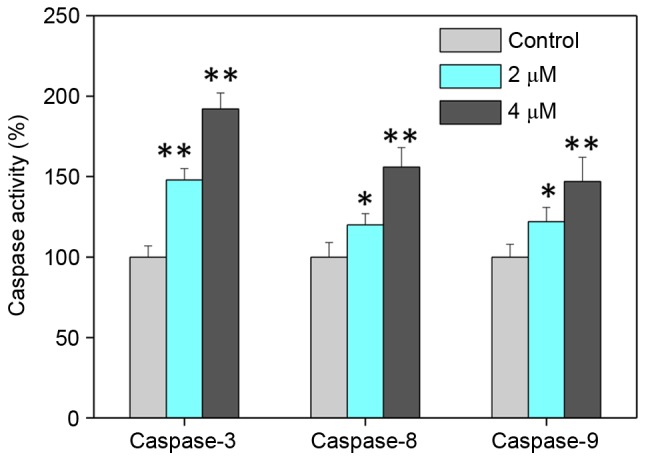
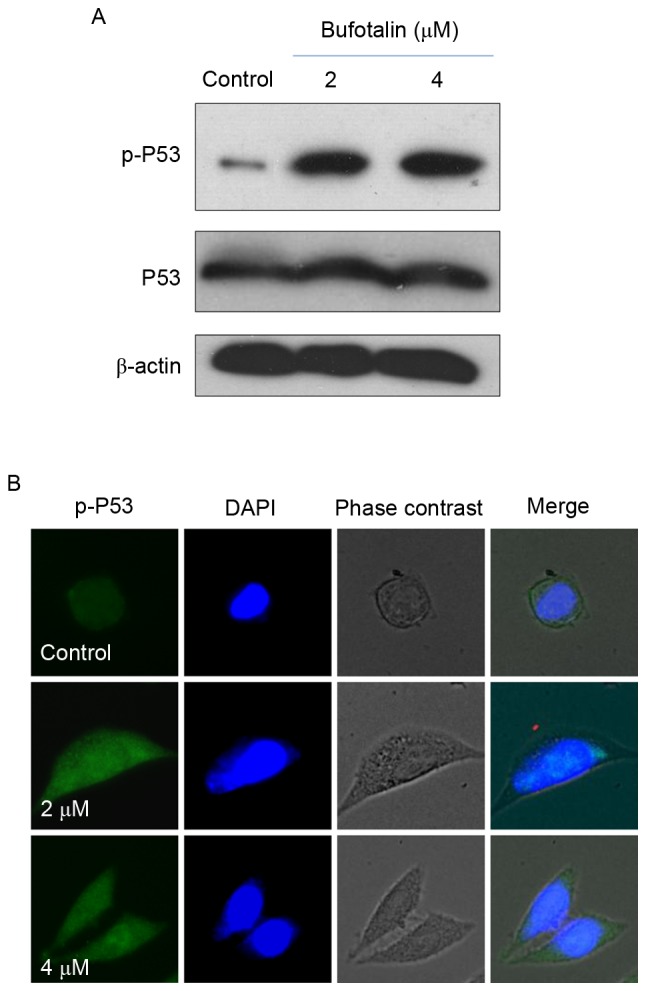
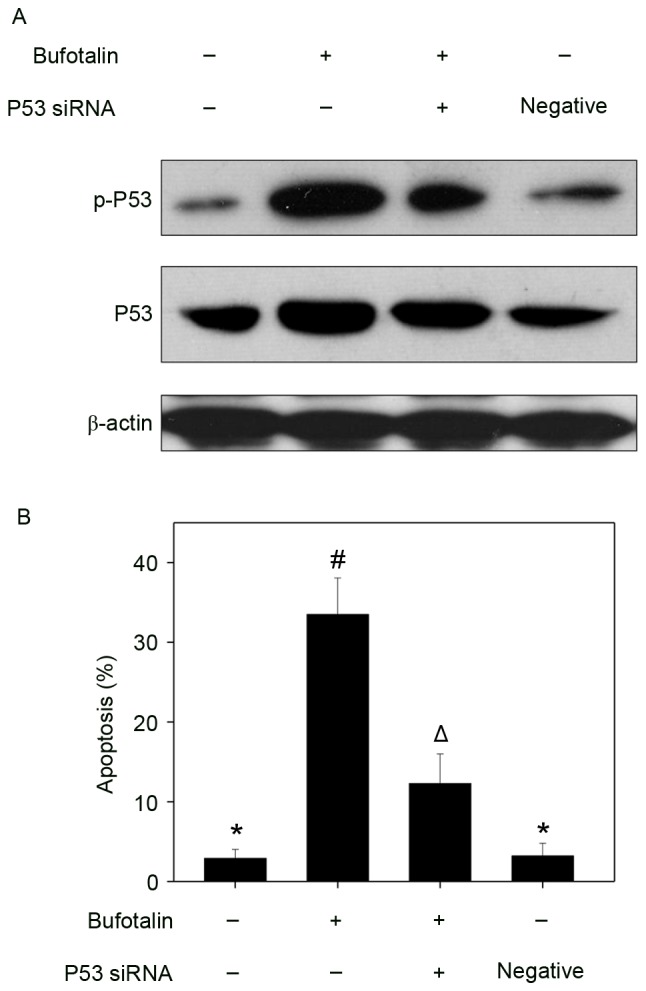
Bufadienolides are a type of cardiotonic steroids isolated from the skin and parotid venom glands of the toad Cantor, and exhibit wide-spectrum anticancer activities. However, the effects and mechanisms of bufadienolides on esophageal squamous cell carcinoma (ESCC) cells remain unknown. In the present study, the anticancer activities of two bufadienolides, bufotalin and bufalin, were examined and . The results demonstrated that bufotalin and bufalin effectively inhibited the viability of ESCC cells, with half-maximal inhibitory concentration (IC) values of 0.8-3.6 µM. However, bufotalin and bufalin exhibited lower toxicity towards Het-1A human esophageal squamous cells, indicating their high selectivity towards cancer cells. Mechanistic studies revealed that bufotalin effectively induced ESCC cell apoptosis, as characterized by DNA fragmentation and nuclear condensation, which was primarily mediated through activation of caspase family members. In addition, treatment of ESCC cells with bufotalin markedly activated tumor protein p53 (p53) phosphorylation. Transfection of cells with p53 small interfering RNA markedly inhibited bufotalin-induced p53 phosphorylation and significantly inhibited bufotalin-induced cell apoptosis. Furthermore, bufotalin demonstrated anticancer efficacy in a tumor-bearing nude mice model, where bufotalin effectively inhibited Eca-109 xenograft tumor growth in a time- and dose-dependent manner, through activation of the p53 signaling pathway. Collectively, the results from the present study suggested that bufadienolides exert anticancer effects against ESCC by regulating the p53 signaling pathway.
蟾蜍二烯羟酸内酯是一类从蟾蜍的皮肤和腮腺毒腺中分离出的强心甾体,具有广谱抗癌活性。然而,蟾蜍二烯羟酸内酯对食管鳞状细胞癌(ESCC)细胞的作用及机制仍不清楚。在本研究中,检测了两种蟾蜍二烯羟酸内酯,即蟾毒灵和(bufalin,此处原文似乎有误,可能是bufalin)的抗癌活性。结果表明,蟾毒灵和(bufalin)能有效抑制ESCC细胞的活力,半数最大抑制浓度(IC)值为0.8 - 3.6µM。然而,蟾毒灵和(bufalin)对Het-1A人食管鳞状细胞的毒性较低,表明它们对癌细胞具有高选择性。机制研究表明,蟾毒灵可有效诱导ESCC细胞凋亡,其特征为DNA片段化和核浓缩,这主要是通过激活半胱天冬酶家族成员介导的。此外,用蟾毒灵处理ESCC细胞可显著激活肿瘤蛋白p53(p53)的磷酸化。用p53小干扰RNA转染细胞可显著抑制蟾毒灵诱导的p53磷酸化,并显著抑制蟾毒灵诱导的细胞凋亡。此外,蟾毒灵在荷瘤裸鼠模型中显示出抗癌效果,在该模型中,蟾毒灵通过激活p53信号通路,以时间和剂量依赖的方式有效抑制Eca-109异种移植瘤的生长。总的来说,本研究结果表明,蟾蜍二烯羟酸内酯通过调节p53信号通路对ESCC发挥抗癌作用。