Tarekegn Getinet Mekuriaw, Tesfaye Kassahun, Mwai Okeyo Ally, Djikeng Appolinaire, Dessie Tadelle, Birungi Josephine, Osama Sarah, Zergaw Netsanet, Alemu Alubel, Achieng Gloria, Tutah Jack, Mutai Collins, Njuguna Joyce, Mwacharo Joram M
Department of Microbial, Cellular and Molecular Biology Addis Ababa University Addis Ababa Ethiopia.
International Livestock Research Institute (ILRI) Addis Ababa Ethiopia.
Ecol Evol. 2018 Jan 3;8(3):1543-1553. doi: 10.1002/ece3.3710. eCollection 2018 Feb.
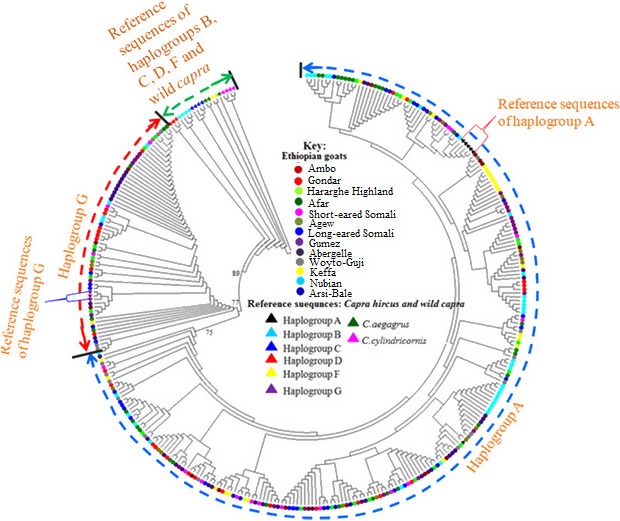
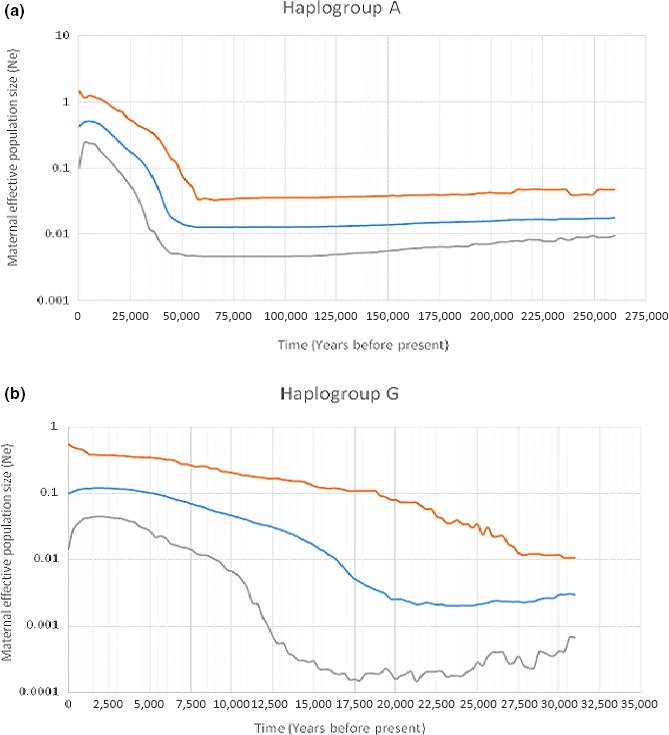
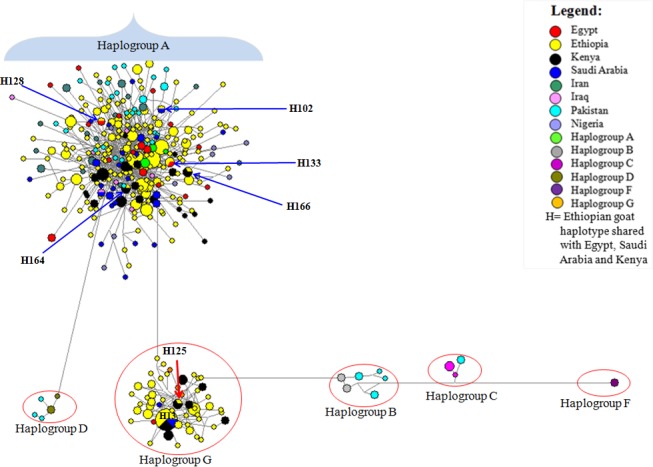
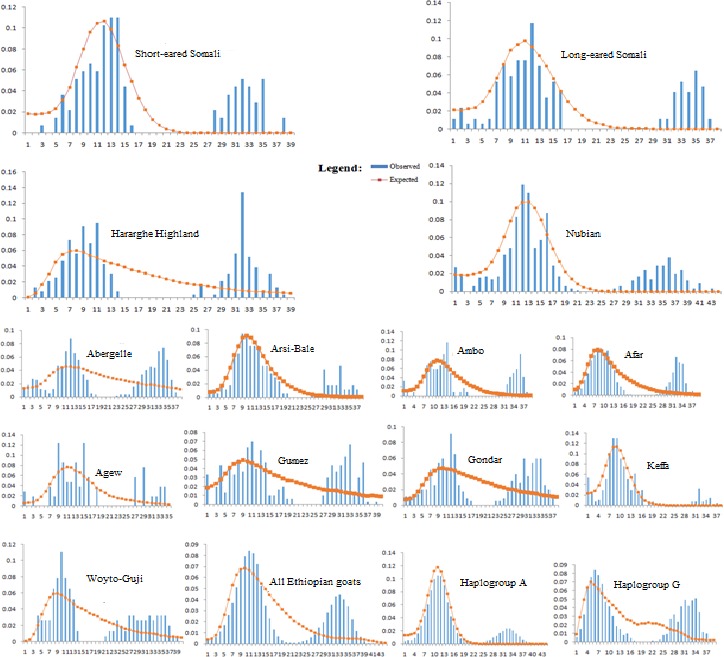
The Horn of Africa forms one of the two main historical entry points of domestics into the continent and Ethiopia is particularly important in this regard. Through the analysis of mitochondrial DNA (mtDNA) -loop region in 309 individuals from 13 populations, we reveal the maternal genetic variation and demographic dynamics of Ethiopian indigenous goats. A total of 174 variable sites that generated 231 haplotypes were observed. They defined two haplogroups that were present in all the 13 study populations. Reference haplotypes from the six globally defined goat mtDNA haplogroups show the two haplogroups present in Ethiopia to be A and G, the former being the most predominant. Although both haplogroups are characterized by an increase in effective population sizes () predating domestication, they also have experienced a decline in at different time periods, suggesting different demographic histories. We observed seven haplotypes, six were directly linked to the central haplotypes of the two haplogroups and one was central to haplogroup G. The seven haplotypes were common between Ethiopia, Kenya, Egypt, and Saudi Arabia populations, suggesting common maternal history and the introduction of goats into East Africa via Egypt and the Arabian Peninsula, respectively. While providing new mtDNA data from a historically important region, our results suggest extensive intermixing of goats mediated by human socio-cultural and economic interactions. These have led to the coexistence of the two haplogroups in different geographic regions in Ethiopia resulting in a large caprine genetic diversity that can be exploited for genetic improvement.
非洲之角是家畜进入该大陆的两个主要历史切入点之一,在这方面埃塞俄比亚尤为重要。通过对来自13个群体的309个个体的线粒体DNA(mtDNA)环区进行分析,我们揭示了埃塞俄比亚本土山羊的母系遗传变异和种群动态。共观察到174个可变位点,产生了231个单倍型。它们定义了两个单倍群,这两个单倍群存在于所有13个研究群体中。来自全球定义的六个山羊mtDNA单倍群的参考单倍型表明,埃塞俄比亚存在的两个单倍群是A和G,前者最为主要。尽管两个单倍群的特征都是在驯化前有效种群大小()增加,但它们在不同时期也经历了下降,这表明了不同的种群历史。我们观察到七个单倍型,其中六个与两个单倍群的中心单倍型直接相关,一个是单倍群G的中心单倍型。这七个单倍型在埃塞俄比亚、肯尼亚、埃及和沙特阿拉伯的种群中很常见,这表明它们有共同的母系历史,并且山羊分别是通过埃及和阿拉伯半岛引入东非的。在提供来自一个具有历史重要性地区的新mtDNA数据的同时,我们的结果表明,山羊通过人类社会文化和经济互动进行了广泛的混合。这些导致了两个单倍群在埃塞俄比亚不同地理区域共存,从而产生了可用于遗传改良的大量山羊遗传多样性。