School of Life Sciences, the University of Nottingham, University Park, Nottingham, NG7 2RD, UK.
University of Anbar, Ministry of Higher Education and Scientific Research, Anbar, Iraq.
BMC Genet. 2020 Mar 14;21(1):30. doi: 10.1186/s12863-020-0830-0.
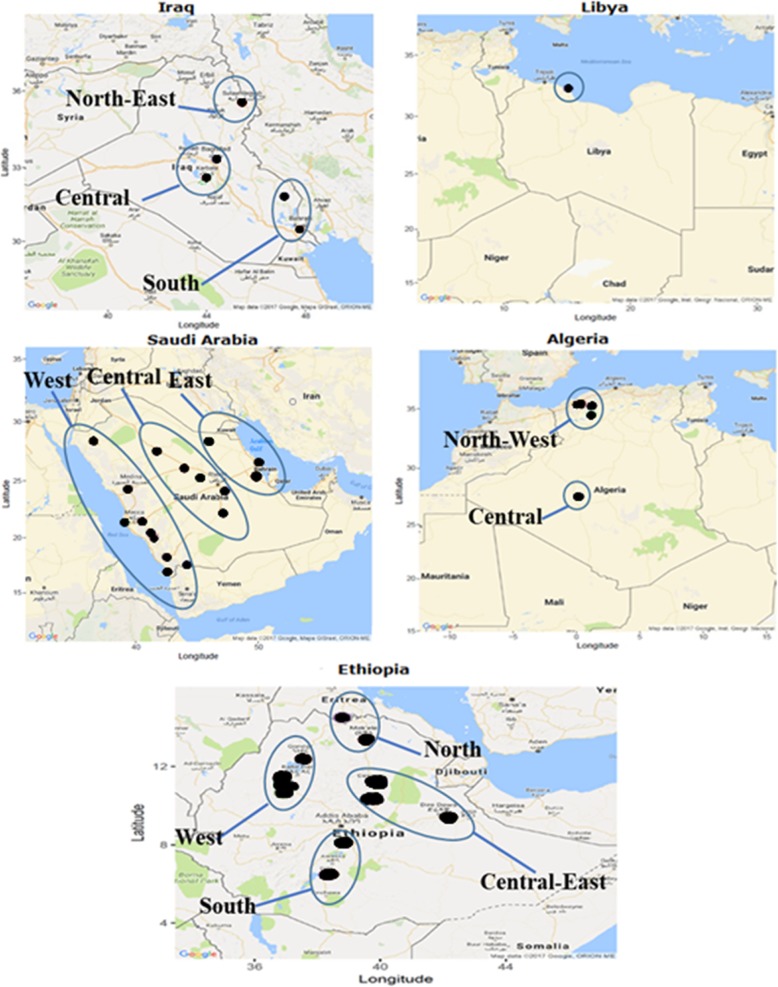
Indigenous domestic chicken represents a major source of protein for agricultural communities around the world. In the Middle East and Africa, they are adapted to hot dry and semi-dry areas, in contrast to their wild ancestor, the Red junglefowl, which lives in humid and sub-humid tropical areas. Indigenous populations are declining following increased demand for poultry meat and eggs, favouring the more productive exotic commercial breeds. In this paper, using the D-loop of mitochondrial DNA as a maternally inherited genetic marker, we address the question of the origin and dispersal routes of domestic chicken of the Middle East (Iraq and Saudi Arabia), the northern part of the African continent (Algeria and Libya) and the Horn of Africa (Ethiopia).
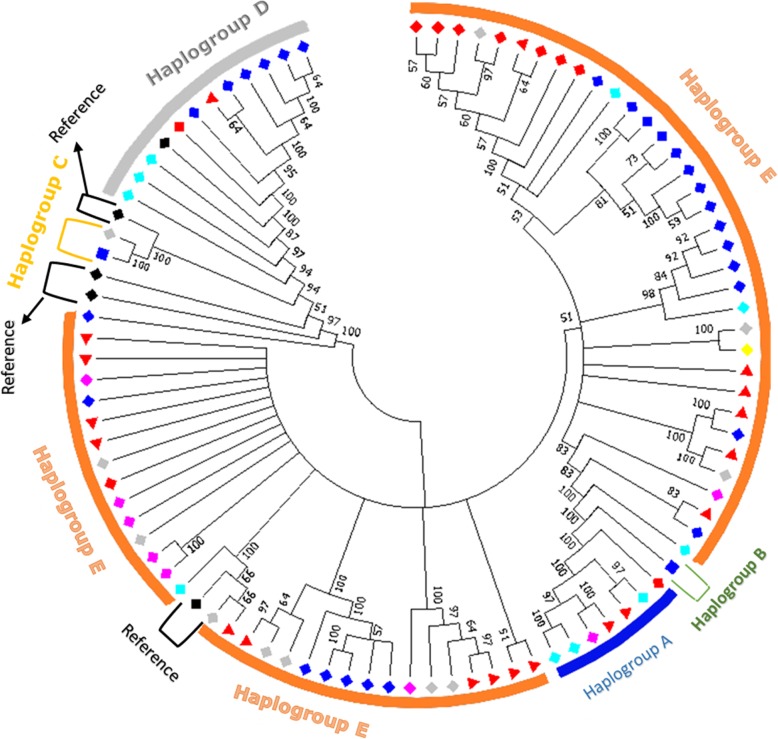
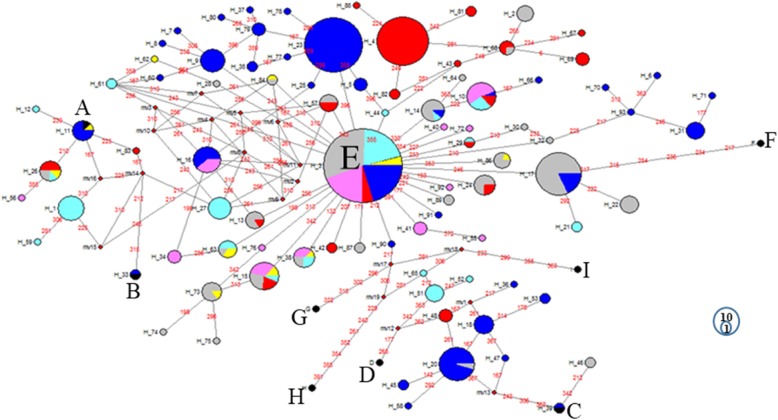
The analysis of the mtDNA D-loop of 706 chicken samples from Iraq (n = 107), Saudi Arabia (n = 185), Algeria (n = 88), Libya (n = 23), Ethiopia (n = 211) and Pakistan (n = 92) show the presence of five haplogroups (A, B, C, D and E), suggesting more than one maternal origin for the studied populations. Haplogroup E, which occurred in 625 samples, was the most frequent in all countries. This haplogroup most likely originates from the Indian subcontinent and probably migrated following a terrestrial route to these different countries. Haplotypes belonging to haplogroup D were present in all countries except Algeria and Libya, it is likely a legacy of the Indian Ocean maritime trading network. Haplogroup A was present in all countries and may be of commercial origin. Haplogroup B was found only in Ethiopia. Haplogroup C was only detected in the South-Western region of Saudi Arabia and in Ethiopia.
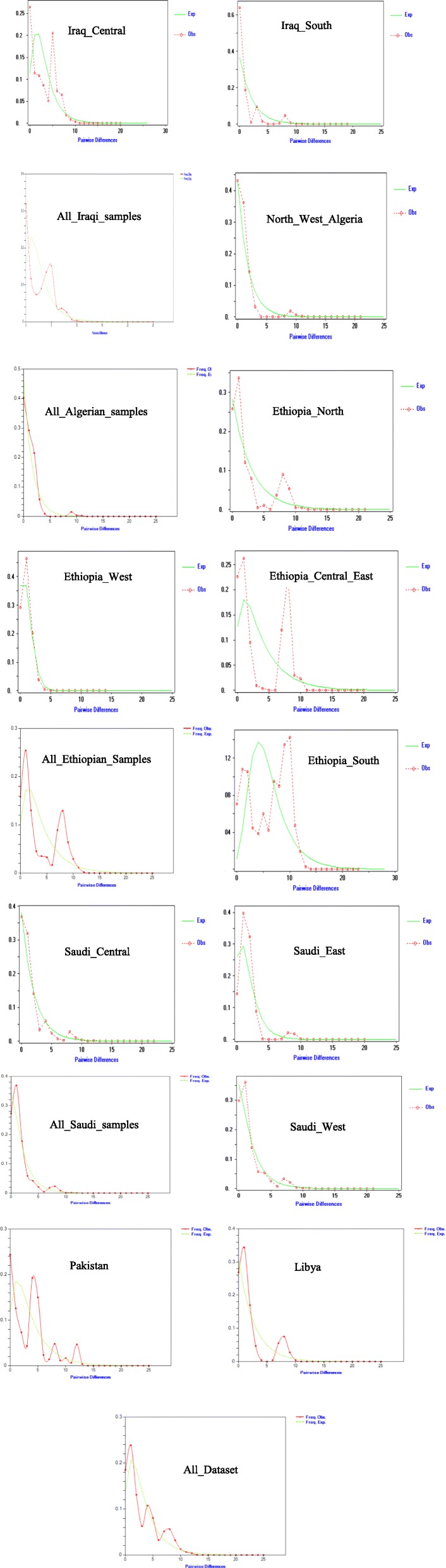
The results support a major influence of the Indian subcontinent on the maternal diversity of the today's chicken populations examined here. Most of the diversity occurs within rather than between populations. This lack of phylogeographic signal agrees with both ancient and more recent trading networks having shaped the modern-day diversity of indigenous chicken across populations and countries.
土生土长的家鸡是世界各地农业社区的主要蛋白质来源。在中东和非洲,它们适应炎热干燥和半干旱地区,与它们的野生祖先红原鸡不同,红原鸡生活在潮湿和亚潮湿的热带地区。随着对禽肉和禽蛋需求的增加,本土种群正在减少,而更具生产力的外来商业品种则受到青睐。在本文中,我们使用线粒体 DNA 的 D 环作为母系遗传标记,探讨了中东(伊拉克和沙特阿拉伯)、非洲北部(阿尔及利亚和利比亚)和非洲之角(埃塞俄比亚)的家鸡的起源和扩散途径。
对来自伊拉克(n=107)、沙特阿拉伯(n=185)、阿尔及利亚(n=88)、利比亚(n=23)、埃塞俄比亚(n=211)和巴基斯坦(n=92)的 706 只鸡样本的 mtDNA D 环分析显示,存在五个单倍群(A、B、C、D 和 E),表明研究人群有不止一个母系起源。在所有国家都出现的最频繁的单倍群 E 可能来自印度次大陆,并且可能是通过陆地路线迁移到这些不同的国家。属于单倍群 D 的单倍型存在于除阿尔及利亚和利比亚之外的所有国家,这很可能是印度洋海上贸易网络的遗留物。单倍群 A 存在于所有国家,可能是商业起源。单倍群 B 仅在埃塞俄比亚发现。单倍群 C 仅在沙特阿拉伯西南部和埃塞俄比亚检测到。
研究结果支持印度次大陆对这里研究的现代家鸡群体母系多样性的主要影响。大多数多样性发生在种群内部,而不是种群之间。这种缺乏系统地理学信号与古代和近代的贸易网络相一致,这些网络塑造了现代本土鸡在不同种群和国家的多样性。