Kokabu Shoichiro, Rosen Vicki
Department of Developmental Biology Harvard School of Dental Medicine Boston MA USA.
Division of Molecular Signaling and Biochemistry Department of Health Promotion Kyushu Dental University Kitakyushu Japan.
FEBS Open Bio. 2017 Dec 16;8(2):168-176. doi: 10.1002/2211-5463.12347. eCollection 2018 Feb.
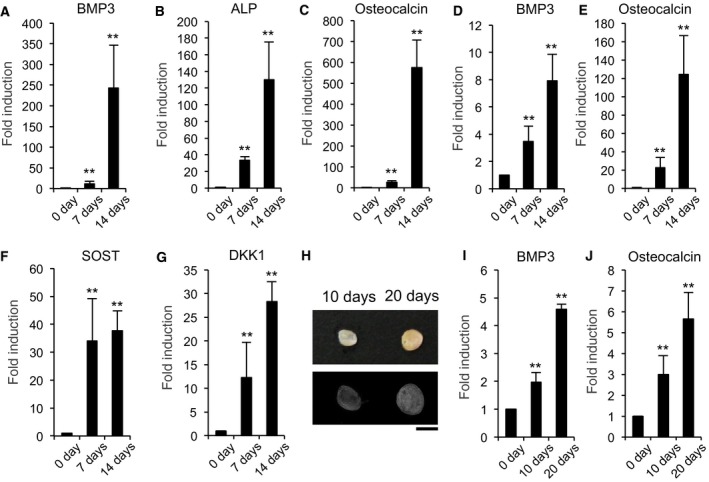
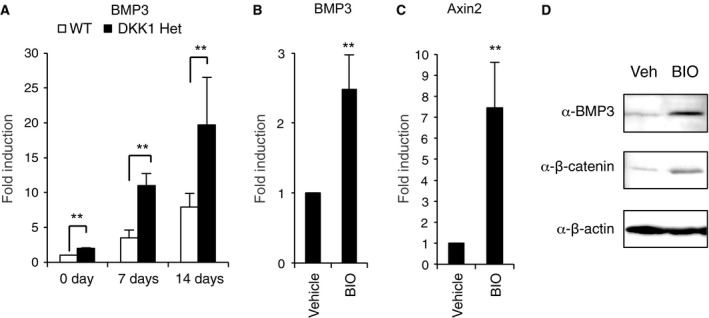
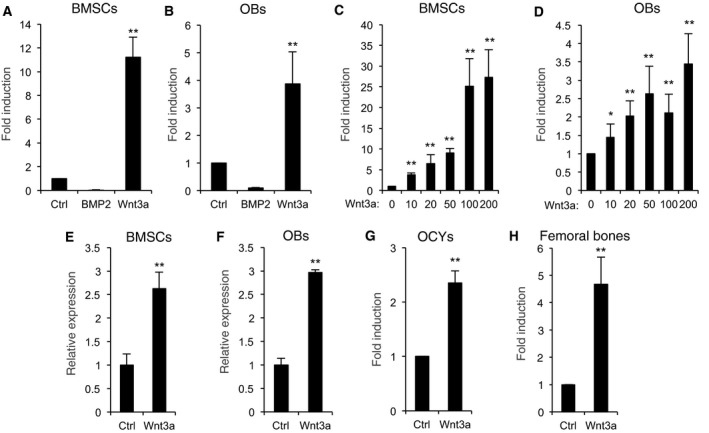
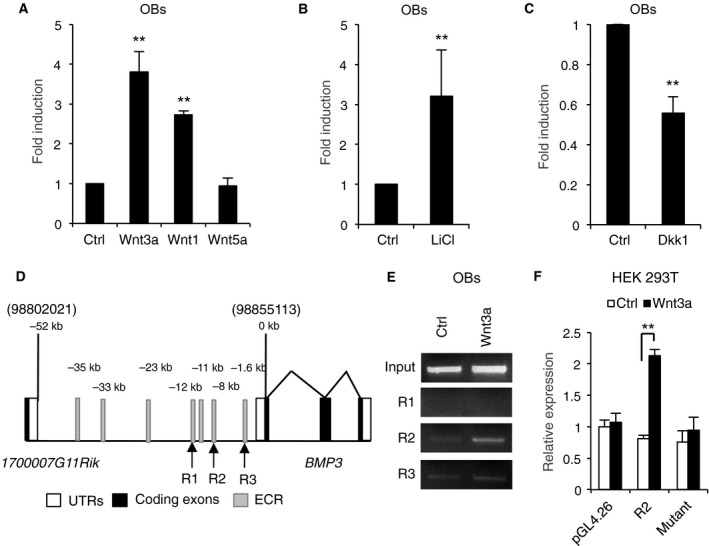
Bone morphogenetic protein (BMP) and canonical Wnt (cWnt) signaling factors are both known to regulate bone mass, fracture risk, fracture repair, and osteoblastogenesis. BMP3 is the most abundant BMP and negatively regulates osteoblastogenesis and bone mass. Thus, identifying the mechanism by which BMP3 acts to depress bone formation may allow for the development of new therapeutics useful in the treatment for osteopenia and osteoporosis. Here, we report that cWnt signaling stimulates BMP3 expression in osteoblast (OB) lineage cells. The expression of BMP3 increases with OB differentiation. Treatment of cells with various cWnt proteins stimulated BMP3 expression. Mice with enhanced cWnt signaling had high expression levels of BMP3. Our data suggest that reduction in BMP3 levels may contribute beneficially to the positive effect of cWnt agonists on bone mass.
骨形态发生蛋白(BMP)和经典Wnt(cWnt)信号因子均已知可调节骨量、骨折风险、骨折修复和成骨细胞生成。BMP3是最丰富的BMP,对成骨细胞生成和骨量起负调节作用。因此,确定BMP3抑制骨形成的作用机制可能有助于开发用于治疗骨质减少和骨质疏松症的新疗法。在此,我们报告cWnt信号传导刺激成骨细胞(OB)谱系细胞中BMP3的表达。BMP3的表达随OB分化而增加。用各种cWnt蛋白处理细胞可刺激BMP3表达。cWnt信号增强的小鼠BMP3表达水平较高。我们的数据表明,BMP3水平的降低可能有助于cWnt激动剂对骨量产生积极影响。