Ramírez Francisco, Rodríguez Carlos, Seoane Javier, Figuerola Jordi, Bustamante Javier
Department of Wetland Ecology, Estación Biológica de Doñana (CSIC), C/ Américo Vespucio 26, Sevilla, Spain.
Departament de Biologia Evolutiva, Ecologia i Ciències Ambientals, Universitat de Barcelona, Facultat de Biologia, Avda. Diagonal 643, Barcelona, Spain.
PLoS One. 2018 Feb 13;13(2):e0192702. doi: 10.1371/journal.pone.0192702. eCollection 2018.
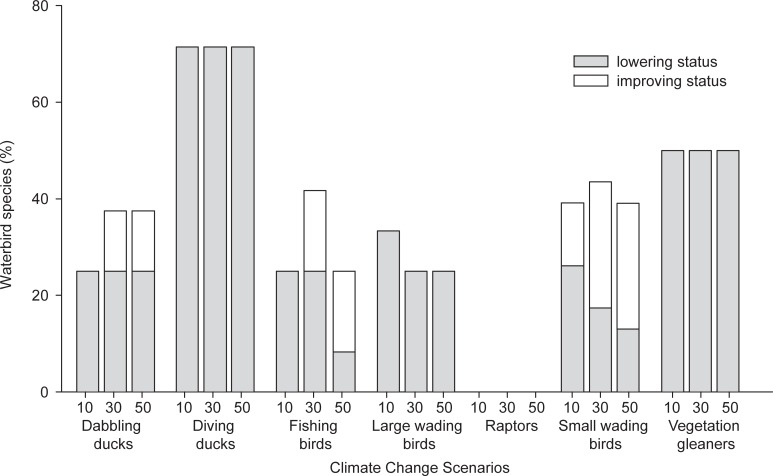
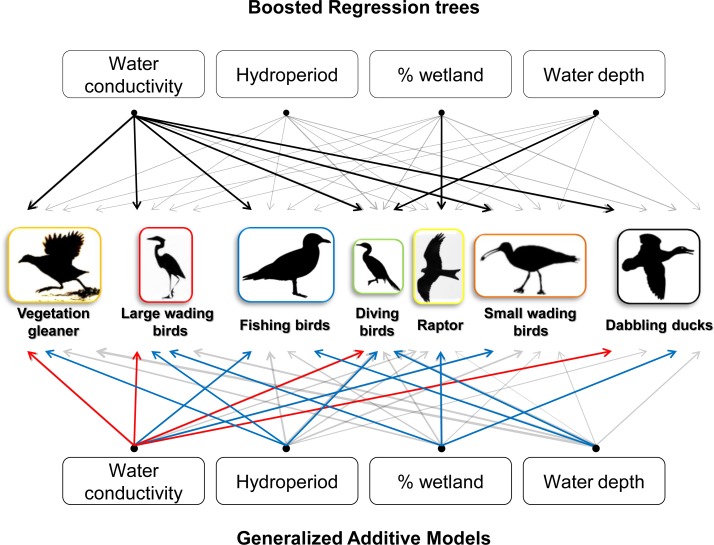
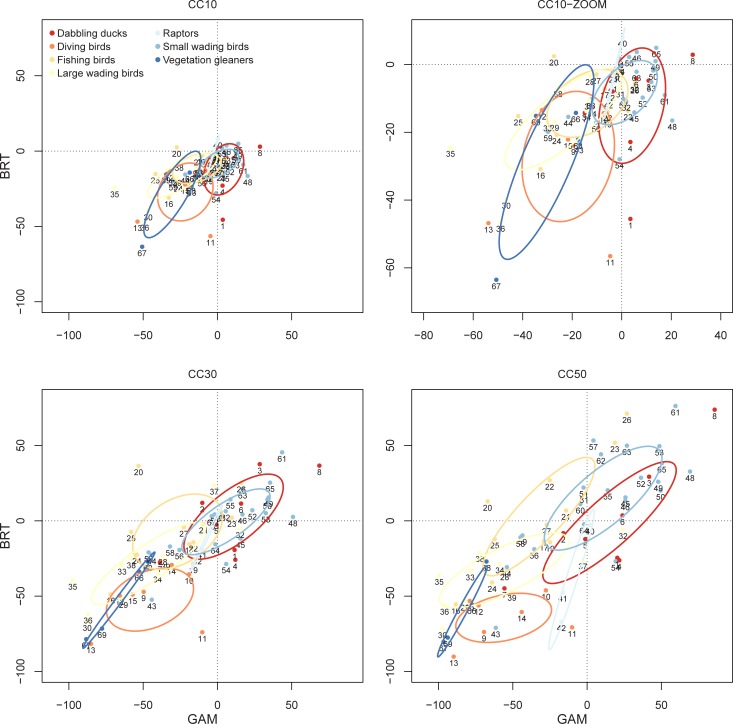
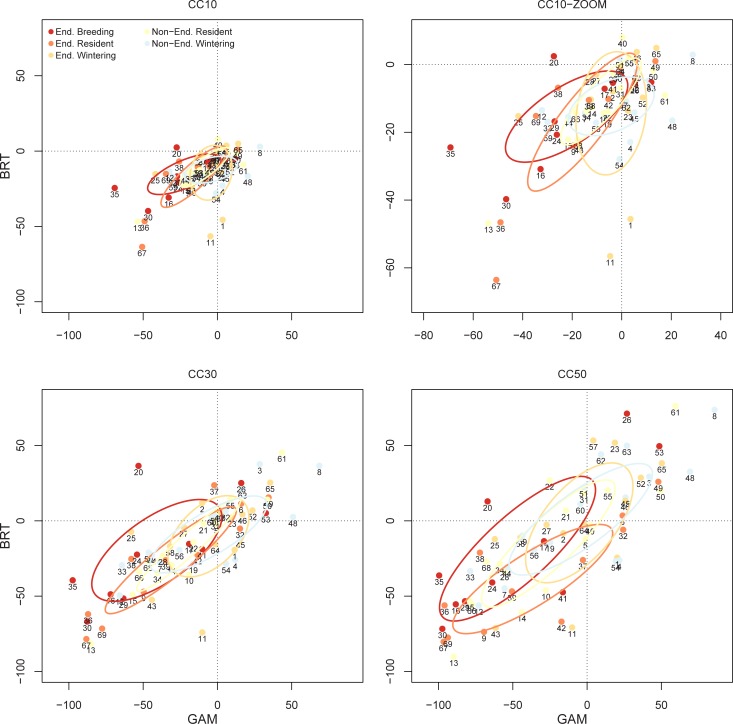
Global warming and direct anthropogenic impacts, such as water extraction, largely affect water budgets in Mediterranean wetlands, thereby increasing wetland salinities and isolation, and decreasing water depths and hydroperiods (duration of the inundation period). These wetland features are key elements structuring waterbird communities. However, the ultimate and net consequences of these dynamic conditions on waterbird assemblages are largely unknown. We combined regular sampling of waterbird presence through one annual cycle with in-situ data on relevant environmental predictors of waterbird distribution to model habitat selection for 69 species in a typical Mediterranean wetland network in southwestern Spain. Species associations with environmental features were subsequently used to predict changes in habitat suitability for each species under three climate change scenarios (encompassing changes in environmental predictors that ranged from 10% to 50% change as predicted by regional climatic models). Waterbirds distributed themselves unevenly throughout environmental gradients and water salinity was the most important gradient structuring the distribution of the community. Environmental suitability for the guilds of diving birds and vegetation gleaners will decline in future climate scenarios, while many small wading birds will benefit from changing conditions. Resident species and those that breed in this wetland network will also be more negatively impacted than those using this area for wintering or stopover. We provide a tool that can be used in a horizon-scanning framework to identify emerging issues in waterbird conservation and to anticipate suitable management actions.
全球变暖和诸如取水等直接的人为影响,在很大程度上影响了地中海湿地的水量平衡,从而增加了湿地的盐度和隔离程度,降低了水深和淹水期时长(淹没期的持续时间)。这些湿地特征是构成水鸟群落的关键要素。然而,这些动态条件对水鸟组合的最终和净影响在很大程度上尚不清楚。我们将通过一个年度周期对水鸟出现情况的定期抽样与水鸟分布相关环境预测因子的实地数据相结合,以模拟西班牙西南部一个典型地中海湿地网络中69种水鸟的栖息地选择。随后,利用物种与环境特征的关联来预测在三种气候变化情景下(涵盖区域气候模型预测的环境预测因子10%至50%的变化)每个物种栖息地适宜性的变化。水鸟在整个环境梯度上分布不均,水盐度是构建群落分布的最重要梯度。在未来气候情景下,潜水鸟类和植被觅食鸟类群落的环境适宜性将会下降,而许多小型涉禽将受益于环境变化。留鸟物种以及在这个湿地网络中繁殖的物种,相比那些将该区域用于越冬或中途停留的物种,也将受到更负面的影响。我们提供了一种工具,可用于前瞻性扫描框架,以识别水鸟保护中出现的问题,并预测合适的管理行动。