Zhang Yu, Chen Shiguo, Wei Chaoyang, Rankin Gary O, Ye Xingqian, Chen Yi Charlie
Zhejiang University, Department of Food Science and Nutrition, Zhejiang Key Laboratory for Agro-Food Processing, Fuli Institute of Food Science, Zhejiang R & D Center for Food Technology and Equipment, Hangzhou 310058, China; College of Science, Technology and Mathematics, Alderson Broaddus University, Philippi, WV 26416, USA.
Zhejiang University, Department of Food Science and Nutrition, Zhejiang Key Laboratory for Agro-Food Processing, Fuli Institute of Food Science, Zhejiang R & D Center for Food Technology and Equipment, Hangzhou 310058, China.
Eur J Med Chem. 2018 Mar 10;147:218-226. doi: 10.1016/j.ejmech.2018.01.084. Epub 2018 Jan 31.
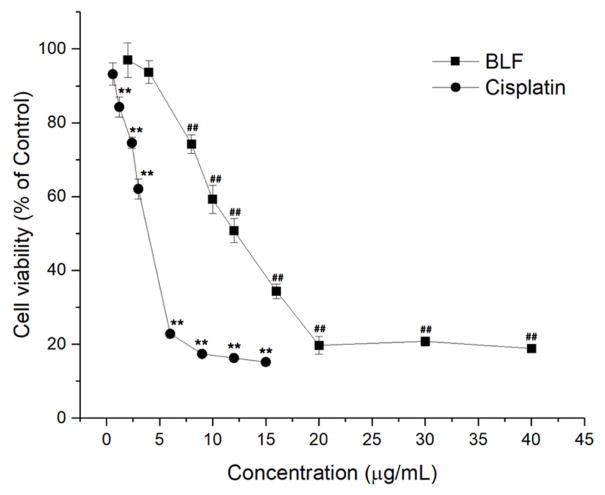
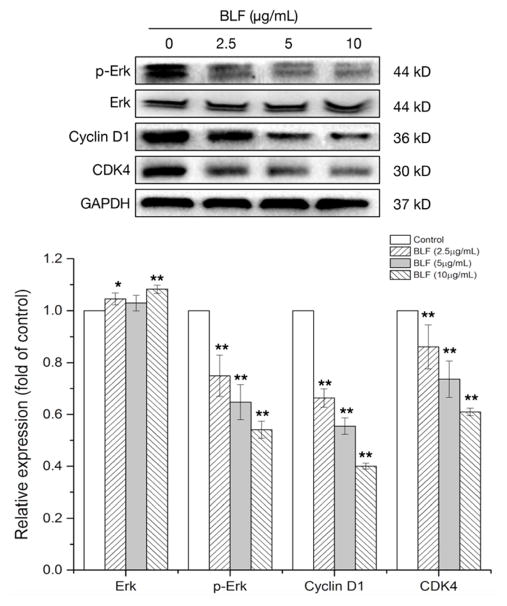
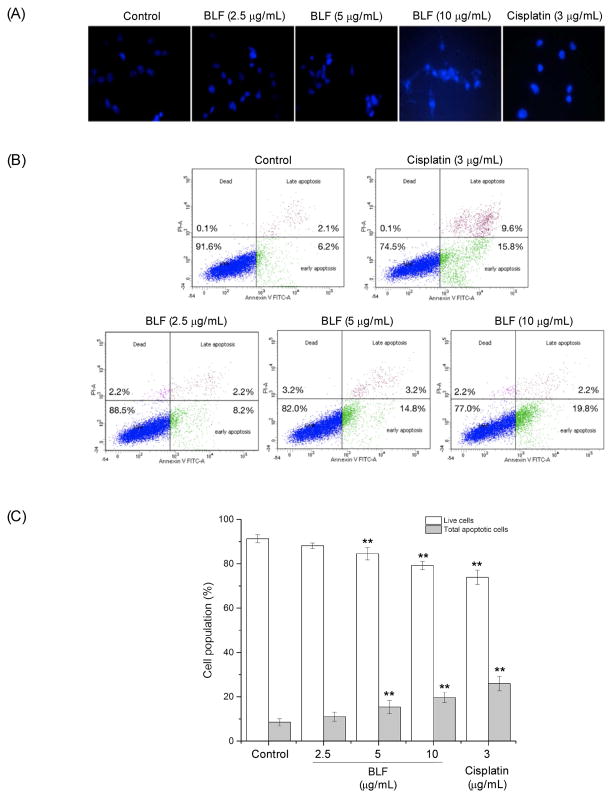
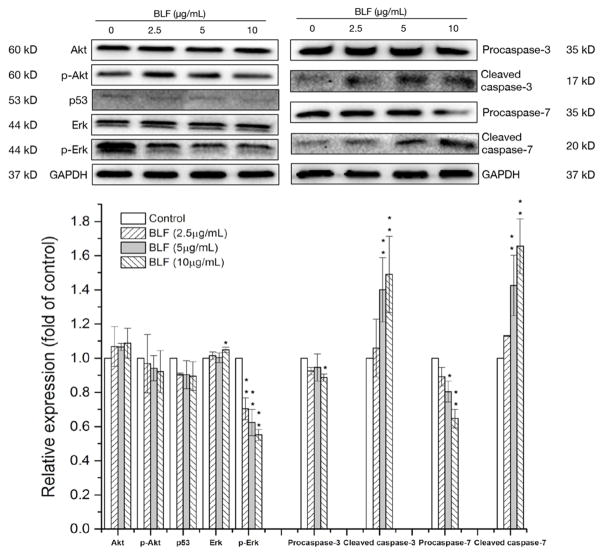
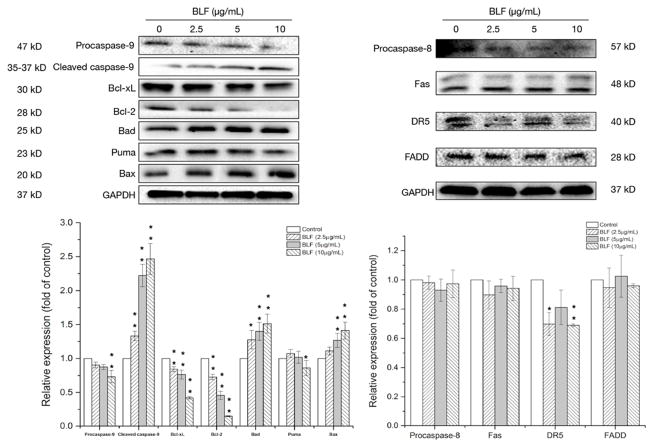
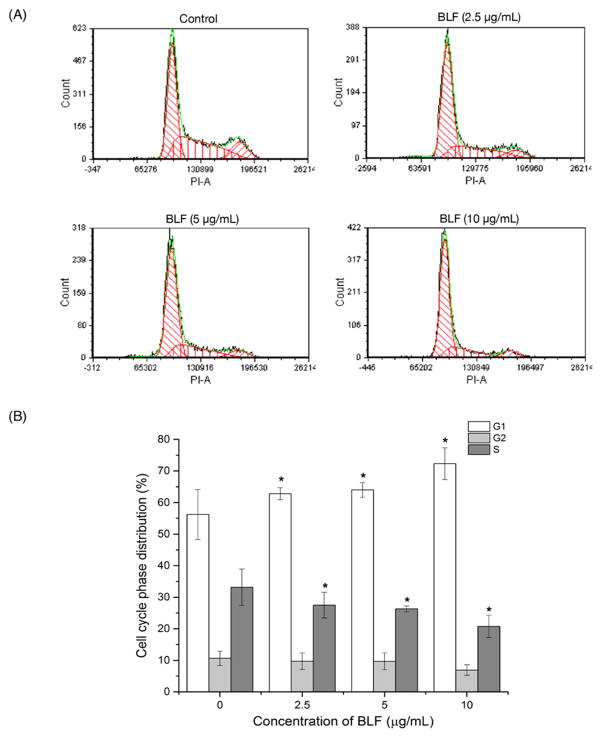
Ovarian cancer is one of the leading causes of death related to the female reproductive system in western countries. Adverse side effects and resistance to platinum based chemotherapy have become the major obstacles for ovarian cancer treatment. Natural products have gained great attention in cancer treatment in recent years. Chinese bayberry leaves flavonoids (BLF) containing rich content of myricitrin (myricetin 3-O-rhamnoside) and a part of quercetrin (quercetin 3-rhamnoside) inhibited the growth of an ovarian cancer cell line A2780/CP70. Such inhibitory effects might be due to the induction of apoptosis and G1 cell cycle arrest. BLF treatment increased the expression of cleaved caspase-3 and -7 and induced apoptosis via a Erk-dependent caspase-9 activation intrinsic apoptotic pathway by up-regulating the pro-apoptotic proteins (Bad and Bax) and down-regulating the anti-apoptotic proteins (Bcl-xL and Bcl-2), which were also in consistency with the results from Hoechst 33342 staining and flow cytometry analysis. Furthermore, by reducing the expression of cyclin D1 and CDK4 and p-Erk, BLF elevated the distribution of G1 phase in cell cycle and thus caused G1 cell cycle arrest. Overall, these results indicated that BLPs could be a valuable resource of natural compound for ovarian cancer treatment.
在西方国家,卵巢癌是女性生殖系统相关的主要死亡原因之一。铂类化疗的不良副作用和耐药性已成为卵巢癌治疗的主要障碍。近年来,天然产物在癌症治疗中备受关注。富含杨梅素(杨梅黄酮3 - O - 鼠李糖苷)和部分槲皮苷(槲皮素3 - 鼠李糖苷)的中国杨梅叶黄酮(BLF)抑制了卵巢癌细胞系A2780/CP70的生长。这种抑制作用可能是由于诱导细胞凋亡和G1期细胞周期阻滞。BLF处理增加了裂解的半胱天冬酶 - 3和 - 7的表达,并通过上调促凋亡蛋白(Bad和Bax)和下调抗凋亡蛋白(Bcl - xL和Bcl - 2),经由Erk依赖性半胱天冬酶 - 9激活的内在凋亡途径诱导细胞凋亡,这也与Hoechst 33342染色和流式细胞术分析结果一致。此外,通过降低细胞周期蛋白D1、细胞周期蛋白依赖性激酶4(CDK4)和磷酸化Erk的表达,BLF提高了细胞周期中G1期的分布,从而导致G1期细胞周期阻滞。总体而言,这些结果表明BLP可能是用于卵巢癌治疗的天然化合物的宝贵资源。