Richards-Belle Alvin, Mouncey Paul R, Wade Dorothy, Brewin Chris R, Emerson Lydia M, Grieve Richard, Harrison David A, Harvey Sheila, Howell David, Mythen Monty, Sadique Zia, Smyth Deborah, Weinman John, Welch John, Rowan Kathryn M
Clinical Trials Unit, Intensive Care National Audit & Research Centre (ICNARC), London, UK.
Critical Care Department, University College London Hospitals NHS Foundation Trust, London, UK.
BMJ Open. 2018 Feb 8;8(2):e020908. doi: 10.1136/bmjopen-2017-020908.
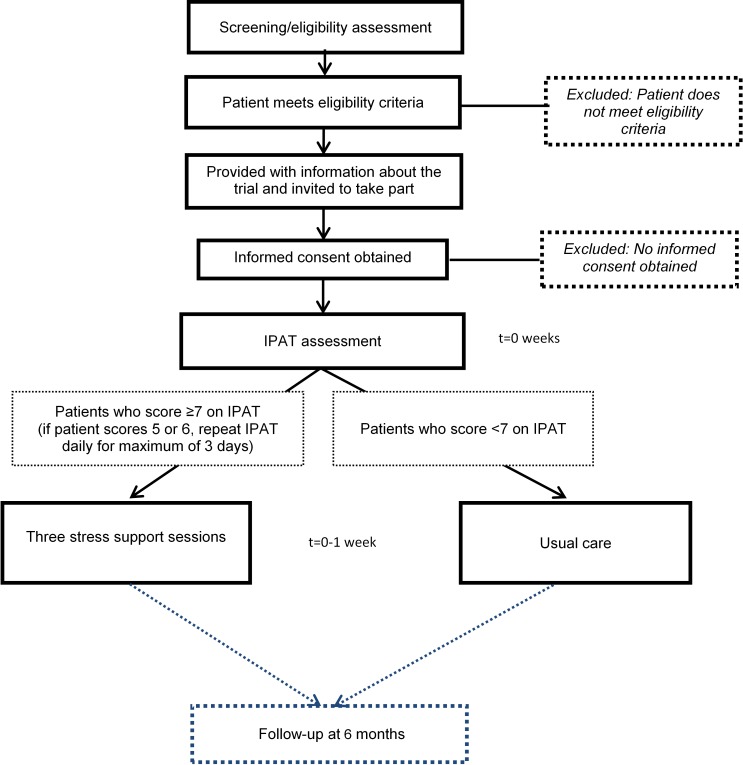
Acute psychological stress, as well as unusual experiences including hallucinations and delusions, are common in critical care unit patients and have been linked to post-critical care psychological morbidity such as post-traumatic stress disorder (PTSD), depression and anxiety. Little high-quality research has been conducted to evaluate psychological interventions that could alleviate longer-term psychological morbidity in the critical care unit setting. Our research team developed and piloted a nurse-led psychological intervention, aimed at reducing patient-reported PTSD symptom severity and other adverse psychological outcomes at 6 months, for evaluation in the POPPI trial.
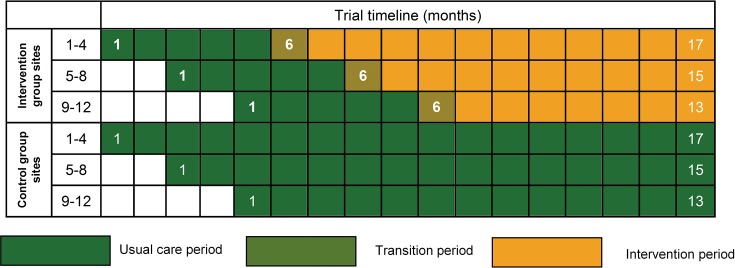
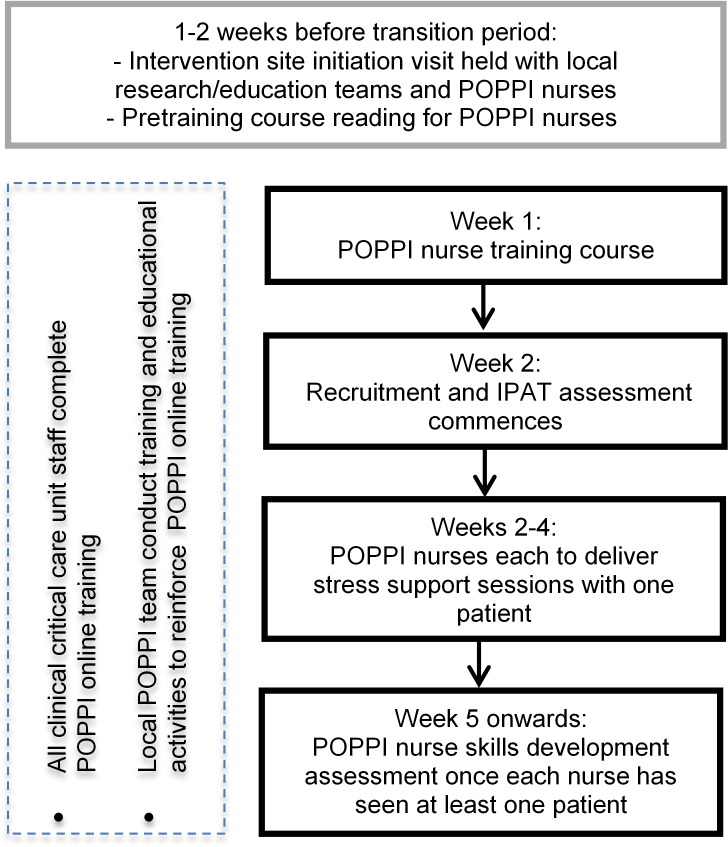
This is a multicentre, parallel group, cluster-randomised clinical trial with a staggered roll-out of the intervention. The trial is being carried out at 24 (12 intervention, 12 control) NHS adult, general, critical care units in the UK and is evaluating the clinical effectiveness and cost-effectiveness of a nurse-led preventative psychological intervention in reducing patient-reported PTSD symptom severity and other psychological morbidity at 6 months. All sites deliver usual care for 5 months (baseline period). Intervention group sites are then trained to carry out the POPPI intervention, and transition to delivering the intervention for the rest of the recruitment period. Control group sites deliver usual care for the duration of the recruitment period. The trial also includes a process evaluation conducted independently of the trial team.
This protocol was reviewed and approved by the National Research Ethics Service South Central - Oxford B Research Ethics Committee (reference: 15/SC/0287). The first patient was recruited in September 2015 and results will be disseminated in 2018. The results will be presented at national and international conferences and published in peer reviewed medical journals.
ISRCTN53448131; Pre-results.
急性心理应激以及包括幻觉和妄想在内的异常经历在重症监护病房患者中很常见,并且与重症监护后心理疾病如创伤后应激障碍(PTSD)、抑郁和焦虑有关。很少有高质量的研究来评估能够减轻重症监护病房环境中长期心理疾病的心理干预措施。我们的研究团队开发并试点了一项由护士主导的心理干预措施,旨在降低患者报告的6个月时PTSD症状严重程度及其他不良心理结局,以在POPPI试验中进行评估。
这是一项多中心、平行组、整群随机临床试验,干预措施逐步推出。该试验正在英国的24个(12个干预组,12个对照组)国民保健服务体系(NHS)成人综合重症监护病房进行,正在评估由护士主导的预防性心理干预措施在降低患者报告的6个月时PTSD症状严重程度及其他心理疾病方面的临床有效性和成本效益。所有站点在5个月(基线期)提供常规护理。然后对干预组站点进行培训以实施POPPI干预,并在剩余招募期过渡到提供干预措施。对照组站点在招募期全程提供常规护理。该试验还包括一个独立于试验团队进行的过程评估。
本方案已由国家研究伦理服务中心中南 - 牛津B研究伦理委员会审查并批准(参考号:15/SC/0287)。首例患者于2015年9月入组,结果将于2018年公布。结果将在国内和国际会议上展示,并发表在同行评审的医学期刊上。
ISRCTN53448131;预结果。