Ward Carol, Meehan James, Gray Mark, Kunkler Ian H, Langdon Simon P, Argyle David J
Cancer Research UK Edinburgh Centre and Division of Pathology Laboratory, Institute of Genetics and Molecular Medicine, University of Edinburgh, Edinburgh EH4 2XU, UK.
Royal (Dick) School of Veterinary Studies and Roslin Institute, The University of Edinburgh, Easter Bush, Midlothian EH25 9RG, UK.
Metabolites. 2018 Feb 10;8(1):13. doi: 10.3390/metabo8010013.
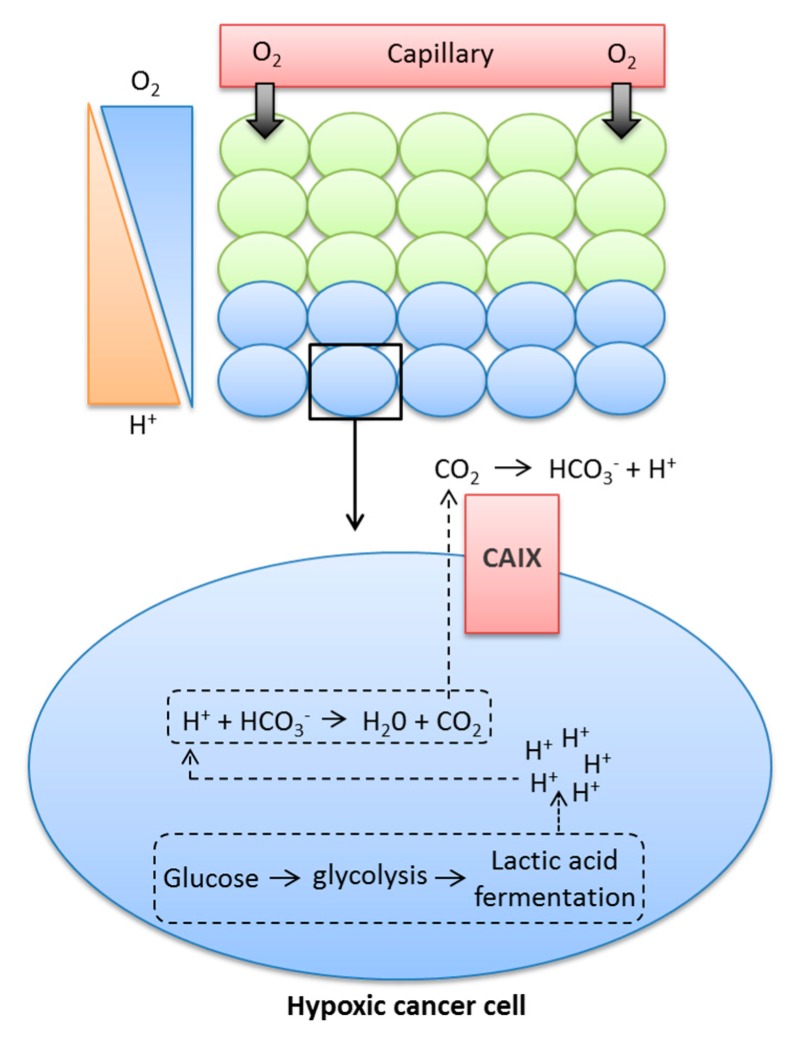
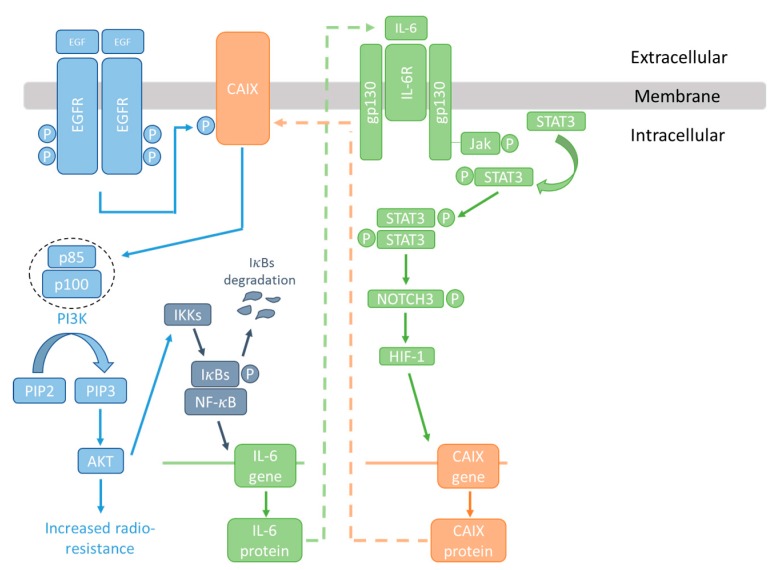
Carbonic anhydrase IX has been under intensive investigation as a therapeutic target in cancer. Studies demonstrate that this enzyme has a key role in pH regulation in cancer cells, allowing these cells to adapt to the adverse conditions of the tumour microenviroment. Novel CAIX inhibitors have shown efficacy in both and pre-clinical cancer models, adversely affecting cell viability, tumour formation, migration, invasion, and metastatic growth when used alone. In co-treatments, CAIX inhibitors may enhance the effects of anti-angiogenic drugs or chemotherapy agents. Research suggests that these inhibitors may also increase the response of tumours to radiotherapy. Although many of the anti-tumour effects of CAIX inhibition may be dependent on its role in pH regulation, recent work has shown that CAIX interacts with several of the signalling pathways involved in the cellular response to radiation, suggesting that pH-independent mechanisms may also be an important basis of its role in tumour progression. Here, we discuss these pH-independent interactions in the context of the ability of CAIX to modulate the responsiveness of cancer to radiation.
碳酸酐酶IX作为癌症治疗靶点一直受到深入研究。研究表明,这种酶在癌细胞的pH调节中起关键作用,使这些细胞能够适应肿瘤微环境的不利条件。新型CAIX抑制剂在临床前癌症模型中均显示出疗效,单独使用时会对细胞活力、肿瘤形成、迁移、侵袭和转移生长产生不利影响。在联合治疗中,CAIX抑制剂可能会增强抗血管生成药物或化疗药物的效果。研究表明,这些抑制剂还可能增加肿瘤对放疗的反应。虽然CAIX抑制的许多抗肿瘤作用可能依赖于其在pH调节中的作用,但最近的研究表明,CAIX与细胞对辐射反应中涉及的几种信号通路相互作用,这表明不依赖pH的机制也可能是其在肿瘤进展中作用的重要基础。在此,我们在CAIX调节癌症对辐射反应能力的背景下讨论这些不依赖pH的相互作用。