Dan L. Duncan Comprehensive Cancer Center Division of Biostatistics, Baylor College of Medicine, Houston, Texas.
Department of Thoracic/Head and Neck Medical Oncology, The University of Texas MD Anderson Cancer Center, Houston, Texas.
Clin Cancer Res. 2018 May 1;24(9):2182-2193. doi: 10.1158/1078-0432.CCR-17-3378. Epub 2018 Feb 9.
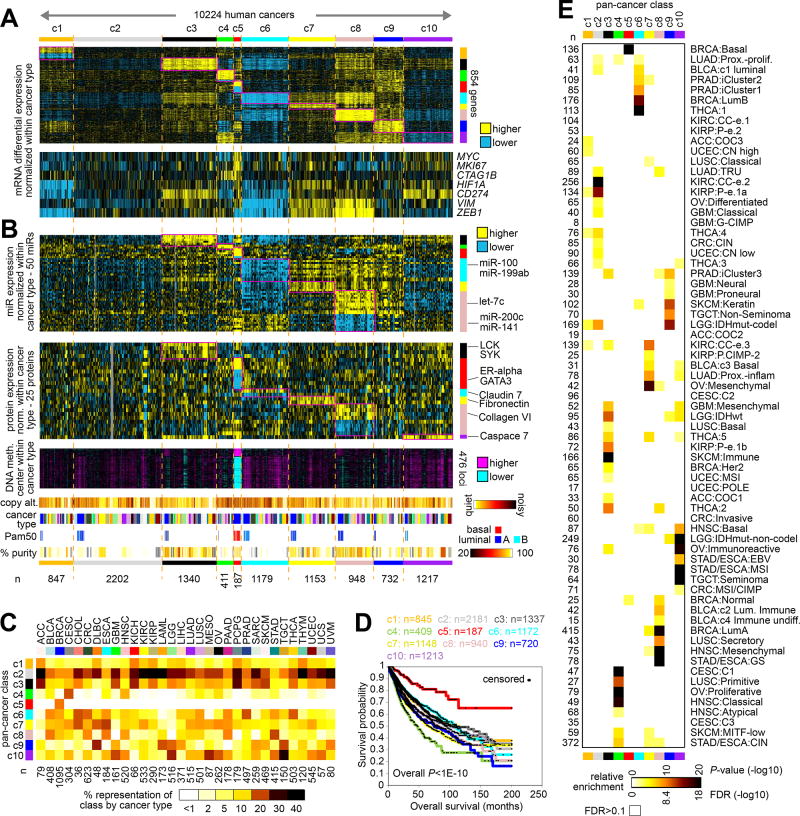
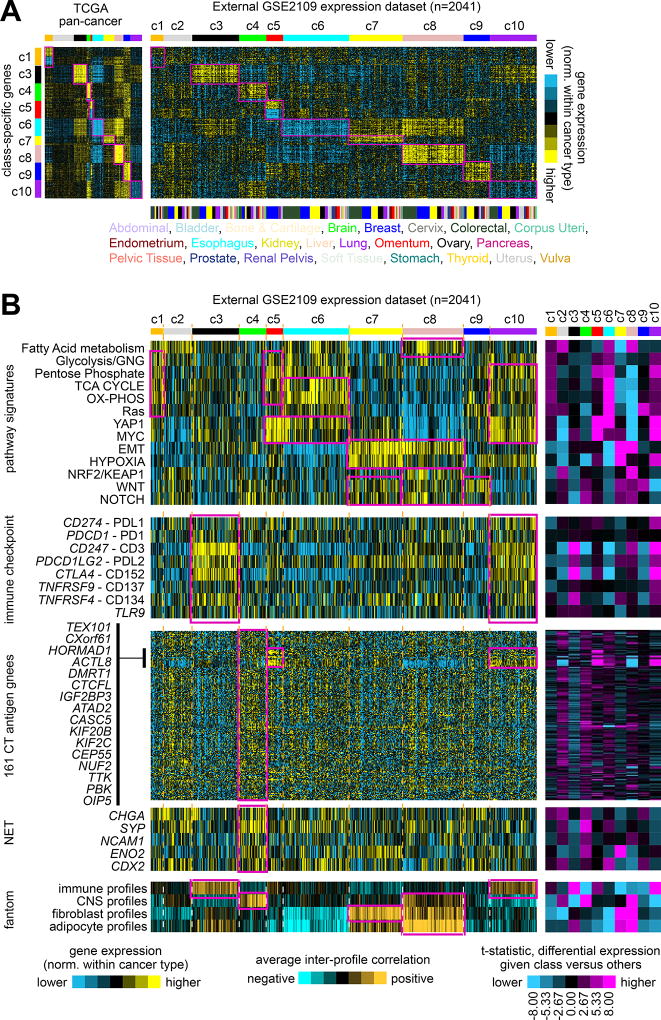
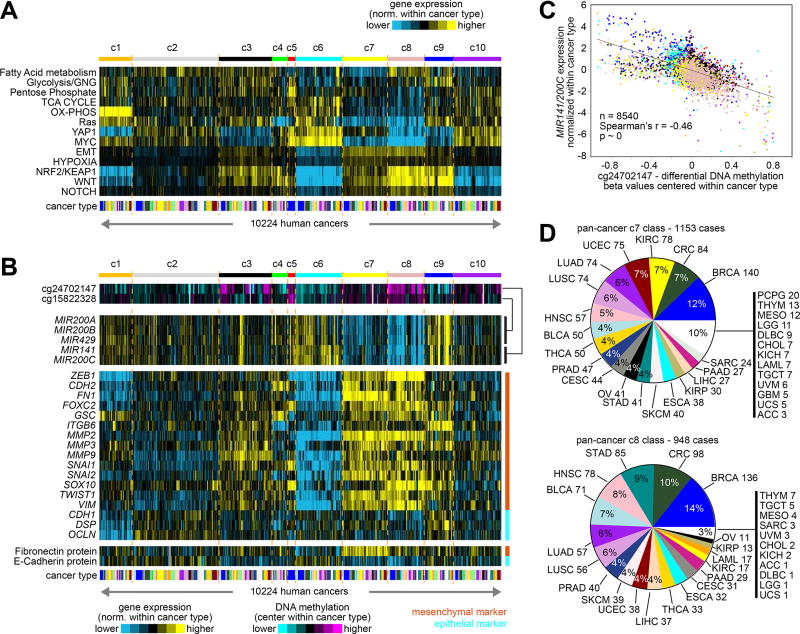
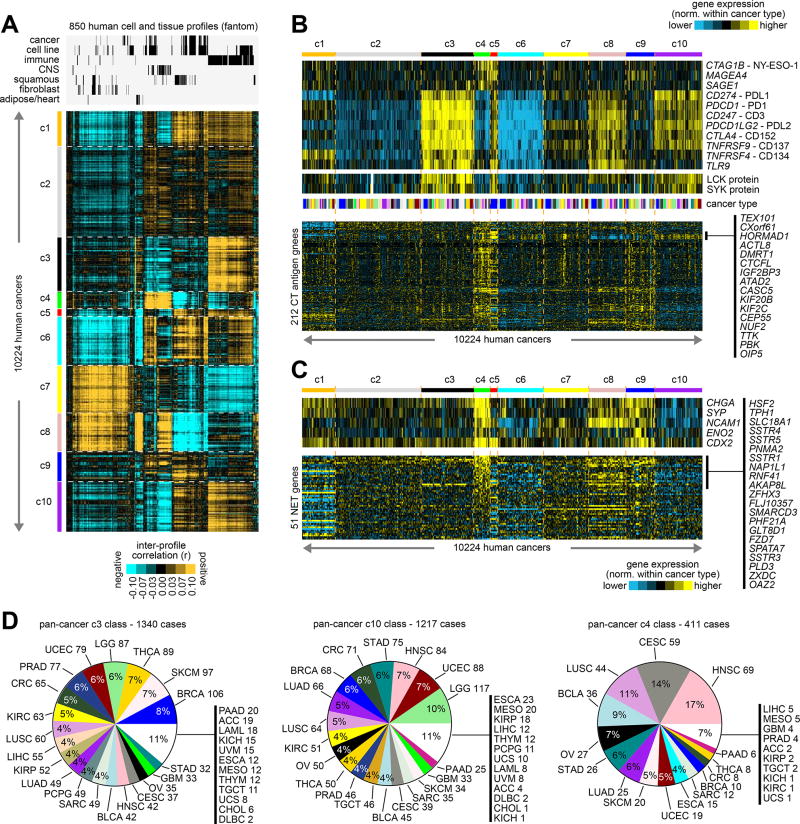
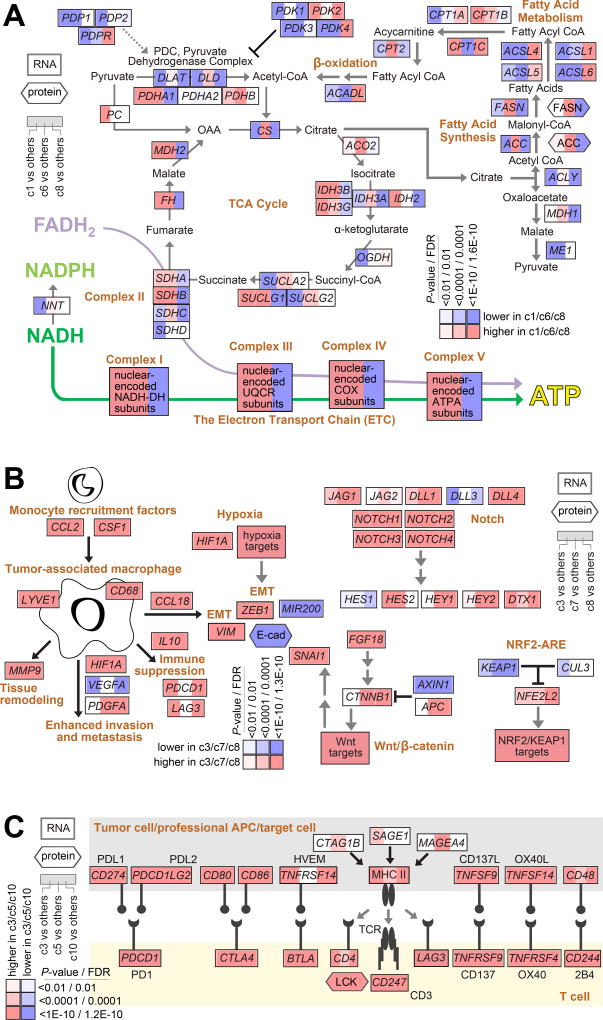
The Cancer Genome Atlas data resources represent an opportunity to explore commonalities across cancer types involving multiple molecular levels, but tumor lineage and histology can represent a barrier in moving beyond differences related to cancer type. On the basis of gene expression data, we classified 10,224 cancers, representing 32 major types, into 10 molecular-based "classes." Molecular patterns representing tissue or histologic dominant effects were first removed computationally, with the resulting classes representing emergent themes across tumor lineages. Key differences involving mRNAs, miRNAs, proteins, and DNA methylation underscored the pan-cancer classes. One class expressing neuroendocrine and cancer-testis antigen markers represented ∼4% of cancers surveyed. Basal-like breast cancers segregated into an exclusive class, distinct from all other cancers. Immune checkpoint pathway markers and molecular signatures of immune infiltrates were most strongly manifested within a class representing ∼13% of cancers. Pathway-level differences involving hypoxia, NRF2-ARE, Wnt, and Notch were manifested in two additional classes enriched for mesenchymal markers and miR200 silencing. All pan-cancer molecular classes uncovered here, with the important exception of the basal-like breast cancer class, involve a wide range of cancer types and would facilitate understanding the molecular underpinnings of cancers beyond tissue-oriented domains. Numerous biological processes associated with cancer in the laboratory setting were found here to be coordinately manifested across large subsets of human cancers. The number of cancers manifesting features of neuroendocrine tumors may be much higher than previously thought, which disease is known to occur in many different tissues. .
癌症基因组图谱数据资源代表了一个探索涉及多个分子水平的多种癌症类型共性的机会,但肿瘤谱系和组织学可能成为超越与癌症类型相关差异的障碍。基于基因表达数据,我们将 10,224 种癌症(代表 32 种主要类型)分为 10 种基于分子的“类别”。首先通过计算去除代表组织或组织学主要效应的分子模式,由此产生的类别代表肿瘤谱系之间的新兴主题。涉及 mRNA、miRNA、蛋白质和 DNA 甲基化的关键差异突出了泛癌症类别。一个表达神经内分泌和癌症睾丸抗原标志物的类别代表了调查中约 4%的癌症。基底样乳腺癌分为一个独特的类别,与所有其他癌症不同。免疫检查点途径标志物和免疫浸润的分子特征在代表约 13%的癌症的一个类别中表现最为明显。涉及缺氧、NRF2-ARE、Wnt 和 Notch 的通路水平差异在另外两个类别的标志物中表现出来,这些类别富集了间充质标志物和 miR200 沉默。这里发现的所有泛癌症分子类别,除了基底样乳腺癌类别,都涉及广泛的癌症类型,并将有助于理解超越组织导向领域的癌症的分子基础。在实验室环境中与癌症相关的许多生物学过程在这里被发现是在大量人类癌症中协调表现的。表现出神经内分泌肿瘤特征的癌症数量可能比以前认为的要高得多,这种疾病已知发生在许多不同的组织中。