Centre of Microbial and Plant Genetics, KU Leuven, Heverlee, Belgium
Laboratory of Molecular Biology, National Institute of Diabetes and Kidney Diseases, National Institutes of Health, Bethesda, Maryland, USA.
mBio. 2018 Feb 13;9(1):e02267-17. doi: 10.1128/mBio.02267-17.
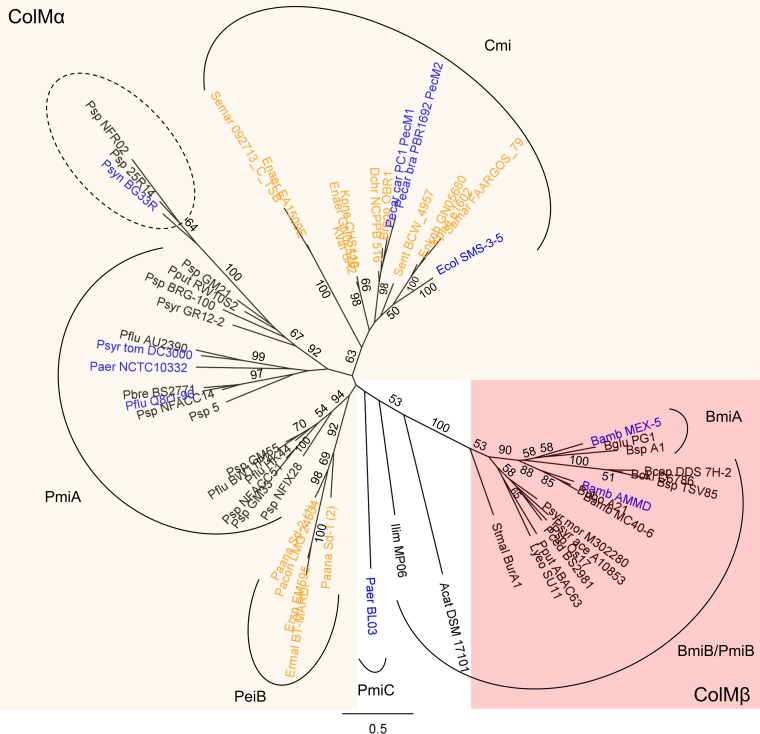
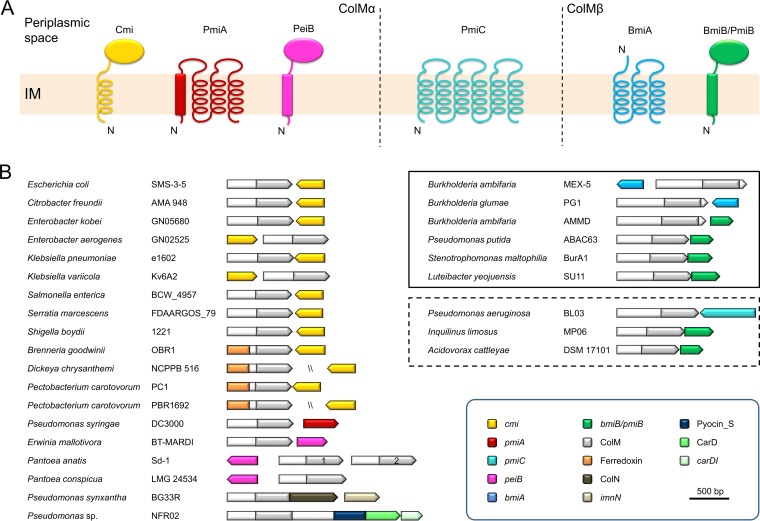
Bacteria host an arsenal of antagonism-mediating molecules to combat for ecologic space. Bacteriocins represent a pivotal group of secreted antibacterial peptides and proteins assisting in this fight, mainly eliminating relatives. Colicin M, a model for peptidoglycan-interfering bacteriocins in Gram-negative bacteria, appears to be part of a set of polymorphic toxins equipped with such a catalytic domain (ColM) targeting lipid II. Diversifying recombination has enabled parasitism of different receptors and has also given rise to hybrid bacteriocins in which ColM is associated with another toxin module. Remarkably, ColM toxins have recruited a diverse array of immunity partners, comprising cytoplasmic membrane-associated proteins with different topologies. Together, these findings suggest that different immunity mechanisms have evolved for ColM, in contrast to bacteriocins with nuclease activities.
细菌拥有大量的拮抗调节分子来争夺生态位。细菌素是一类重要的分泌型抗菌肽和蛋白,有助于这场斗争,主要是消灭同类。大肠杆菌素 M 是革兰氏阴性菌中肽聚糖干扰型细菌素的模型,似乎是一组具有这种催化结构域(ColM)的多态性毒素的一部分,该结构域针对脂质 II。多样化的重组使不同的受体能够寄生,并产生了杂合细菌素,其中 ColM 与另一个毒素模块相关联。值得注意的是,ColM 毒素招募了多种多样的免疫伙伴,包括具有不同拓扑结构的细胞质膜相关蛋白。这些发现表明,与具有核酸酶活性的细菌素不同,ColM 进化出了不同的免疫机制。