Samanta Dipak, Galaktionova Daria, Gemen Julius, Shimon Linda J W, Diskin-Posner Yael, Avram Liat, Král Petr, Klajn Rafal
Department of Organic Chemistry, Weizmann Institute of Science, Rehovot, 76100, Israel.
Department of Chemistry, University of Illinois at Chicago, Chicago, IL, 60607, USA.
Nat Commun. 2018 Feb 13;9(1):641. doi: 10.1038/s41467-017-02715-6.
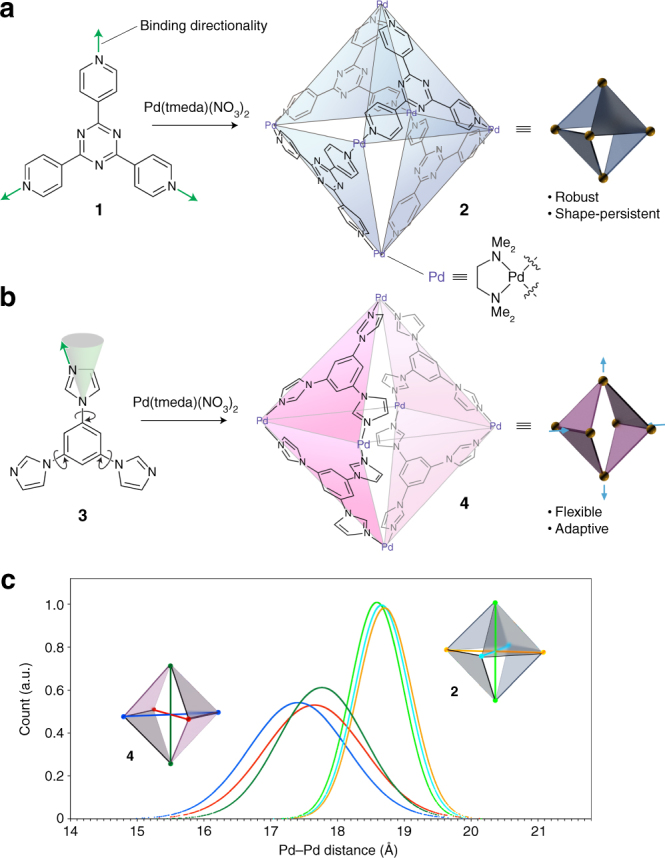
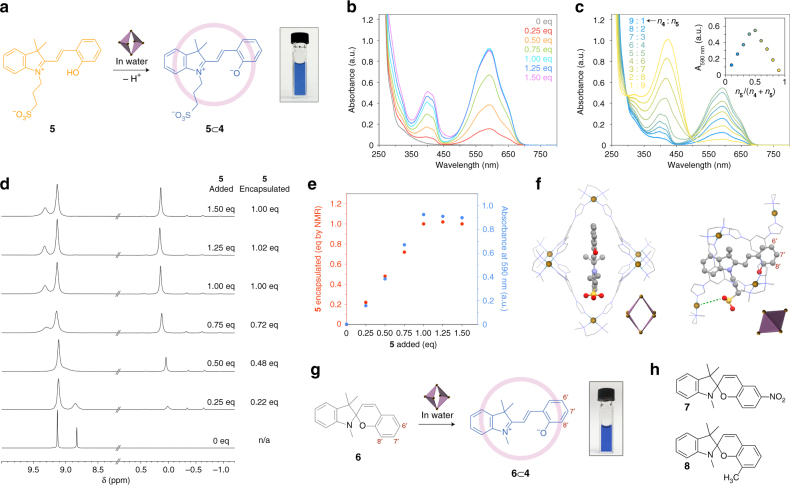
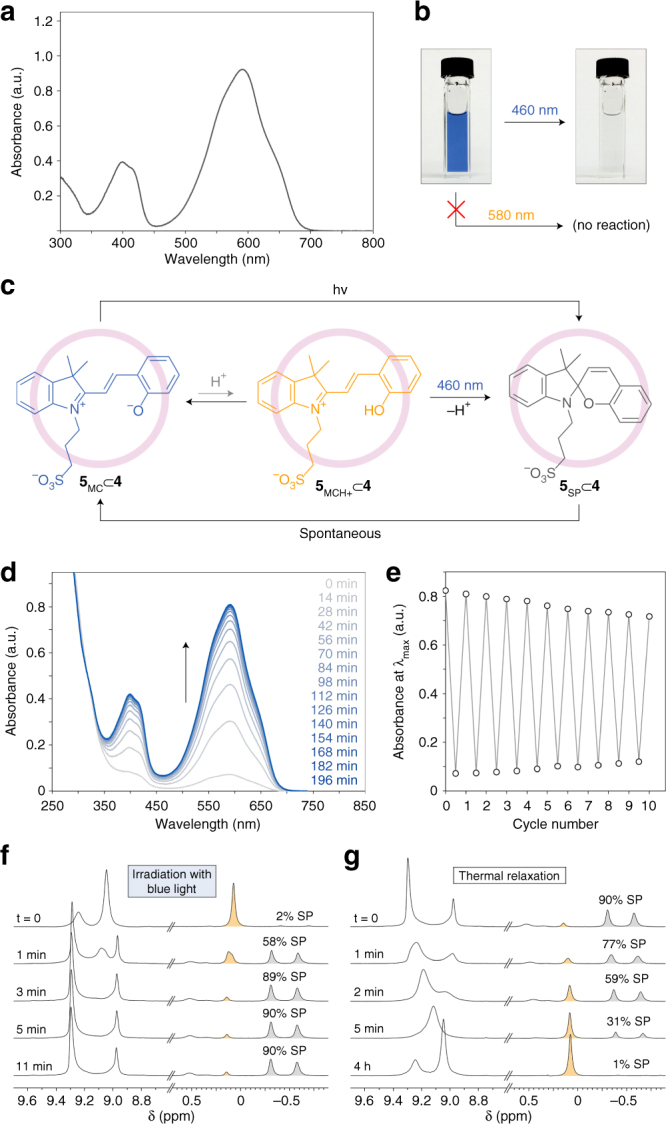
Confining molecules to volumes only slightly larger than the molecules themselves can profoundly alter their properties. Molecular switches-entities that can be toggled between two or more forms upon exposure to an external stimulus-often require conformational freedom to isomerize. Therefore, placing these switches in confined spaces can render them non-operational. To preserve the switchability of these species under confinement, we work with a water-soluble coordination cage that is flexible enough to adapt its shape to the conformation of the encapsulated guest. We show that owing to its flexibility, the cage is not only capable of accommodating-and solubilizing in water-several light-responsive spiropyran-based molecular switches, but, more importantly, it also provides an environment suitable for the efficient, reversible photoisomerization of the bound guests. Our findings pave the way towards studying various molecular switching processes in confined environments.
将分子限制在仅略大于分子本身的体积中会深刻改变其性质。分子开关——在受到外部刺激时可在两种或更多种形式之间切换的实体——通常需要构象自由度来进行异构化。因此,将这些开关置于受限空间中可能会使其无法运作。为了在受限条件下保持这些物质的可切换性,我们使用了一种水溶性配位笼,其柔韧性足以使其形状适应被封装客体的构象。我们表明,由于其柔韧性,该笼子不仅能够容纳并在水中溶解几种基于光响应螺吡喃的分子开关,而且更重要的是,它还提供了一个适合所结合客体进行高效、可逆光异构化的环境。我们的发现为在受限环境中研究各种分子开关过程铺平了道路。