School of Biomedical Engineering, Tianjin Medical University, Tianjin, 300070, China.
Department of Pharmaceutical Science, College of Pharmacy, University of South Florida, Tampa, FL, 33612, USA.
Sci Rep. 2018 Feb 13;8(1):2894. doi: 10.1038/s41598-018-21297-x.
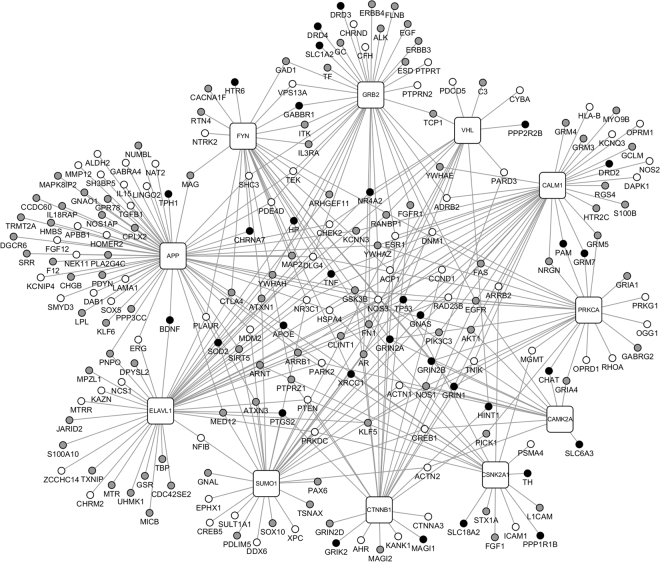
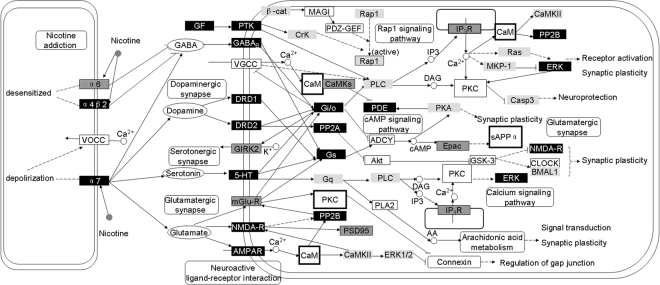
The prevalence of tobacco use in people with schizophrenia is much higher than in general population, which indicates a close relationship between nicotine addiction and schizophrenia. However, the molecular mechanism underlying the high comorbidity of tobacco smoking and schizophrenia remains largely unclear. In this study, we conducted a pathway and network analysis on the genes potentially associated with nicotine addiction or schizophrenia to reveal the functional feature of these genes and their interactions. Of the 276 genes associated with nicotine addiction and 331 genes associated with schizophrenia, 52 genes were shared. From these genes, 12 significantly enriched pathways associated with both diseases were identified. These pathways included those related to synapse function and signaling transduction, and drug addiction. Further, we constructed a nicotine addiction-specific and schizophrenia-specific sub-network, identifying 11 novel candidate genes potentially associated with the two diseases. Finally, we built a schematic molecular network for nicotine addiction and schizophrenia based on the results of pathway and network analysis, providing a systematic view to understand the relationship between these two disorders. Our results illustrated that the biological processes underlying the comorbidity of nicotine addiction and schizophrenia was complex, and was likely induced by the dysfunction of multiple molecules and pathways.
精神分裂症患者的吸烟率远高于一般人群,这表明尼古丁成瘾与精神分裂症之间存在密切关系。然而,吸烟与精神分裂症高共病的分子机制在很大程度上仍不清楚。在这项研究中,我们对可能与尼古丁成瘾或精神分裂症相关的基因进行了途径和网络分析,以揭示这些基因及其相互作用的功能特征。在与尼古丁成瘾相关的 276 个基因和与精神分裂症相关的 331 个基因中,有 52 个基因是共享的。从这些基因中,确定了与这两种疾病都相关的 12 个显著富集的途径。这些途径包括与突触功能和信号转导以及药物成瘾相关的途径。此外,我们构建了一个尼古丁成瘾特异性和精神分裂症特异性子网络,确定了 11 个可能与这两种疾病相关的新的候选基因。最后,我们根据途径和网络分析的结果构建了一个尼古丁成瘾和精神分裂症的示意性分子网络,提供了一个系统的视角来理解这两种疾病之间的关系。我们的结果表明,尼古丁成瘾和精神分裂症共病的生物学过程是复杂的,可能是由多个分子和途径的功能障碍引起的。