Zhu Linhao, He Yongjun, Niu Fanglin, Yan Mengdan, Li Jing, Yuan Dongya, Jin Tianbo
Key Laboratory of Molecular Mechanism and Intervention Research for Plateau Diseases of Tibet Autonomous Region Key Laboratory of High Altitude Environment and Genes Related to Diseases of Tibet Autonomous Region Key Laboratory for Basic Life Science Research of Tibet Autonomous Region, School of Medicine, Xizang Minzu University, Xianyang Key Laboratory of Resource Biology and Biotechnology in Western China (Northwest University), Ministry of Education, School of Life Sciences, Northwest University, Xi'an, Shaanxi, China.
Medicine (Baltimore). 2018 Feb;97(7):e9970. doi: 10.1097/MD.0000000000009970.
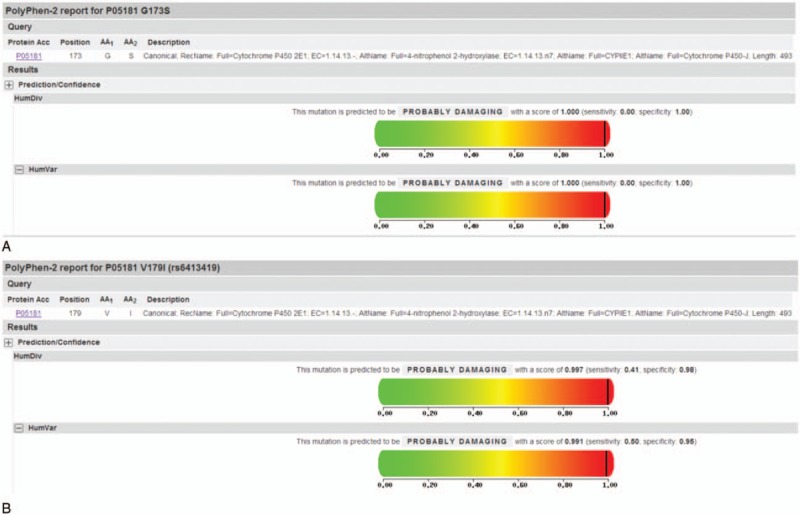
Pharmacogenetics is the genetic basis of pharmacokinetics, genetic testing, and clinical management in diseases. Evaluation about genetic alterations of drug metabolizing enzymes in human genome contributes toward understanding the interindividual and interethnic variability for clinical response to potential toxicants. CYP2E1 gene encodes a drug-metabolizing enzyme that metabolizes mostly small, polar molecules, including toxic laboratory chemicals. The aim of this study was to investigate CYP2E1 polymorphisms and gene profile in a Chinese Uygur population. Frequencies for the CYP2E1 mutated alleles and genotypes were screened in 100 unrelated random healthy Uygur volunteers. PCR and direct sequencing revealed a total of 32 polymorphisms, of which 5 novel mutations were presented. Rs 943975 was the most common single nucleotide polymorphism (SNP). The allele frequencies of CYP2E11A, 4, 7A, and 7C were 65.5, 2, 19.5, and 13%, respectively. The most common genotype combinations were CYP2C191A/1A (43%) and 1A/7C (24%). Functional prediction for 2 nonsynonymous mutations G173S and V179I was performed using MutationTaster, sorting intolerant from tolerant, and PolyPhen-2. The observations of the present study give rise to useful information on CYP2E1 polymorphisms in Chinese Uygur individuals. The results suggest important clinical implications for the use of medications metabolized by CYP2E1 among Uygurs.
药物遗传学是疾病中药代动力学、基因检测及临床管理的遗传基础。对人类基因组中药物代谢酶基因改变的评估有助于理解个体间和种族间对潜在毒物临床反应的变异性。CYP2E1基因编码一种药物代谢酶,主要代谢包括有毒实验室化学物质在内的小分子极性分子。本研究旨在调查中国维吾尔族人群中CYP2E1基因多态性及基因谱。在100名无亲缘关系的随机健康维吾尔族志愿者中筛查CYP2E1突变等位基因和基因型的频率。聚合酶链反应(PCR)和直接测序共发现32个多态性位点,其中有5个新突变。Rs 943975是最常见的单核苷酸多态性(SNP)。CYP2E1 1A、4、7A和7C等位基因频率分别为65.5%、2%、19.5%和13%。最常见的基因型组合是CYP2C19 1A/1A(43%)和1A/7C(24%)。使用MutationTaster、从耐受中筛选不耐受和PolyPhen-2对2个非同义突变G173S和V179I进行功能预测。本研究的观察结果为中国维吾尔族个体CYP2E1基因多态性提供了有用信息。结果提示CYP2E1代谢药物在维吾尔族人群中使用具有重要临床意义。