Division of Biochemistry, Department of Medical Biochemistry and Biophysics, Karolinska Institutet, SE 171 77 Stockholm, Sweden.
Oblique Therapeutics AB, SE 413 46 Gothenburg, Sweden.
Sci Transl Med. 2018 Feb 14;10(428). doi: 10.1126/scitranslmed.aaf7444.
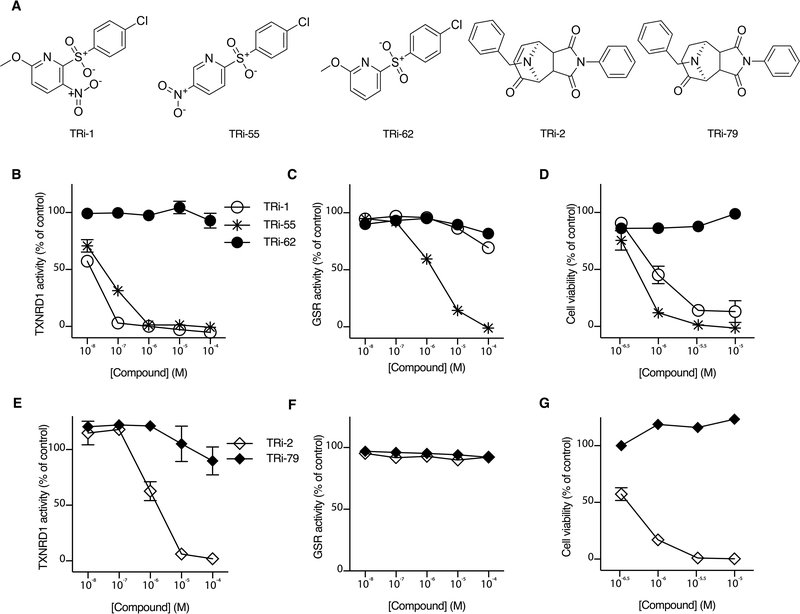
Cancer cells adapt to their inherently increased oxidative stress through activation of the glutathione (GSH) and thioredoxin (TXN) systems. Inhibition of both of these systems effectively kills cancer cells, but such broad inhibition of antioxidant activity also kills normal cells, which is highly unwanted in a clinical setting. We therefore evaluated targeting of the TXN pathway alone and, more specifically, selective inhibition of the cytosolic selenocysteine-containing enzyme TXN reductase 1 (TXNRD1). TXNRD1 inhibitors were discovered in a large screening effort and displayed increased specificity compared to pan-TXNRD inhibitors, such as auranofin, that also inhibit the mitochondrial enzyme TXNRD2 and additional targets. For our lead compounds, TXNRD1 inhibition correlated with cancer cell cytotoxicity, and inhibitor-triggered conversion of TXNRD1 from an antioxidant to a pro-oxidant enzyme correlated with corresponding increases in cellular production of HO In mice, the most specific TXNRD1 inhibitor, here described as TXNRD1 inhibitor 1 (TRi-1), impaired growth and viability of human tumor xenografts and syngeneic mouse tumors while having little mitochondrial toxicity and being better tolerated than auranofin. These results display the therapeutic anticancer potential of irreversibly targeting cytosolic TXNRD1 using small molecules and present potent and selective TXNRD1 inhibitors. Given the pronounced up-regulation of TXNRD1 in several metastatic malignancies, it seems worthwhile to further explore the potential benefit of specific irreversible TXNRD1 inhibitors for anticancer therapy.
癌细胞通过激活谷胱甘肽 (GSH) 和硫氧还蛋白 (TXN) 系统来适应其固有的氧化应激增加。抑制这两个系统都能有效地杀死癌细胞,但这种广泛抑制抗氧化活性也会杀死正常细胞,这在临床环境中是极不理想的。因此,我们评估了单独靶向 TXN 途径的方法,更具体地说,是靶向含有硒代半胱氨酸的细胞质酶 TXN 还原酶 1 (TXNRD1) 的选择性抑制。在大规模筛选工作中发现了 TXNRD1 抑制剂,与泛 TXNRD 抑制剂(如金诺芬)相比,它们对 TXNRD2 和其他靶标的抑制具有更高的特异性。对于我们的先导化合物,TXNRD1 抑制与癌细胞细胞毒性相关,抑制剂触发 TXNRD1 从抗氧化酶向促氧化剂酶的转化与细胞中 HO 的相应增加相关。在小鼠中,最特异的 TXNRD1 抑制剂,在此描述为 TXNRD1 抑制剂 1 (TRi-1),可损害人肿瘤异种移植物和同源小鼠肿瘤的生长和活力,而对线粒体毒性较小,且耐受性优于金诺芬。这些结果显示了使用小分子不可逆地靶向细胞质 TXNRD1 的治疗抗癌潜力,并提供了有效和选择性的 TXNRD1 抑制剂。鉴于 TXNRD1 在几种转移性恶性肿瘤中的明显上调,进一步探索特异性不可逆 TXNRD1 抑制剂在抗癌治疗中的潜在益处似乎是值得的。