Eriksson Sofi, Prigge Justin R, Talago Emily A, Arnér Elias S J, Schmidt Edward E
1] Department of Microbiology and Immunology, Montana State University, Cooley Hall, PO Box 173520, Bozeman, Montana 59717, USA [2] Division of Biochemistry, Medical Biochemistry and Biophysics, Karolinska Institutet, SE-171 77 Stockholm, Sweden.
Department of Microbiology and Immunology, Montana State University, Cooley Hall, PO Box 173520, Bozeman, Montana 59717, USA.
Nat Commun. 2015 Mar 20;6:6479. doi: 10.1038/ncomms7479.
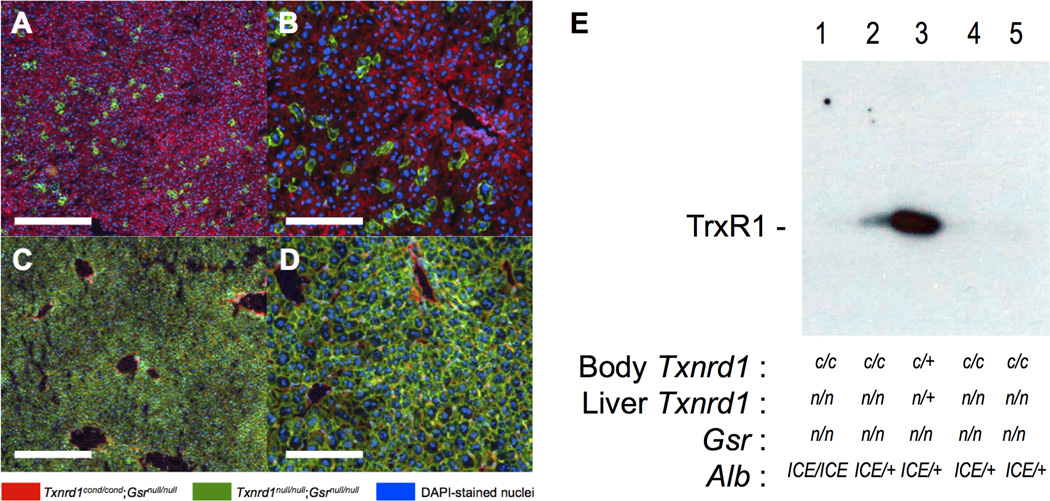
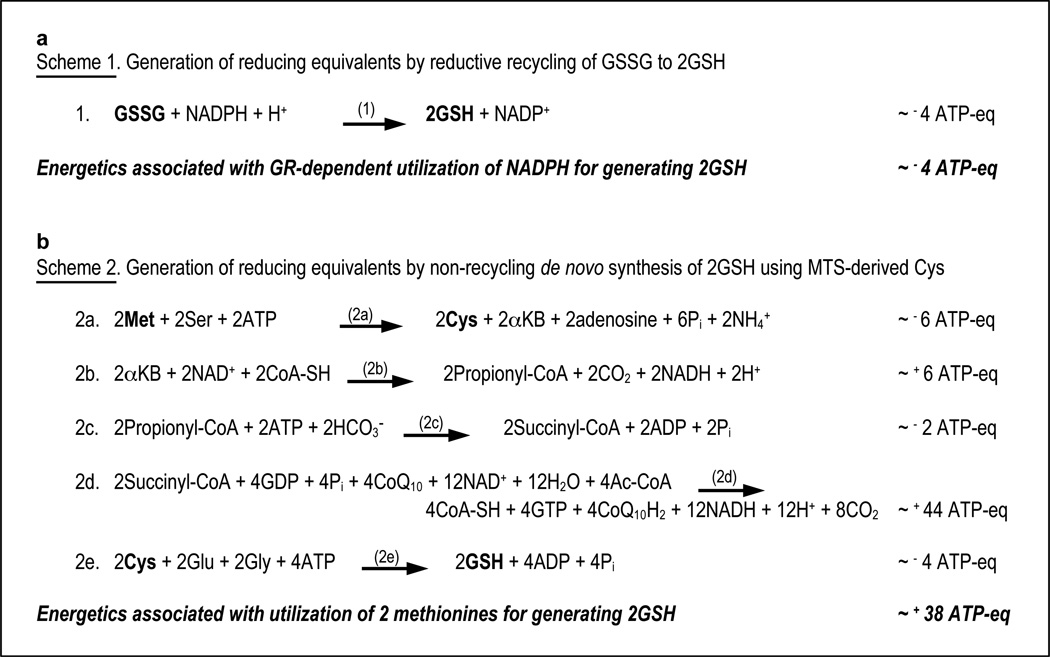
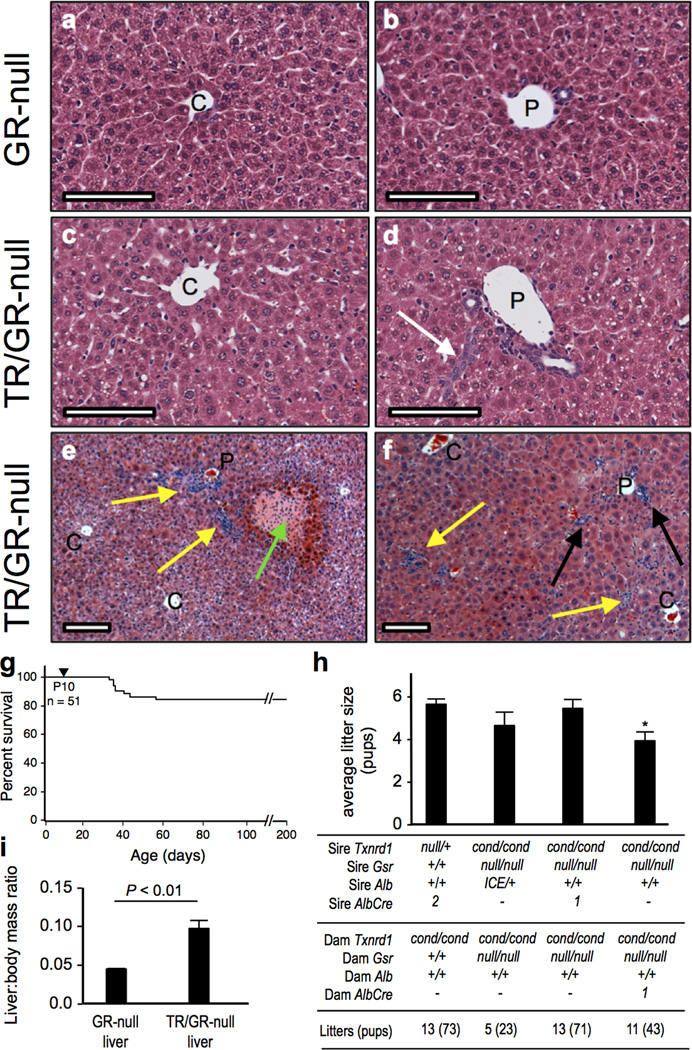
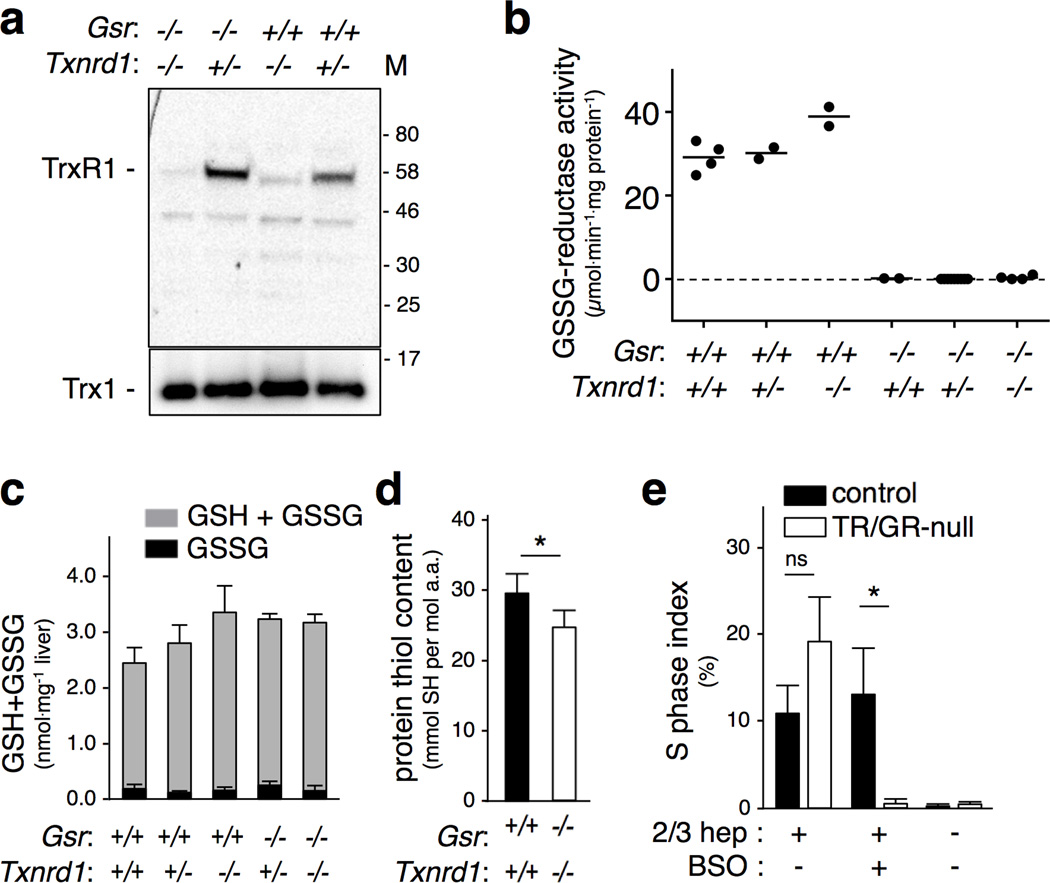
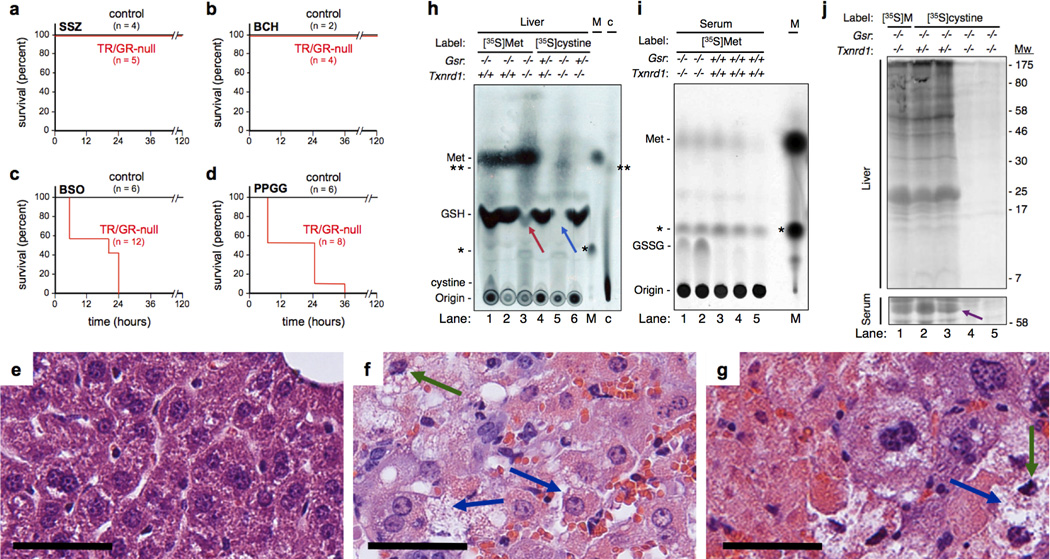
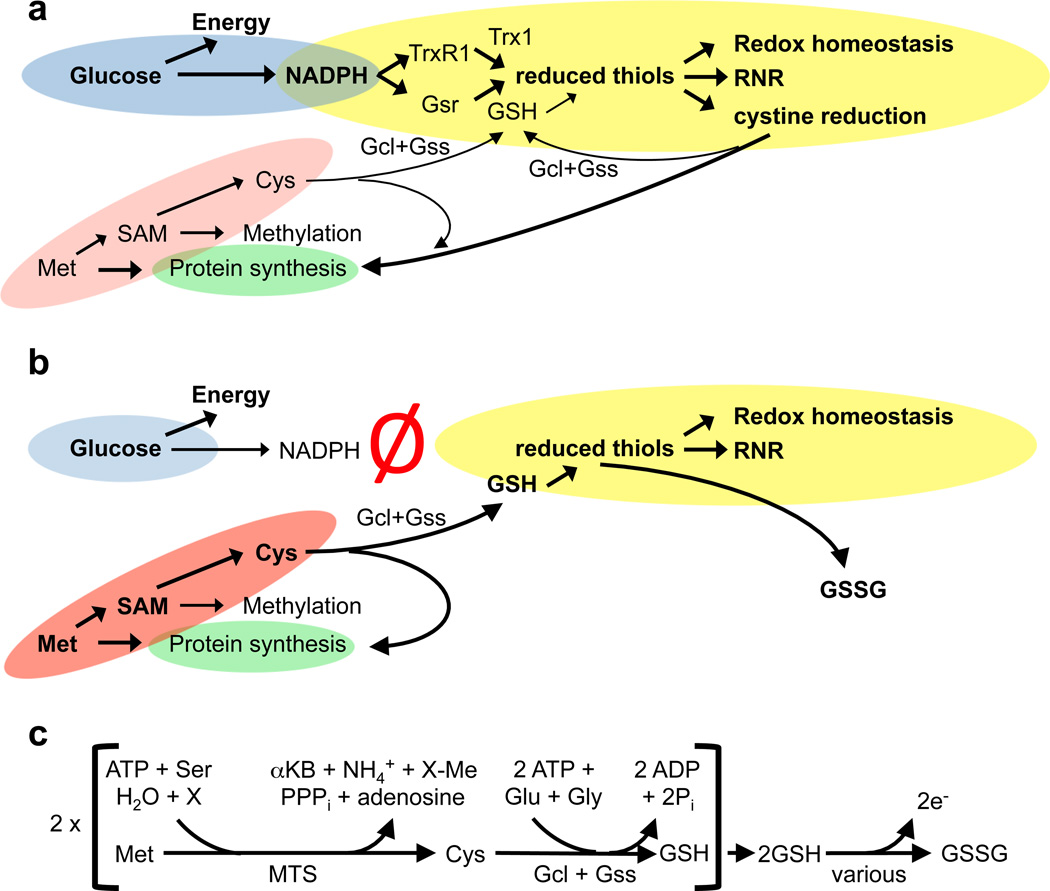
Across phyla, reduced nicotinamide adenine dinucleotide phosphate (NADPH) transfers intracellular reducing power to thioredoxin reductase-1 (TrxR1) and glutathione reductase (GR), thereby supporting fundamental housekeeping and antioxidant pathways. Here we show that a third, NADPH-independent pathway can bypass the need for TrxR1 and GR in mammalian liver. Most mice genetically engineered to lack both TrxR1 and GR in all hepatocytes ('TR/GR-null livers') remain long-term viable. TR/GR-null livers cannot reduce oxidized glutathione disulfide using NADPH but still require continuous glutathione synthesis. Inhibition of cystathionine γ-lyase causes rapid necrosis of TR/GR-null livers, indicating that methionine-fueled trans-sulfuration supplies the necessary cysteine precursor for glutathione synthesis via an NADPH-independent pathway. We further show that dietary methionine provides the cytosolic disulfide-reducing power and all sulfur amino acids in TR/GR-null livers. Although NADPH is generally considered an essential reducing currency, these results indicate that hepatocytes can adequately sustain cytosolic redox homeostasis pathways using either NADPH or methionine.
在不同的生物门类中,还原型烟酰胺腺嘌呤二核苷酸磷酸(NADPH)将细胞内的还原能力传递给硫氧还蛋白还原酶-1(TrxR1)和谷胱甘肽还原酶(GR),从而支持基本的细胞维持和抗氧化途径。在此,我们表明,在哺乳动物肝脏中,第三条不依赖NADPH的途径可以绕过对TrxR1和GR的需求。大多数经过基因工程改造、所有肝细胞均缺乏TrxR1和GR的小鼠(“TR/GR基因敲除肝脏”)能长期存活。TR/GR基因敲除肝脏无法利用NADPH还原氧化型谷胱甘肽二硫化物,但仍需要持续的谷胱甘肽合成。抑制胱硫醚γ-裂解酶会导致TR/GR基因敲除肝脏迅速坏死,这表明由甲硫氨酸驱动的转硫作用通过一条不依赖NADPH的途径为谷胱甘肽合成提供了必需的半胱氨酸前体。我们进一步表明,膳食甲硫氨酸为TR/GR基因敲除肝脏提供了胞质二硫化物还原能力和所有含硫氨基酸。尽管NADPH通常被认为是一种必需的还原货币,但这些结果表明,肝细胞可以使用NADPH或甲硫氨酸充分维持胞质氧化还原稳态途径。