Hashimoto Haruo, Yamamoto Masafumi, Sugiura Emika, Abe Hayato, Kagawa Takahiro, Goto Motohito, Takahashi Ri-Ichi, Akimoto Toshio, Suemizu Hiroshi
Central Institute for Experimental Animals, 3-25-12 Tonomachi, Kawasaki-ku, Kawasaki, Kanagawa 210-0821, Japan.
Division of Laboratory Animal Science, Nippon Medical School, 115 Sendagi, Bunkyo-ku, Tokyo 113-8602, Japan.
J Vet Med Sci. 2018 Apr 18;80(4):662-666. doi: 10.1292/jvms.17-0641. Epub 2018 Feb 14.
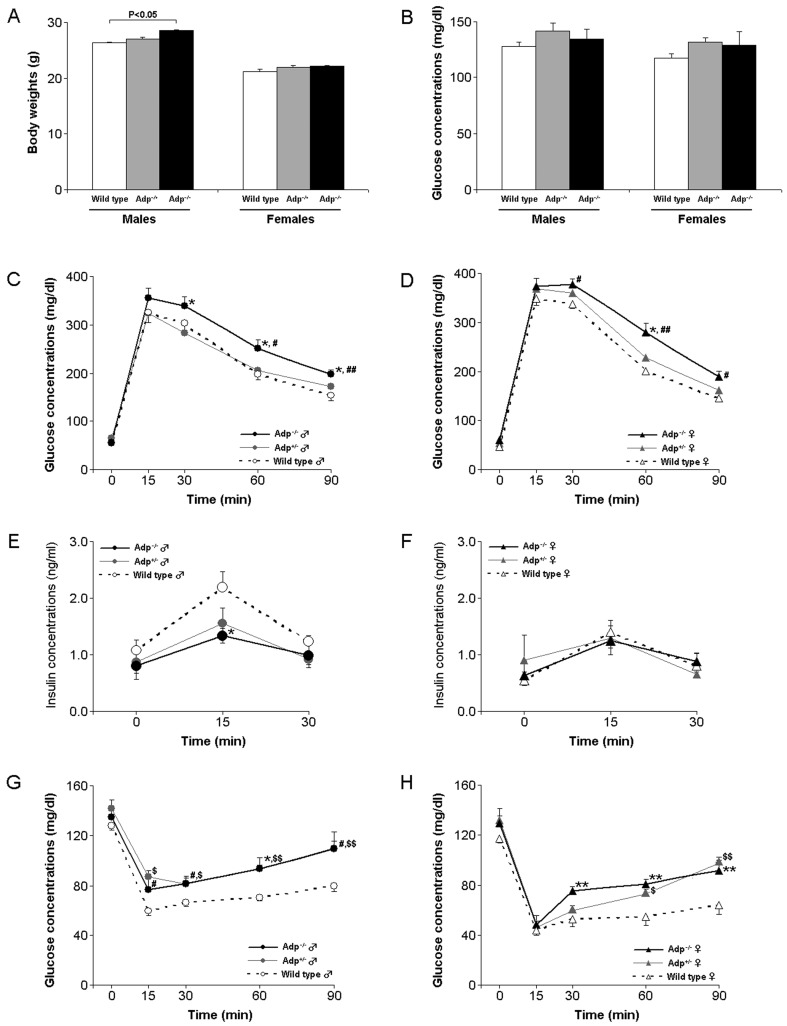
Expression of peroxisome proliferator-activated receptor (PPAR) α was investigated in adiponectin knockout mice to elucidate the relationship between PPARα and adiponectin deficiency-induced diabetes. Adiponectin knockout (Adp) mice were generated by gene targeting. Glucose tolerance test (GTT), insulin tolerance test (ITT), and organ sampling were performed in Adp mice at the age of 10 weeks. PPARα, insulin, triglyceride, free fatty acid (FFA), and tumor necrosis factor α (TNFα) were analyzed from the sampled organs. Adp mice showed impaired glucose tolerance and insulin resistance. Additionally, PPARα levels were decreased and plasma concentration of triglyceride, FFA and TNFα were increased. These data may indicate that insulin resistance in Adp mice is likely caused by an increase in concentrations of TNFα and FFA via downregulation of PPARα.
为了阐明过氧化物酶体增殖物激活受体(PPAR)α与脂联素缺乏诱导的糖尿病之间的关系,我们在脂联素基因敲除小鼠中研究了PPARα的表达情况。通过基因靶向技术构建脂联素基因敲除(Adp)小鼠。在10周龄的Adp小鼠中进行葡萄糖耐量试验(GTT)、胰岛素耐量试验(ITT)和器官取样。从取样的器官中分析PPARα、胰岛素、甘油三酯、游离脂肪酸(FFA)和肿瘤坏死因子α(TNFα)。Adp小鼠表现出葡萄糖耐量受损和胰岛素抵抗。此外,PPARα水平降低,甘油三酯、FFA的血浆浓度和TNFα升高。这些数据可能表明,Adp小鼠的胰岛素抵抗可能是由于PPARα下调导致TNFα和FFA浓度升高所致。