School of Medicine, Hunan Normal University, Changsha, Hunan, 410013, China.
Department of Biology, Zhejiang Normal University, Jinhua, Zhejiang, 321004, China.
Cell Death Dis. 2018 Feb 14;9(2):246. doi: 10.1038/s41419-018-0281-y.
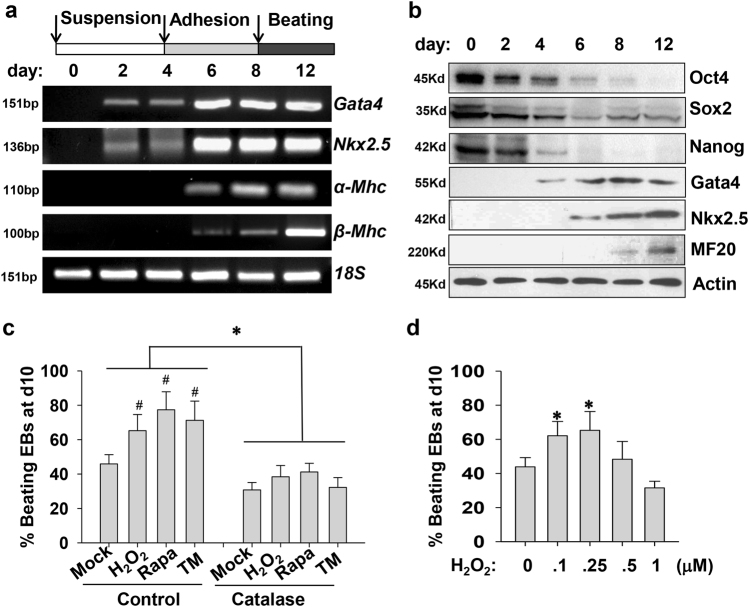
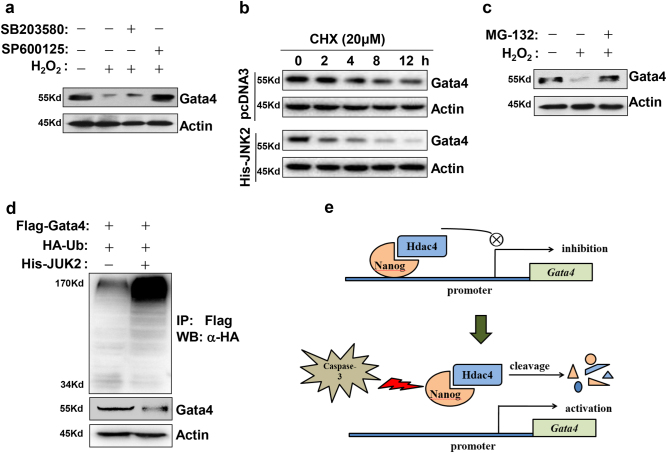
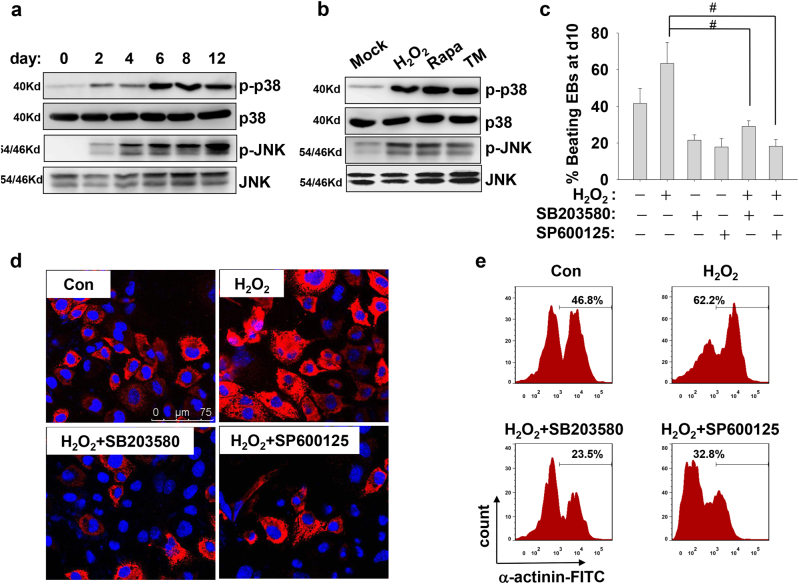
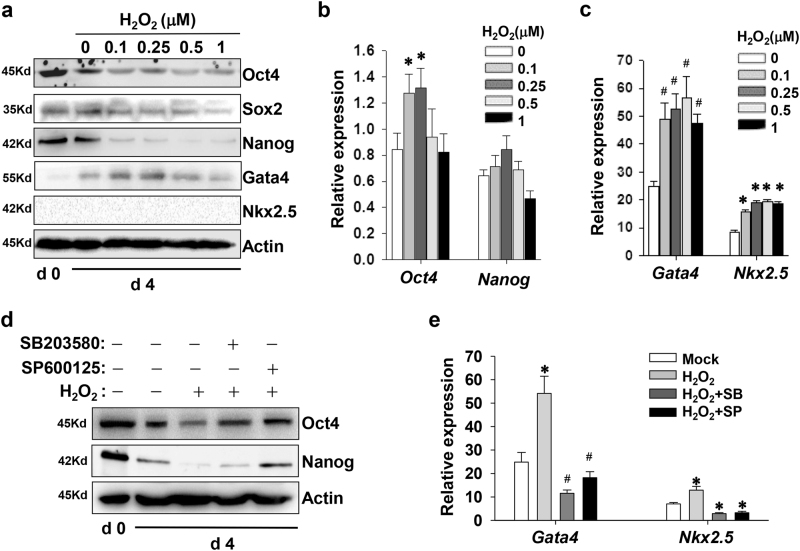
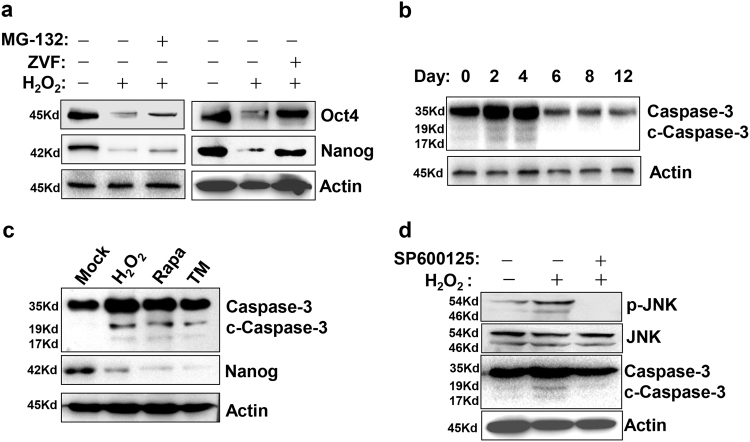
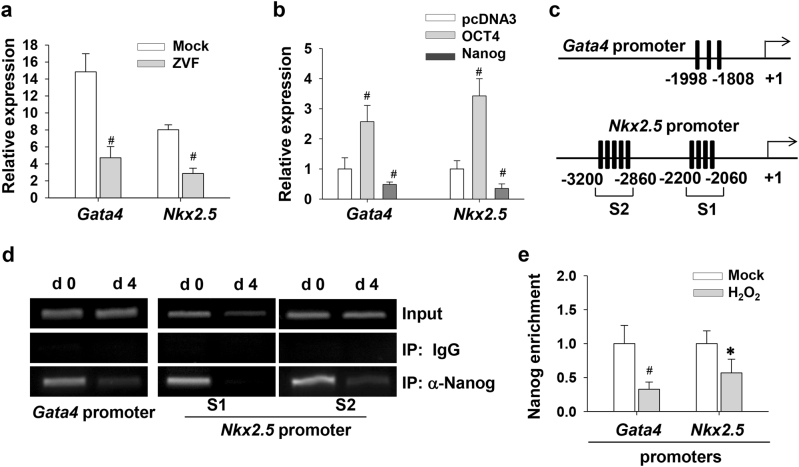
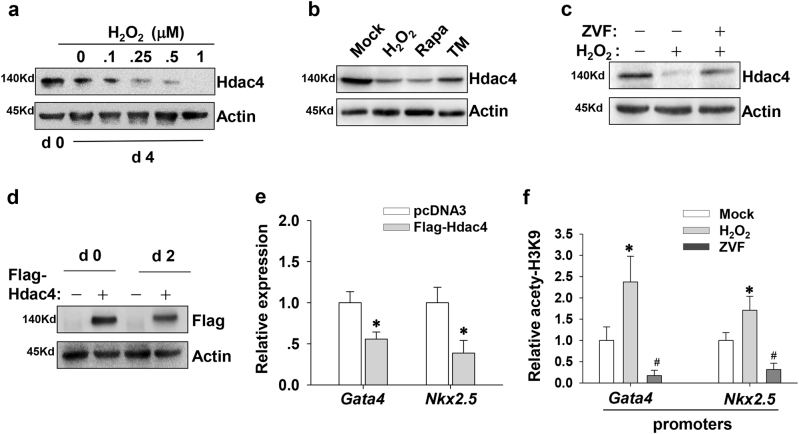
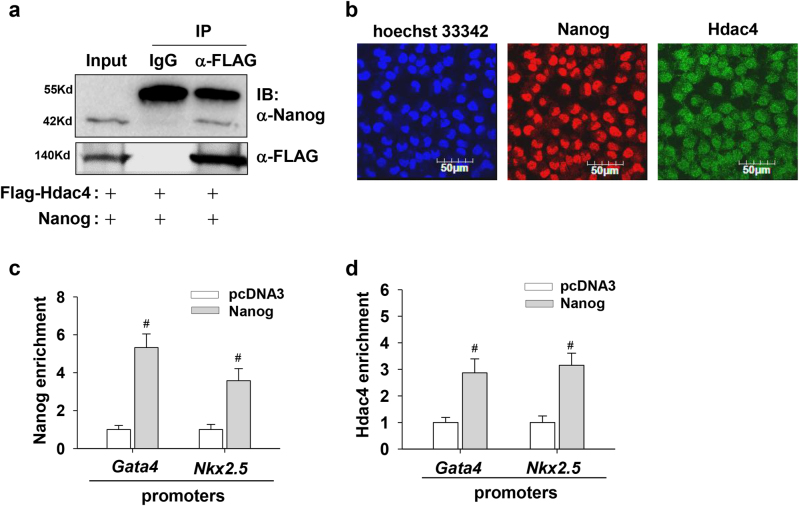
Oxidative stress generates reactive oxygen species (ROS) that can promote or inhibit cardiac differentiation of stem cells dependent on the intensity of stimuli as well as cellular context in redox and differentiation status. In the current study, we confirmed that suitable intensity of hydrogen peroxide at the formation stage of embryoid bodies (EBs) effectively favored the formation of spontaneously beating cardiomyocytes from P19 embryonal carcinoma cells. Mechanistic studies implicated that extrinsic ROS enhanced the Caspase-mediated degradation of Oct4 and Nanog, two factors that governing pluripotent property. Further experiments suggested that a cohort of Nanog together with histone deacetylase 4 (Hdac4) played a critical role in establishing and maintaining the silent transcriptional status of Gata4 and Nkx2.5 in undifferentiated cells. Thus, an impulse of hydrogen peroxide depleted Nanog and Hdac4 via a caspase-dependent manner to ameliorate the repression on Gata4 and Nkx2.5 promoters, thereby generating a persistent activation on cardiac differentiation program. Meanwhile, we found that excessive ROS-activated JNK cascade to facilitate the ubiquitination and subsequent degradation of Gata4 protein. Overall, our results indicate that suitable ROS promotes the activation of Gata4 in transcription, while excessive ROS targets Gata4 protein for proteasome-dependent degradation. Gata4 is an important modulator balancing the promoting and inhibitory effects of oxidative stress on differentiation program of cardiomyogenesis.
氧化应激会产生活性氧(ROS),这些 ROS 可以促进或抑制干细胞向心脏细胞的分化,具体取决于刺激的强度以及细胞内的氧化还原和分化状态。在本研究中,我们证实了胚胎体(EB)形成阶段合适强度的过氧化氢能有效地促进 P19 胚胎癌细胞自发搏动心肌细胞的形成。机制研究表明,外源性 ROS 增强了 Caspase 介导的 Oct4 和 Nanog 的降解,这两种因子调控着多能性。进一步的实验表明,一组 Nanog 与组蛋白去乙酰化酶 4(Hdac4)一起在未分化细胞中对于建立和维持 Gata4 和 Nkx2.5 的沉默转录状态起着关键作用。因此,过氧化氢的冲击通过 Caspase 依赖性方式耗竭了 Nanog 和 Hdac4,从而减轻了对 Gata4 和 Nkx2.5 启动子的抑制作用,从而使心脏分化程序持续激活。同时,我们发现过多的 ROS 激活了 JNK 级联反应,从而促进了 Gata4 蛋白的泛素化和随后的降解。总的来说,我们的结果表明,合适的 ROS 促进了 Gata4 在转录中的激活,而过多的 ROS 则将 Gata4 蛋白作为蛋白酶体依赖性降解的靶标。Gata4 是一种重要的调节剂,平衡了氧化应激对心肌发生分化程序的促进和抑制作用。