Department of Pediatrics, The Third Xiangya Hospital, Central South University, 410013, Changsha, China.
Department of Medicine, The Third Xiangya Hospital, Central South University, 410013, Changsha, China.
Cell Death Dis. 2018 Feb 14;9(2):242. doi: 10.1038/s41419-018-0271-0.
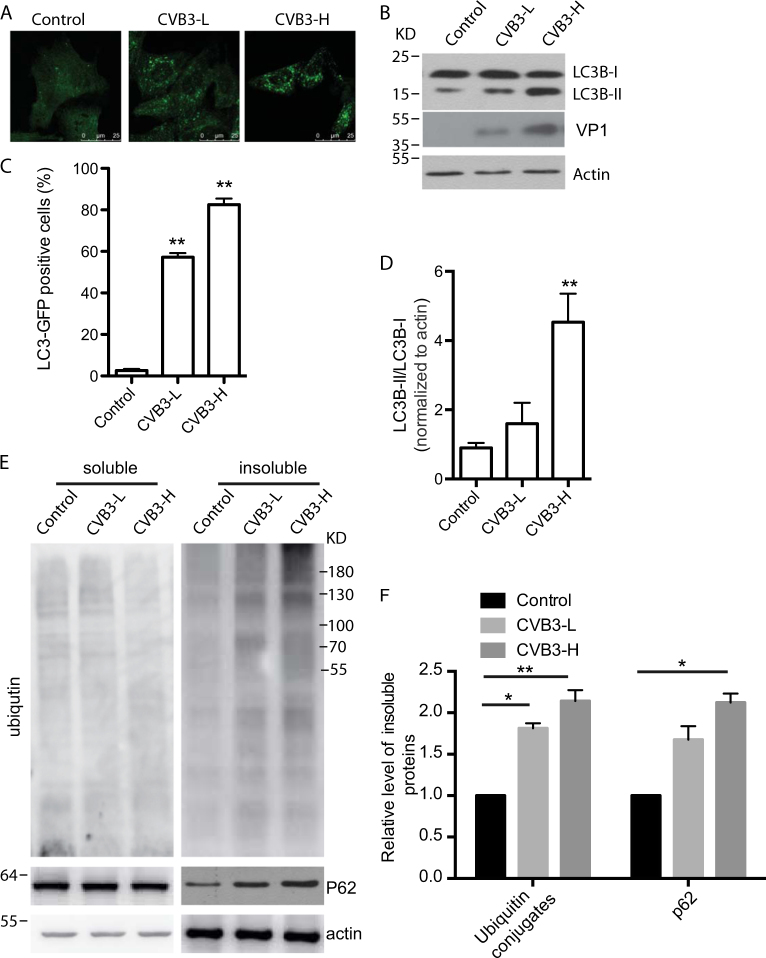
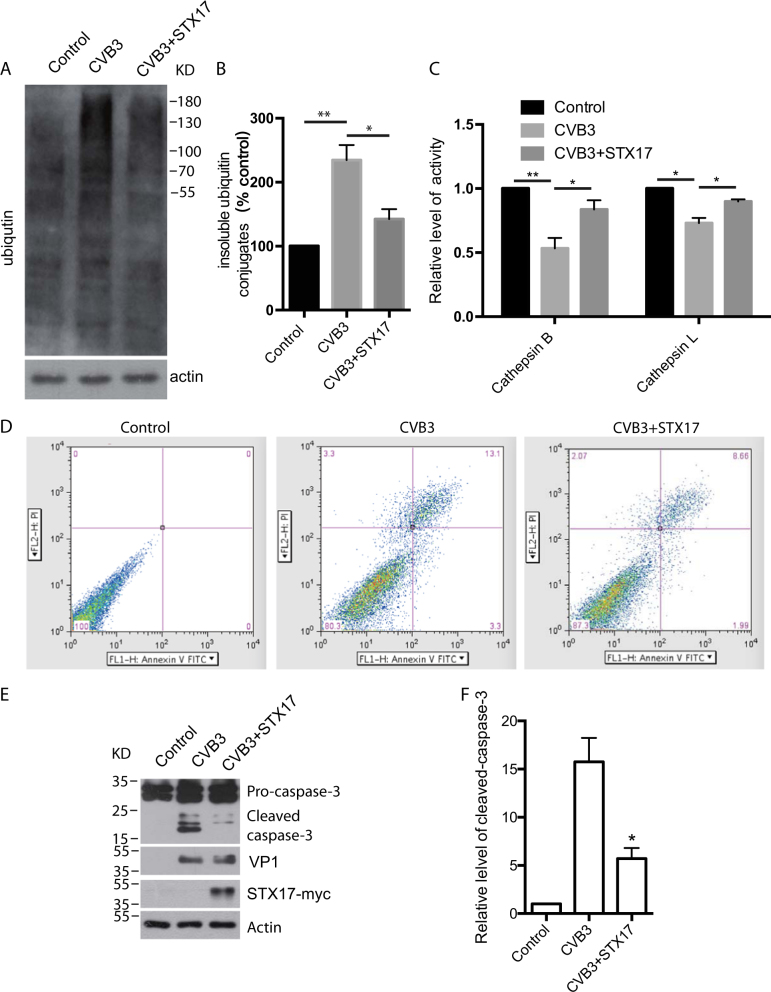
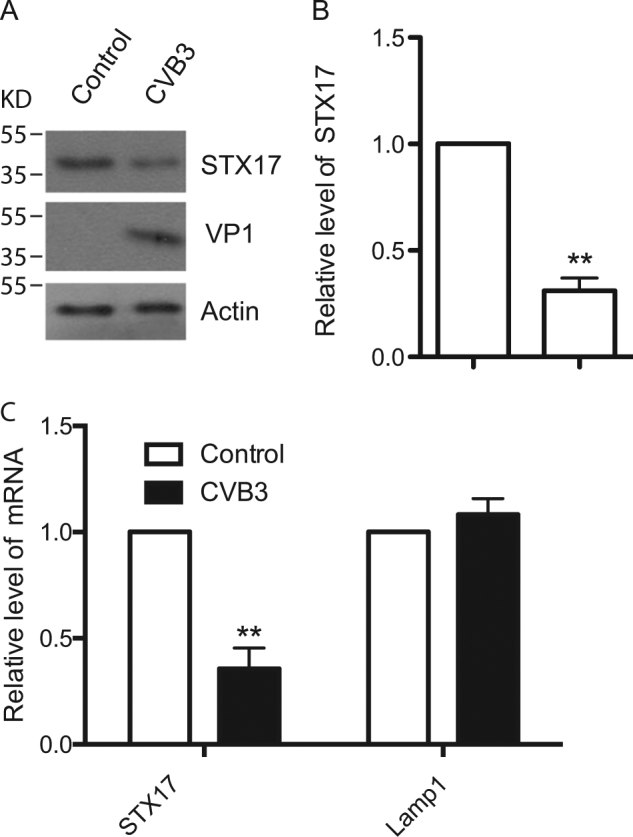
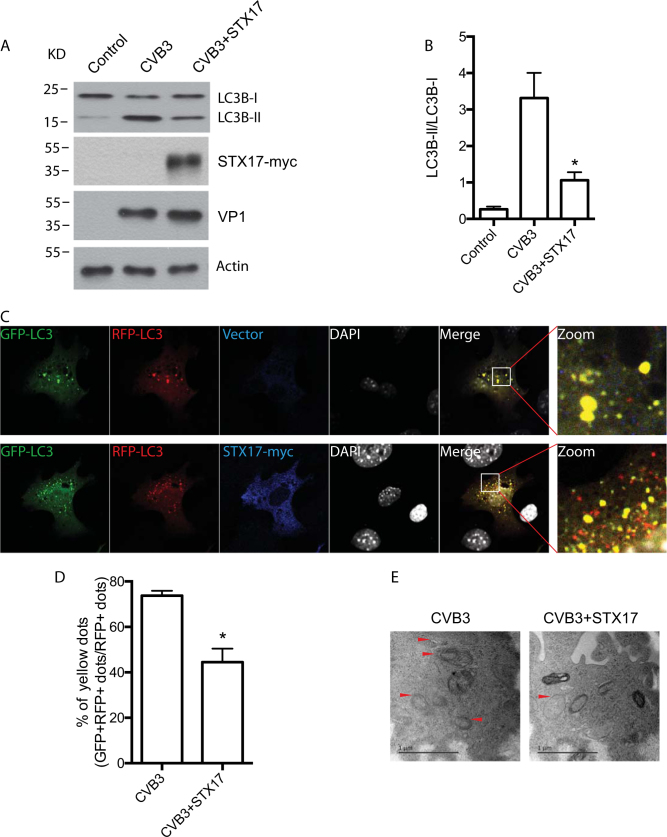
Coxsackievirus B3 (CVB3) is an important human pathogen linked to cardiac arrhythmias and acute heart failure. CVB3 infection has been reported to induce the formation of autophagosomes that support the viral replication in host cells. Interestingly, our study shows that the accumulation of autophagosomes during CVB3 infection is caused by a blockage of autophagosome-lysosome fusion rather than the induction of autophagosome biogenesis. Moreover, CVB3 decreases the transcription and translation of syntaxin 17 (STX17), a SNARE (soluble N-ethylmaleimide-sensitive factor activating protein receptor) protein involved in autophagosome-lysosome fusion. Overexpression of STX17 restored the autophagic flux, alleviated the virus-induced lysosomal dysfunction, and decreased the apoptosis induced by CVB3 infection in HeLa cells. Taken together, our results suggest that CVB3 infection impairs the autophagic flux by blocking autophagosome-lysosome fusion. These findings thus point to potential new therapeutic strategies targeting STX17 or autophagosome-lysosome fusion for treating CVB3-associated diseases.
柯萨奇病毒 B3(CVB3)是一种重要的人类病原体,与心律失常和急性心力衰竭有关。据报道,CVB3 感染会诱导自噬体的形成,从而支持病毒在宿主细胞中的复制。有趣的是,我们的研究表明,CVB3 感染期间自噬体的积累是由于自噬体-溶酶体融合的阻断而不是自噬体生物发生的诱导所致。此外,CVB3 降低了参与自噬体-溶酶体融合的 SNARE(可溶性 N-乙基马来酰亚胺敏感因子激活蛋白受体)蛋白 syntaxin 17(STX17)的转录和翻译。STX17 的过表达恢复了自噬通量,减轻了病毒感染引起的溶酶体功能障碍,并降低了 HeLa 细胞中由 CVB3 感染诱导的细胞凋亡。总之,我们的研究结果表明,CVB3 感染通过阻断自噬体-溶酶体融合来损害自噬通量。这些发现为针对 STX17 或自噬体-溶酶体融合的潜在新治疗策略提供了依据,以治疗与 CVB3 相关的疾病。