Shi Daohua, Zhu Yanting, Niu Peiguang, Zhou Jintuo, Chen Huajiao
Department of Pharmacy, Fujian Provincial Maternity and Children Hospital, Affiliated Hospital of Fujian Medical University, Fuzhou, Fujian, China.
Onco Targets Ther. 2018 Feb 9;11:757-767. doi: 10.2147/OTT.S155065. eCollection 2018.
Cardamonin inhibits the proliferation of SKOV3 cells by suppressing the mammalian target of rapamycin complex 1 (mTORC1). However, the mechanism of cardamonin on mTORC1 inhibition has not been well demonstrated. The regulatory-associated protein of TOR (Raptor) is an essential component of mTORC1. Here, we investigated the role of Raptor in the mTORC1 inhibition effect of cardamonin in SKOV3 cells.
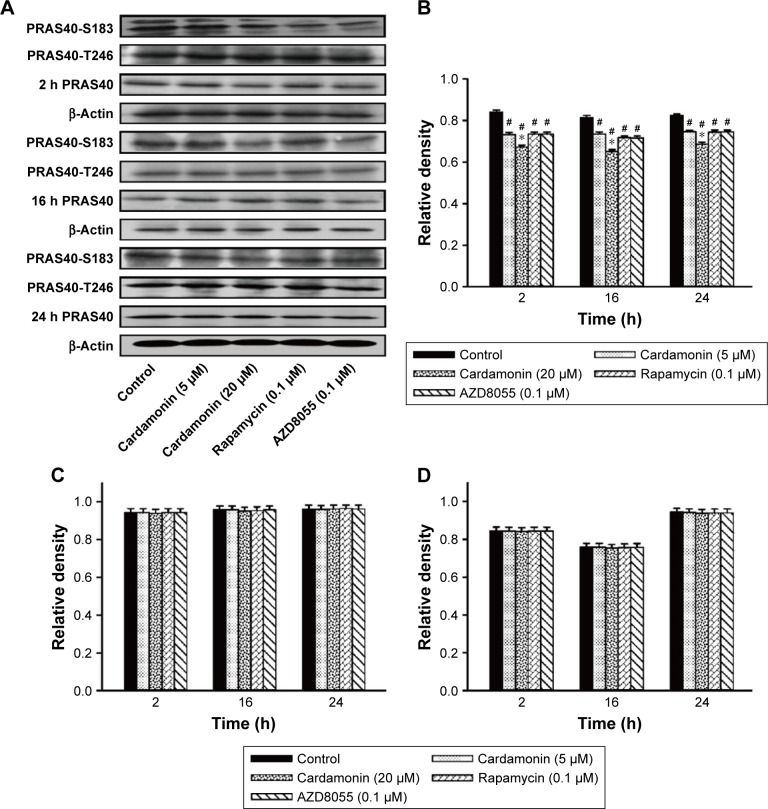
The expression of Raptor was knockdown by small interfering RNA (siRNA). The expressions of specific binding proteins of mTORC1 were analyzed by Western blotting, and the cell proliferation was detected by methyl thiazolyl tetrazolium (MTT) assay.
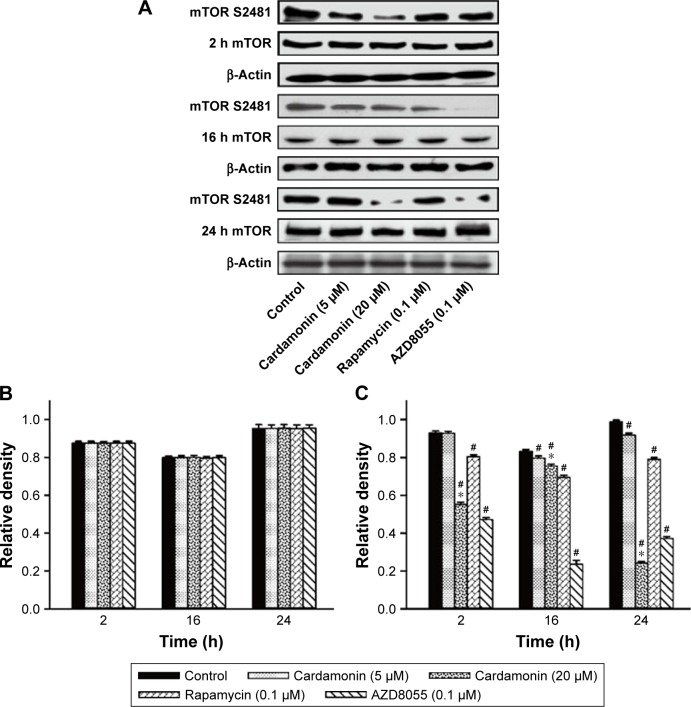
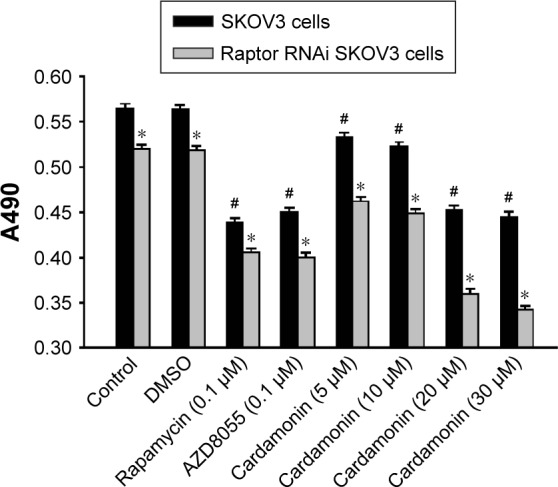
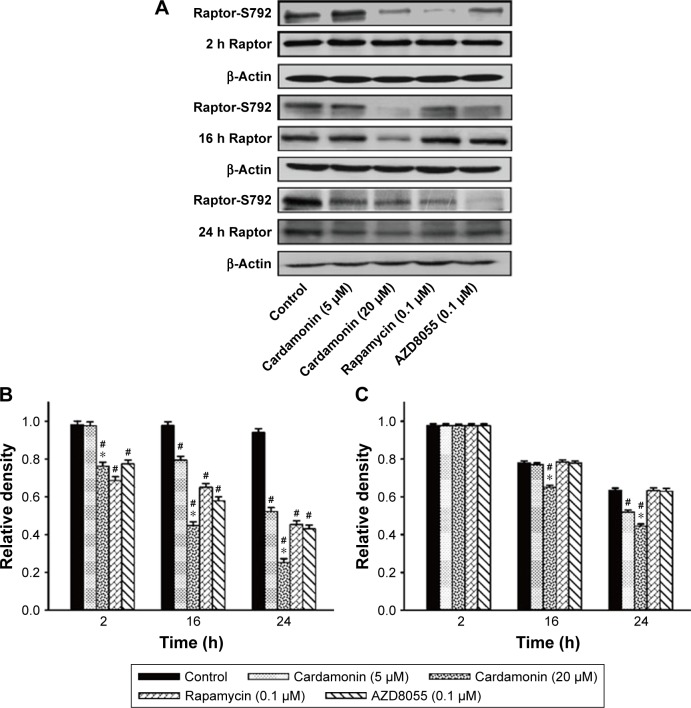
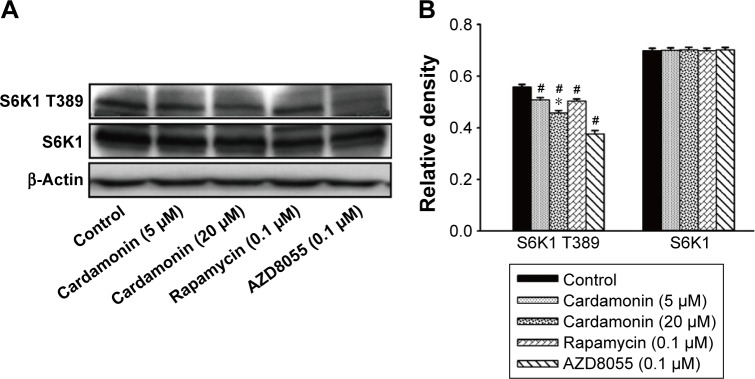
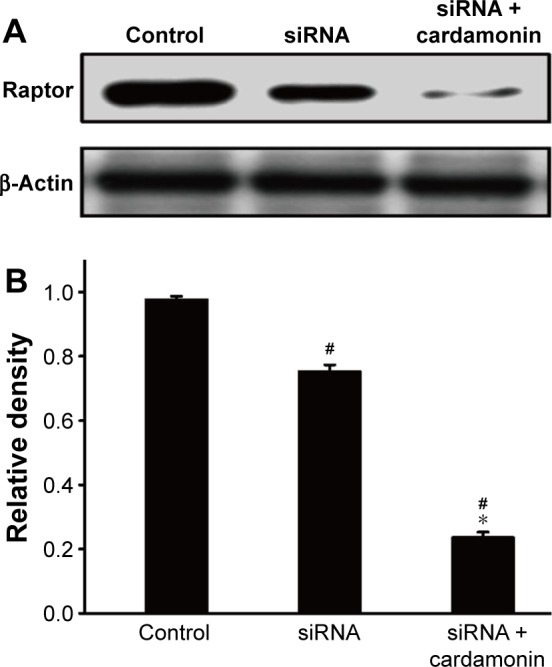
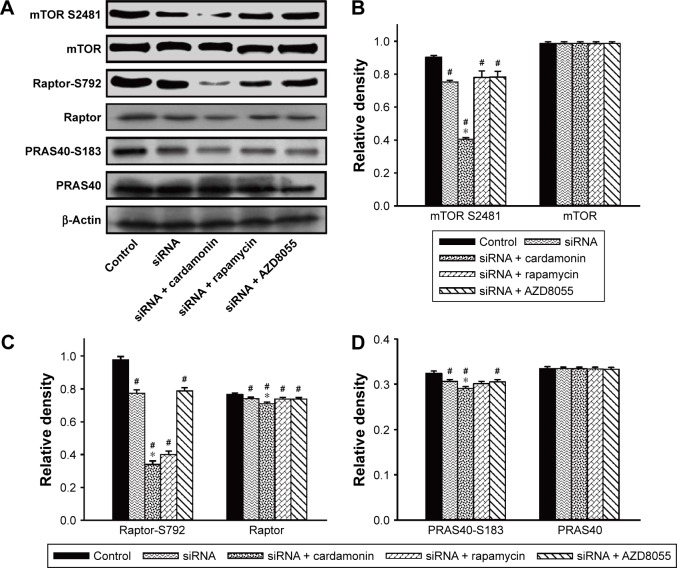
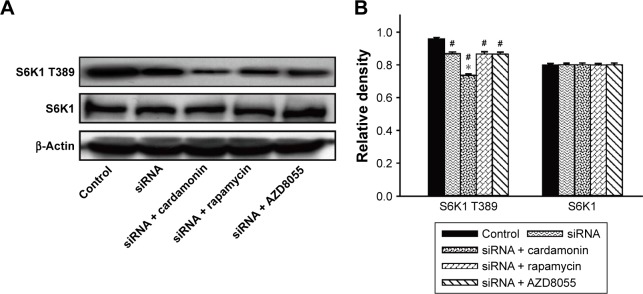
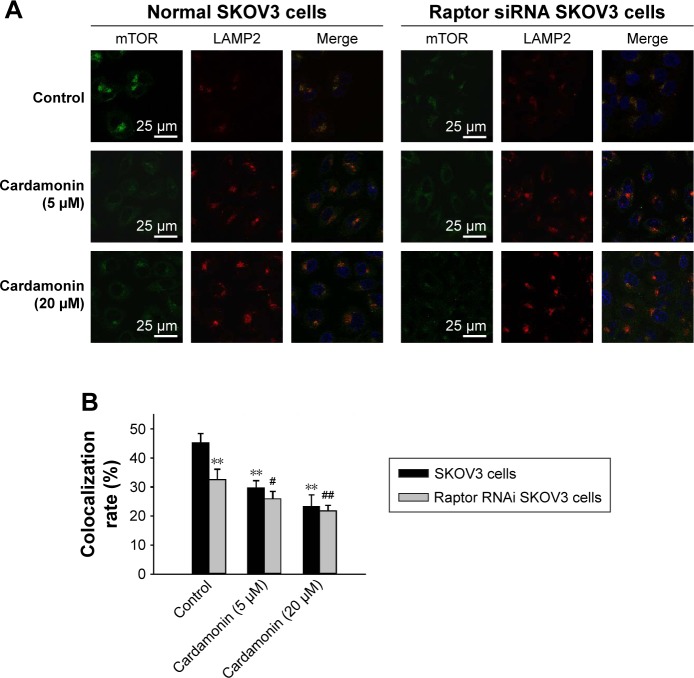
Rapamycin, AZD8055, and cardamonin inhibited the activity of mammalian target of rapamycin (mTOR). Different from rapamycin and AZD8055, cardamonin suppressed the phosphorylation and protein expression of Raptor. Transfected with Raptor siRNA, the mTOR activation and proliferation of SKOV3 cells were decreased, and these effects were strengthened by cardamonin in Raptor siRNA SKOV3 cells. Cardamonin interfered with the lysosomal colocalization of mTOR with lysosomal associated membrane protein 2 (LAMP2), which was also hindered by Raptor siRNA. Furthermore, cardamonin strengthened the inhibitory effect on the lysosomal localization of mTOR in Raptor siRNA cells.
Our results suggested that Raptor mainly mediated the inhibition of cardamonin on mTORC1 in SKOV3 cells.
小豆蔻明通过抑制雷帕霉素靶蛋白复合物1(mTORC1)来抑制SKOV3细胞的增殖。然而,小豆蔻明抑制mTORC1的机制尚未得到充分阐明。雷帕霉素靶蛋白调节相关蛋白(Raptor)是mTORC1的重要组成部分。在此,我们研究了Raptor在小豆蔻明对SKOV3细胞mTORC1抑制作用中的作用。
通过小干扰RNA(siRNA)敲低Raptor的表达。采用蛋白质免疫印迹法分析mTORC1特异性结合蛋白的表达,并用噻唑蓝(MTT)法检测细胞增殖。
雷帕霉素、AZD8055和小豆蔻明均抑制雷帕霉素靶蛋白(mTOR)的活性。与雷帕霉素和AZD8055不同,小豆蔻明抑制Raptor的磷酸化和蛋白表达。转染Raptor siRNA后,SKOV3细胞的mTOR激活和增殖降低,小豆蔻明在Raptor siRNA SKOV3细胞中增强了这些作用。小豆蔻明干扰mTOR与溶酶体相关膜蛋白2(LAMP2)的溶酶体共定位,Raptor siRNA也有此作用。此外,小豆蔻明增强了对Raptor siRNA细胞中mTOR溶酶体定位的抑制作用。
我们的结果表明,Raptor主要介导了小豆蔻明对SKOV3细胞中mTORC1的抑制作用。