Li Xuhui, Wang Guihua, Fu Junjie, Li Li, Jia Guangyao, Ren Lisha, Lubberstedt Thomas, Wang Guoying, Wang Jianhua, Gu Riliang
Center of Seed Science and Technology, Beijing Key Laboratory of Crop Genetics and Breeding, Innovation Center for Seed Technology (Ministry of Agriculture), China Agricultural University, Beijing, China.
Institute of Crop Sciences, Chinese Academy of Agricultural Sciences, Beijing, China.
Front Plant Sci. 2018 Jan 31;9:65. doi: 10.3389/fpls.2018.00065. eCollection 2018.
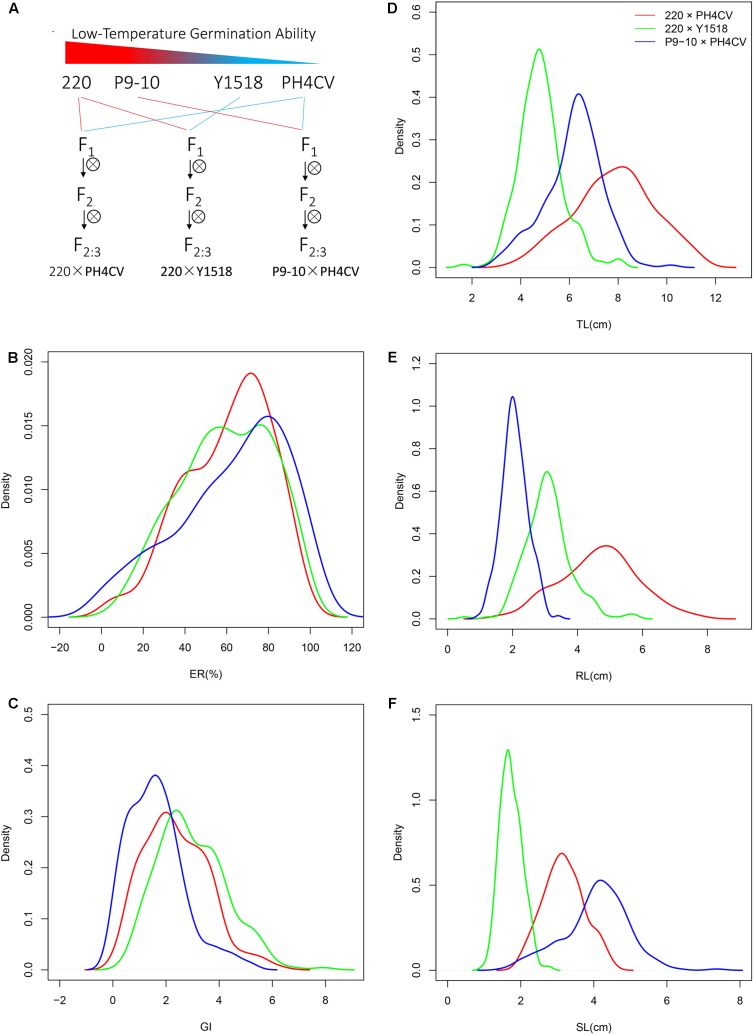
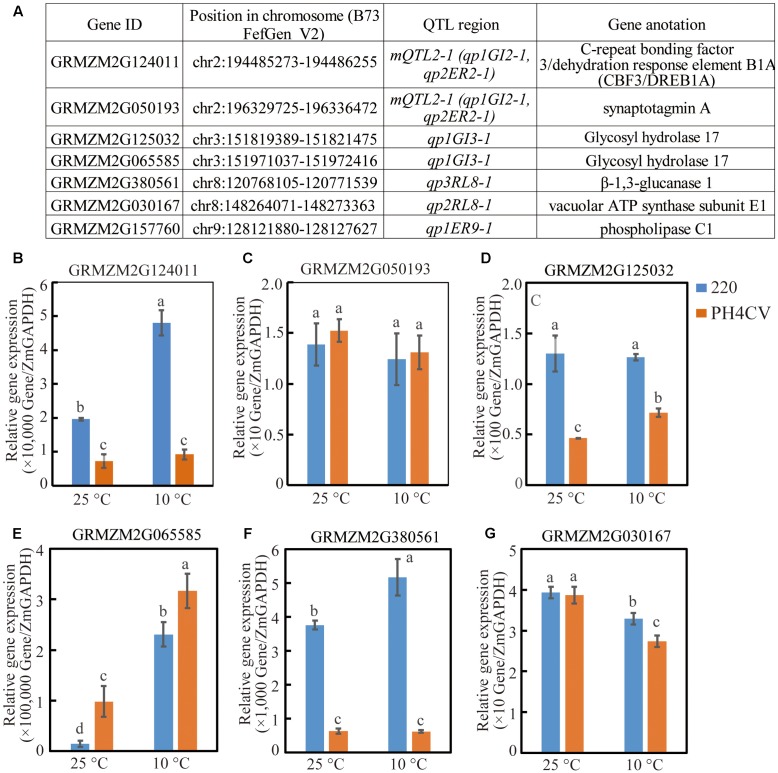
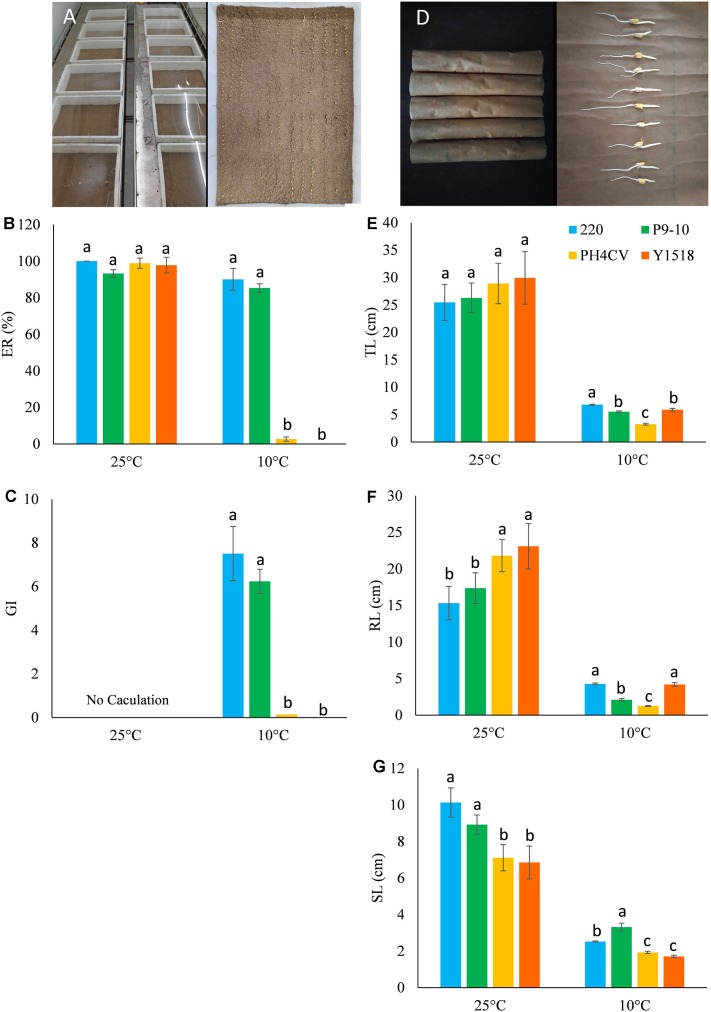
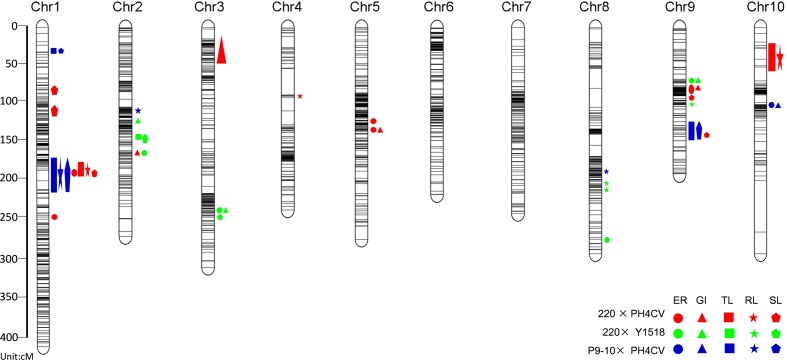
Improving seed vigor in response to cold stress is an important breeding objective in maize that allows early sowing. Using two cold tolerant inbred lines 220 and P9-10 and two susceptible lines Y1518 and PH4CV, three connected F populations were generated for detecting quantitative trait locus (QTL) related to seed low-temperature germination ability. At 10°C, two germination traits (emergence rate and germination index) were collected from a sand bed and three seedling traits (seedling root length, shoot length, and total length) were extracted from paper rolls. Significant correlations were found among all traits in all populations. Via single-population analysis, 43 QTL were detected with explained phenotypic variance of 0.62%∼39.44%. Seventeen QTL explained more than 10% phenotypic variance; of them sixteen (94.12%) inherited favorable alleles from the tolerant lines. After constructing a consensus map, three meta-QTL (mQTL) were identified to include at least two initial QTL from different populations. included seven initial QTL for both germination and seedling traits; with three explaining more than 30% phenotypic variance. and covered two to three initial QTL. The favorable alleles of the QTL within these three mQTL regions were all inherited from the tolerant line 220 and P9-10. These results provided a basis for cloning of genes underlying the mQTL regions to uncover the molecular mechanisms of maize cold tolerance during germination.
提高玉米应对冷胁迫时的种子活力是一个重要的育种目标,这有助于实现早播。利用两个耐冷自交系220和P9 - 10以及两个感病系Y1518和PH4CV,构建了三个连锁的F群体,用于检测与种子低温发芽能力相关的数量性状位点(QTL)。在10°C条件下,从沙床收集了两个发芽性状(出苗率和发芽指数),并从纸卷中提取了三个幼苗性状(幼苗根长、苗长和总长)。在所有群体的所有性状之间均发现了显著相关性。通过单群体分析,共检测到43个QTL,其解释的表型变异为0.62%至39.44%。17个QTL解释的表型变异超过10%;其中16个(94.12%)从耐冷系中继承了有利等位基因。构建整合图谱后,鉴定出三个元QTL(mQTL),每个mQTL至少包含来自不同群体的两个初始QTL。其中一个mQTL包含与发芽和幼苗性状相关的7个初始QTL;其中3个解释的表型变异超过30%。另外两个mQTL分别涵盖2至3个初始QTL。这三个mQTL区域内QTL的有利等位基因均来自耐冷系220和P9 - 10。这些结果为克隆mQTL区域的基因以揭示玉米发芽期耐冷性的分子机制提供了依据。