He Fei, Shen Hangqi, Lin Cheng, Fu Hong, Sheteiwy Mohamed S, Guan Yajing, Huang Yutao, Hu Jin
Seed Science Center, Institute of Crop Science, College of Agriculture and Biotechnology, Zhejiang University Hangzhou, China.
Seed Science Center, Institute of Crop Science, College of Agriculture and Biotechnology, Zhejiang UniversityHangzhou, China; Department of Agronomy, Faculty of Agriculture, Mansoura UniversityMansoura, Egypt.
Front Plant Sci. 2017 Jan 4;7:1978. doi: 10.3389/fpls.2016.01978. eCollection 2016.
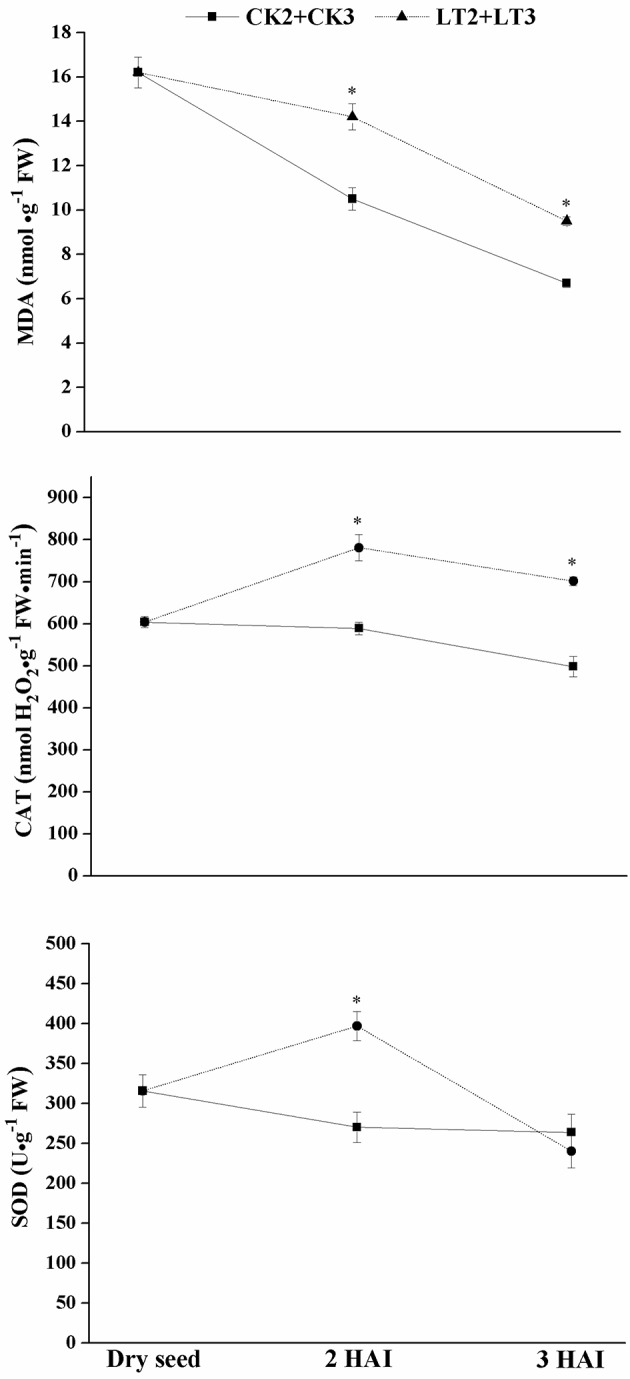
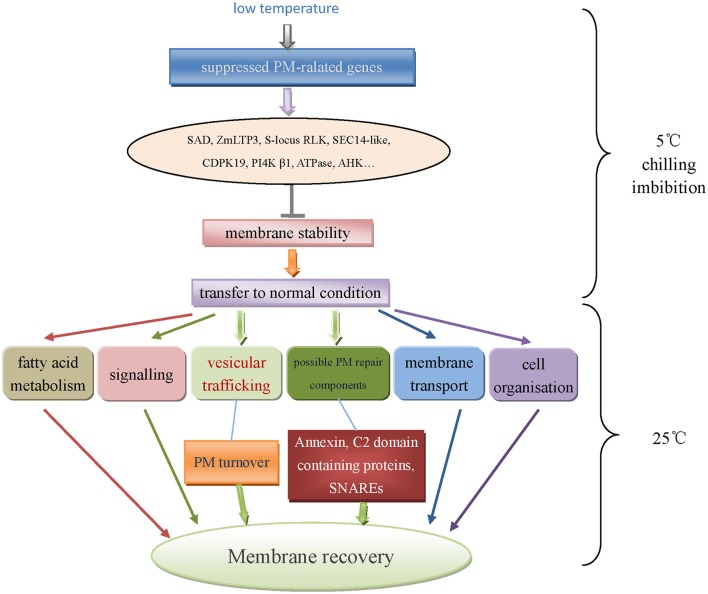
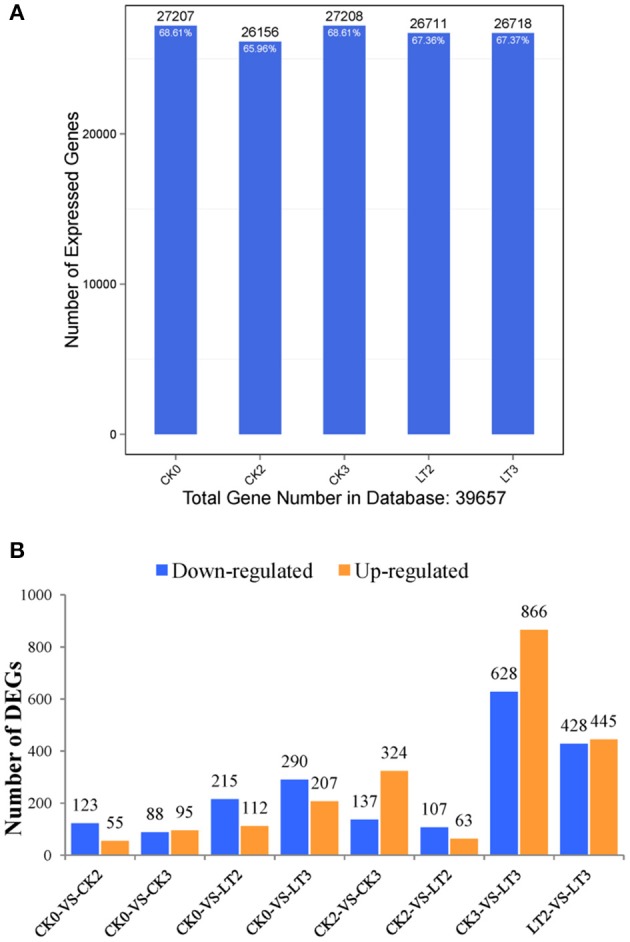
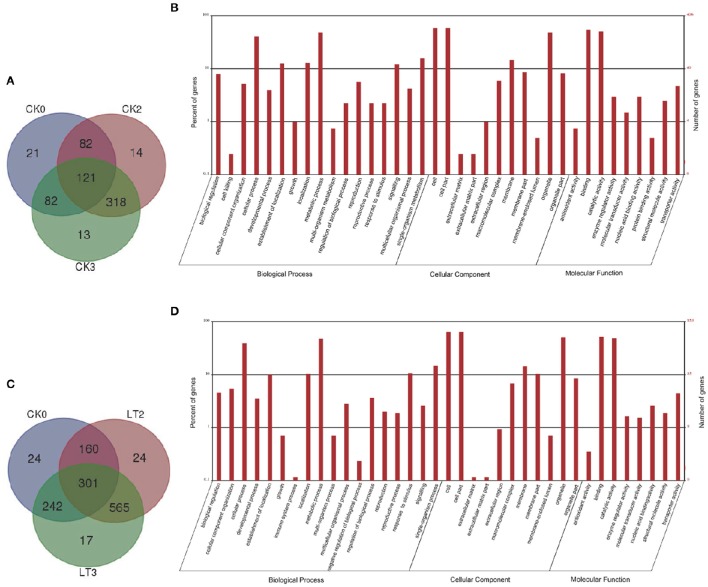
The delayed seed germination and poor seedling growth caused by imbibitional chilling injury was common phenomenon in maize seedling establishment. In this study, RNA sequencing technology was used to comprehensively investigate the gene expressions in chilling-imbibed maize embryo and to reveal the underlying mechanism of chilling injury at molecular level. Imbibed seeds for 2 h at 5°C (LT2) were selected and transcriptomic comparative analysis was performed. Among 327 DEGs indentified between dry seed (CK0) and LT2, 15 specific genes with plasma membrane (PM) relevant functions belonging to lipid metabolism, stress, signaling and transport were characterized, and most of them showed down-regulation pattern under chilling stress. When transferred to 25°C for recovery (LT3), remarkable changes occurred in maize embryo. There were 873 DEGs including many PM related genes being identified between LT2 and LT3, some of which showing significant increase after 1 h recovery. Moreover, 15 genes encoding intracellular vesicular trafficking proteins were found to be exclusively differential expressed at recovery stage. It suggested that the intracellular vesicle trafficking might be essential for PM recovery through PM turnover. Furthermore, transcriptome analyses on imbibed embryos under normal condition (25°C) were also made as a contrast. A total of 651 DEGs were identified to mainly involved in protein metabolism, transcriptional regulation, signaling, and energy productions. Overall, the RNA-Seq results provided us a deep knowledge of imbibitional chilling injury on plasma membrane and a new view on PM repaired mechanism during early seed imbibition at transcriptional level. The DEGs identified in this work would be useful references in future seed germination research.
吸胀冷害导致的种子萌发延迟和幼苗生长不良是玉米幼苗建立过程中的常见现象。本研究利用RNA测序技术全面研究了冷吸胀玉米胚中的基因表达,并在分子水平上揭示冷害的潜在机制。选取在5°C下吸胀2小时的种子(LT2)进行转录组比较分析。在干种子(CK0)和LT2之间鉴定出的327个差异表达基因(DEG)中,表征了15个具有质膜(PM)相关功能的特定基因,这些基因属于脂质代谢、应激、信号传导和转运,其中大多数在冷胁迫下呈下调模式。当转移到25°C进行恢复(LT3)时,玉米胚发生了显著变化。在LT2和LT3之间鉴定出873个DEG,包括许多与PM相关的基因,其中一些在恢复1小时后显著增加。此外,发现15个编码细胞内囊泡运输蛋白的基因在恢复阶段特异性差异表达。这表明细胞内囊泡运输可能通过质膜周转对质膜恢复至关重要。此外,还对正常条件(25°C)下吸胀的胚进行了转录组分析作为对照。共鉴定出651个DEG,主要参与蛋白质代谢、转录调控、信号传导和能量产生。总体而言,RNA-Seq结果为我们提供了对质膜吸胀冷害的深入了解,以及在转录水平上早期种子吸胀过程中质膜修复机制的新观点。本研究中鉴定出的DEG将为未来的种子萌发研究提供有用的参考。