Institute for Memory Impairments and Neurological Disorders (UCI MIND), University of California Irvine, Irvine, California, United States of America.
Department of Neurobiology and Behavior, University of California Irvine, Irvine, California, United States of America.
PLoS One. 2018 Feb 15;13(2):e0193101. doi: 10.1371/journal.pone.0193101. eCollection 2018.
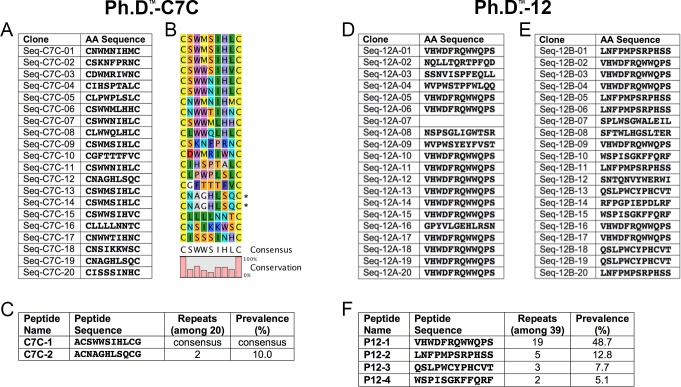
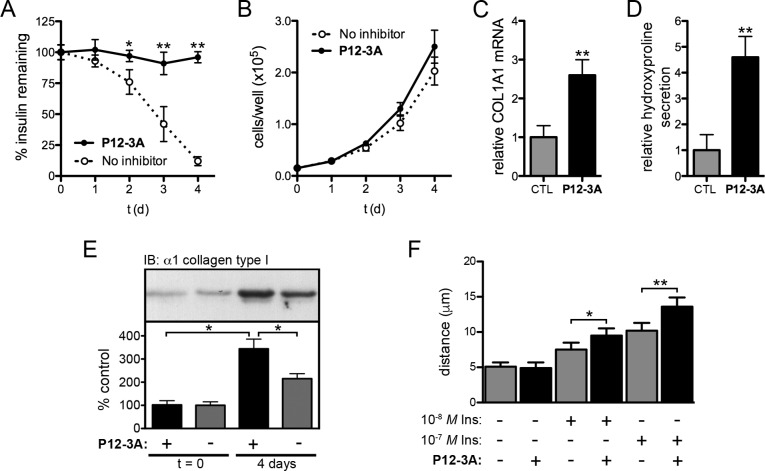
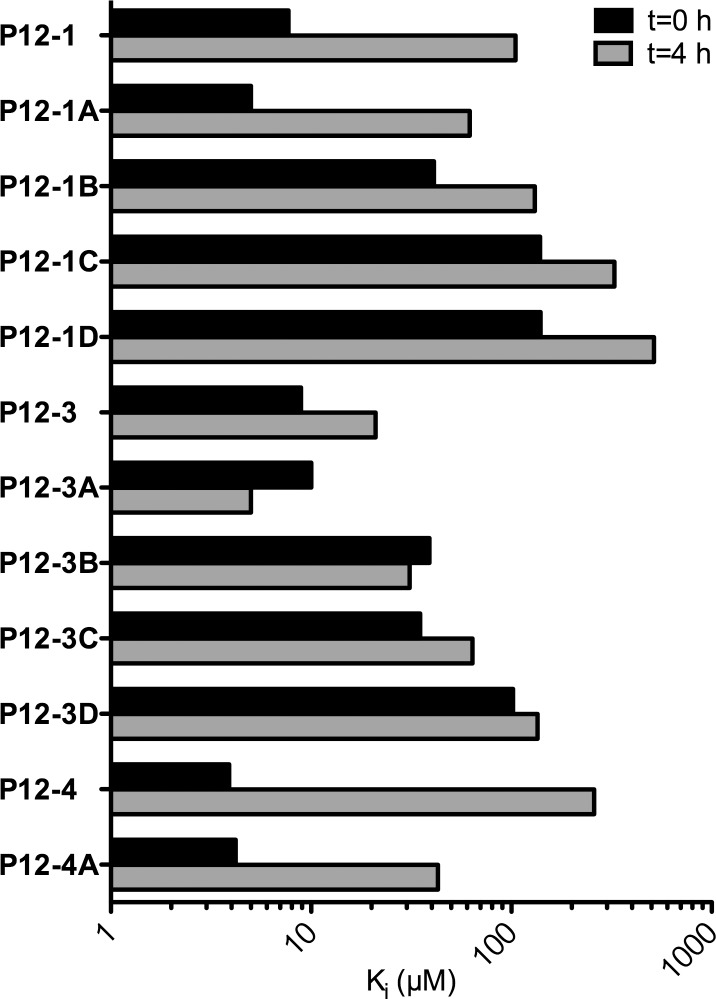
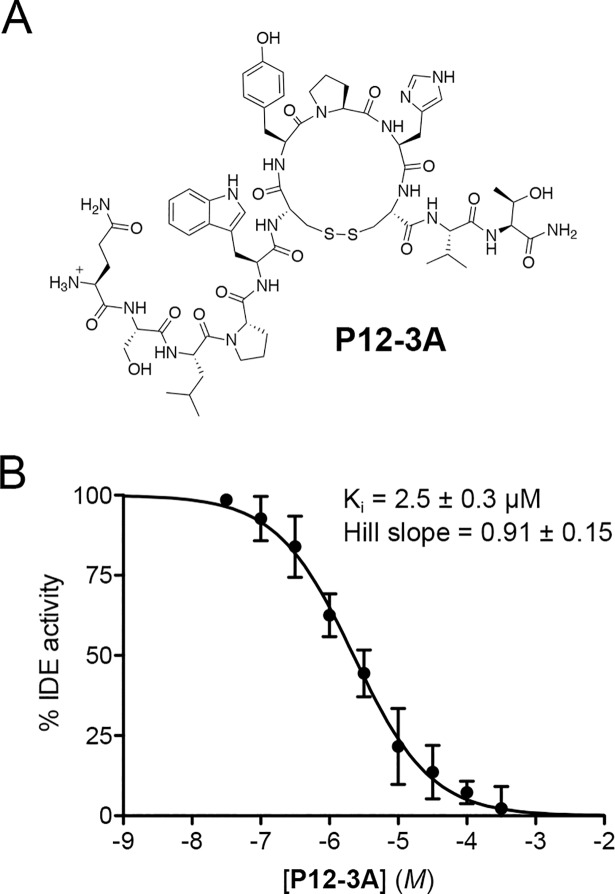
Insulin-degrading enzyme (IDE) is an atypical zinc-metalloendopeptidase that hydrolyzes insulin and other intermediate-sized peptide hormones, many of which are implicated in skin health and wound healing. Pharmacological inhibitors of IDE administered internally have been shown to slow the breakdown of insulin and thereby potentiate insulin action. Given the importance of insulin and other IDE substrates for a variety of dermatological processes, pharmacological inhibitors of IDE suitable for topical applications would be expected to hold significant therapeutic and cosmetic potential. Existing IDE inhibitors, however, are prohibitively expensive, difficult to synthesize and of undetermined toxicity. Here we used phage display to discover novel peptidic inhibitors of IDE, which were subsequently characterized in vitro and in cell culture assays. Among several peptide sequences tested, a cyclic dodecapeptide dubbed P12-3A was found to potently inhibit the degradation of insulin (Ki = 2.5 ± 0.31 μM) and other substrates by IDE, while also being resistant to degradation, stable in biological milieu, and highly selective for IDE. In cell culture, P12-3A was shown to potentiate several insulin-induced processes, including the transcription, translation and secretion of alpha-1 type I collagen in primary murine skin fibroblasts, and the migration of keratinocytes in a scratch wound migration assay. By virtue of its potency, stability, specificity for IDE, low cost of synthesis, and demonstrated ability to potentiate insulin-induced processes involved in wound healing and skin health, P12-3A holds significant therapeutic and cosmetic potential for topical applications.
胰岛素降解酶(IDE)是一种非典型的锌金属内肽酶,可水解胰岛素和其他中等大小的肽类激素,其中许多与皮肤健康和伤口愈合有关。体内给予 IDE 的药理学抑制剂已被证明可减缓胰岛素的分解,从而增强胰岛素的作用。鉴于胰岛素和其他 IDE 底物对各种皮肤过程的重要性,适合局部应用的 IDE 药理学抑制剂有望具有重要的治疗和美容潜力。然而,现有的 IDE 抑制剂价格昂贵、难以合成且毒性不确定。在这里,我们使用噬菌体展示技术发现了 IDE 的新型肽抑制剂,随后在体外和细胞培养测定中对其进行了表征。在测试的几种肽序列中,一种名为 P12-3A 的环状十二肽被发现可强烈抑制 IDE 对胰岛素(Ki = 2.5 ± 0.31 μM)和其他底物的降解,同时也具有抗降解性、在生物环境中稳定且对 IDE 高度选择性。在细胞培养中,P12-3A 被证明可增强几种胰岛素诱导的过程,包括原代小鼠皮肤成纤维细胞中 α-1 型 I 型胶原的转录、翻译和分泌,以及划痕伤口迁移测定中角质形成细胞的迁移。由于其效力、稳定性、对 IDE 的特异性、低合成成本以及增强参与伤口愈合和皮肤健康的胰岛素诱导过程的能力,P12-3A 具有重要的治疗和美容潜力,适用于局部应用。