Department of Neuroscience, Physiology & Pharmacology, UCL, Gower Street, London, WC1E 6BT, United Kingdom.
Department of Neuroscience, Physiology & Pharmacology, UCL, Gower Street, London, WC1E 6BT, United Kingdom.
Neuropharmacology. 2018 Jul 1;136(Pt A):23-36. doi: 10.1016/j.neuropharm.2018.02.008. Epub 2018 Feb 12.
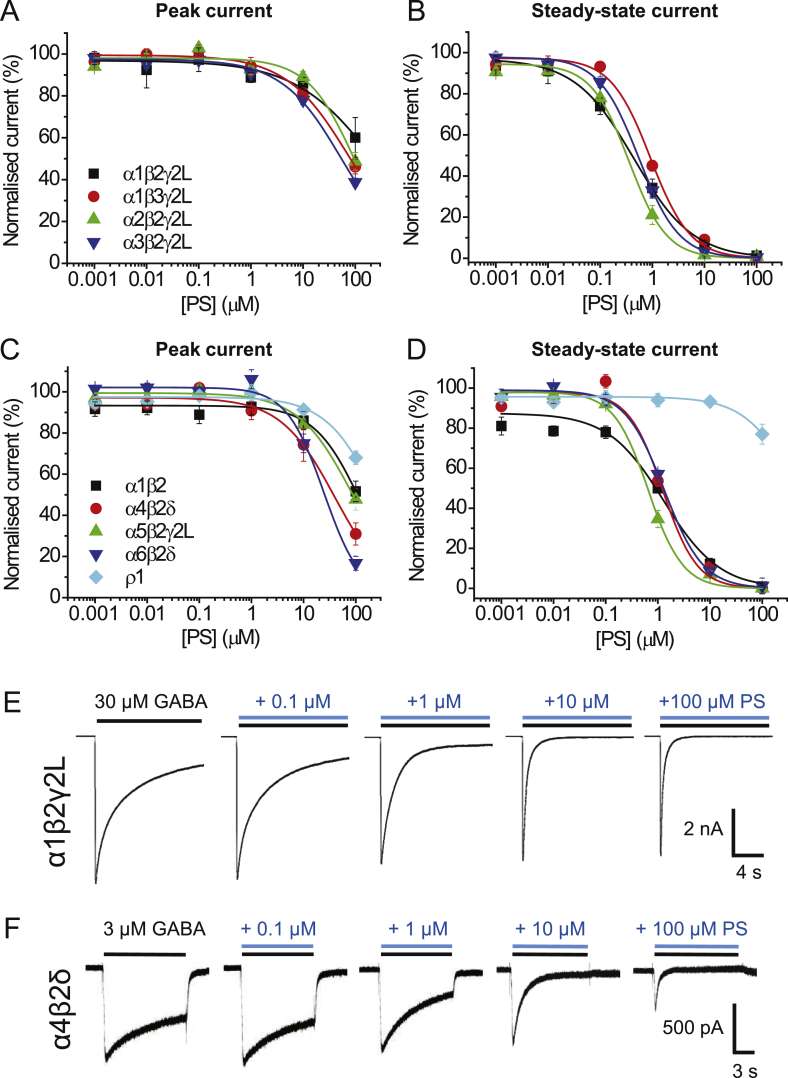
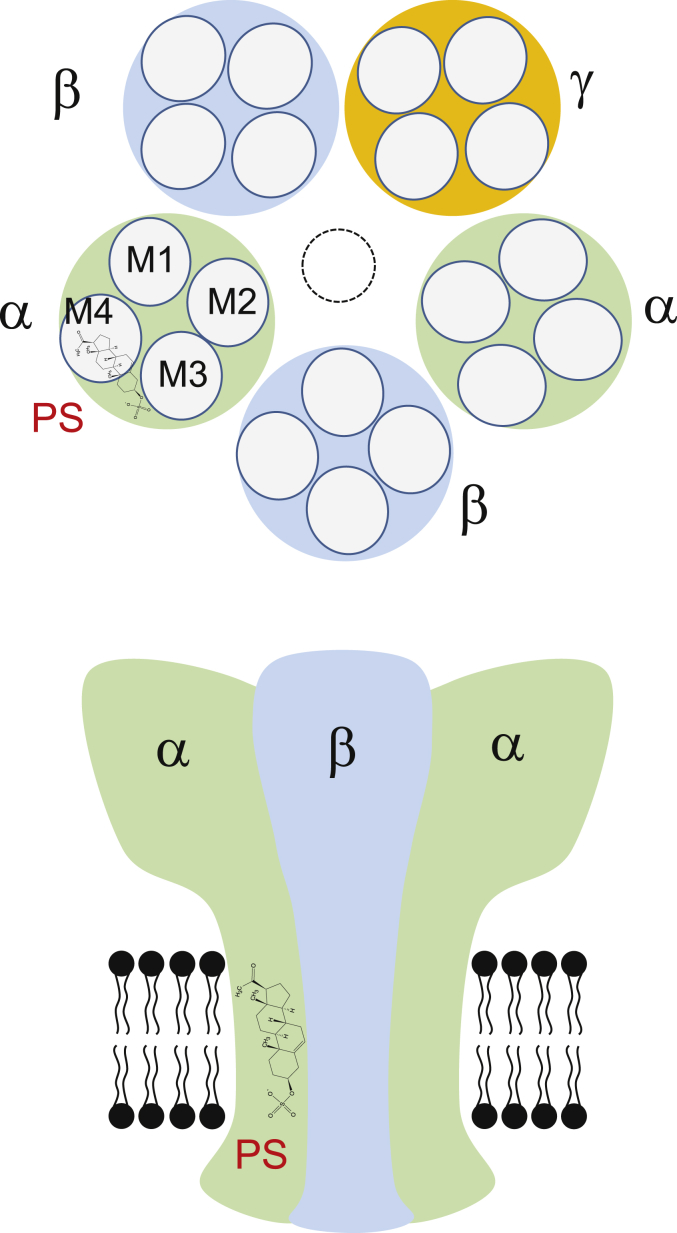
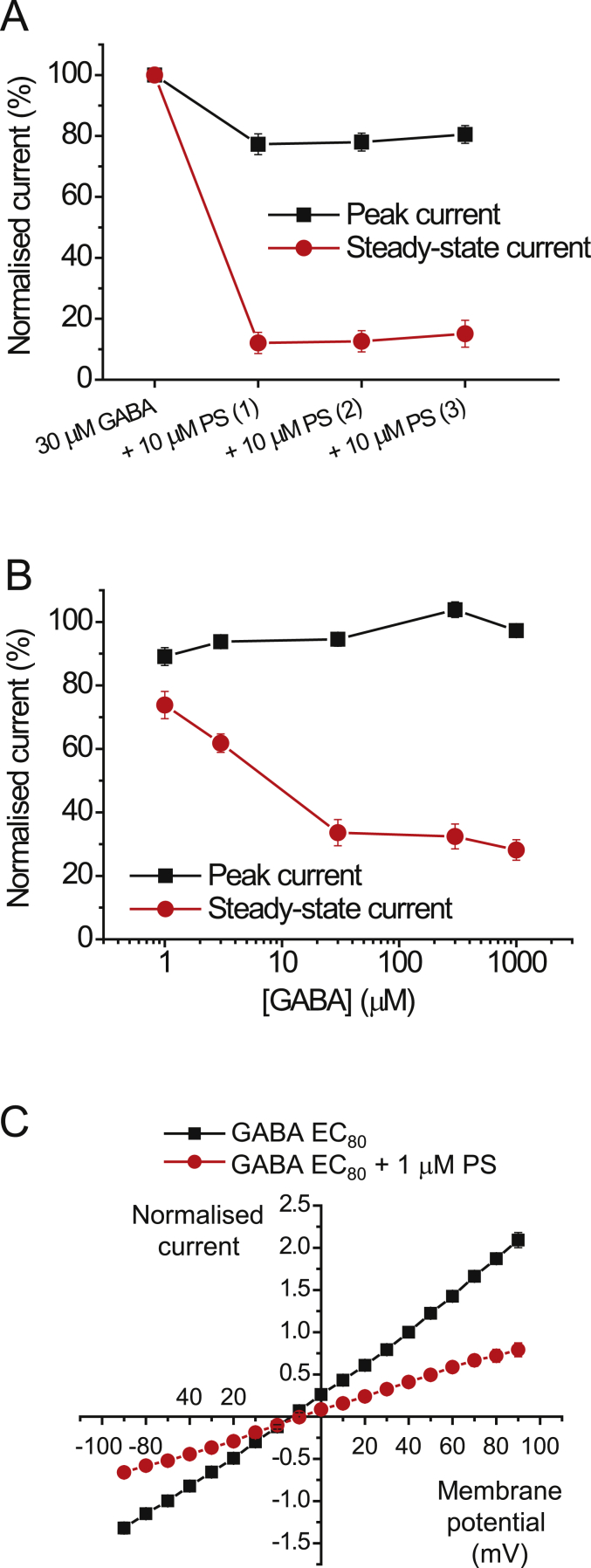
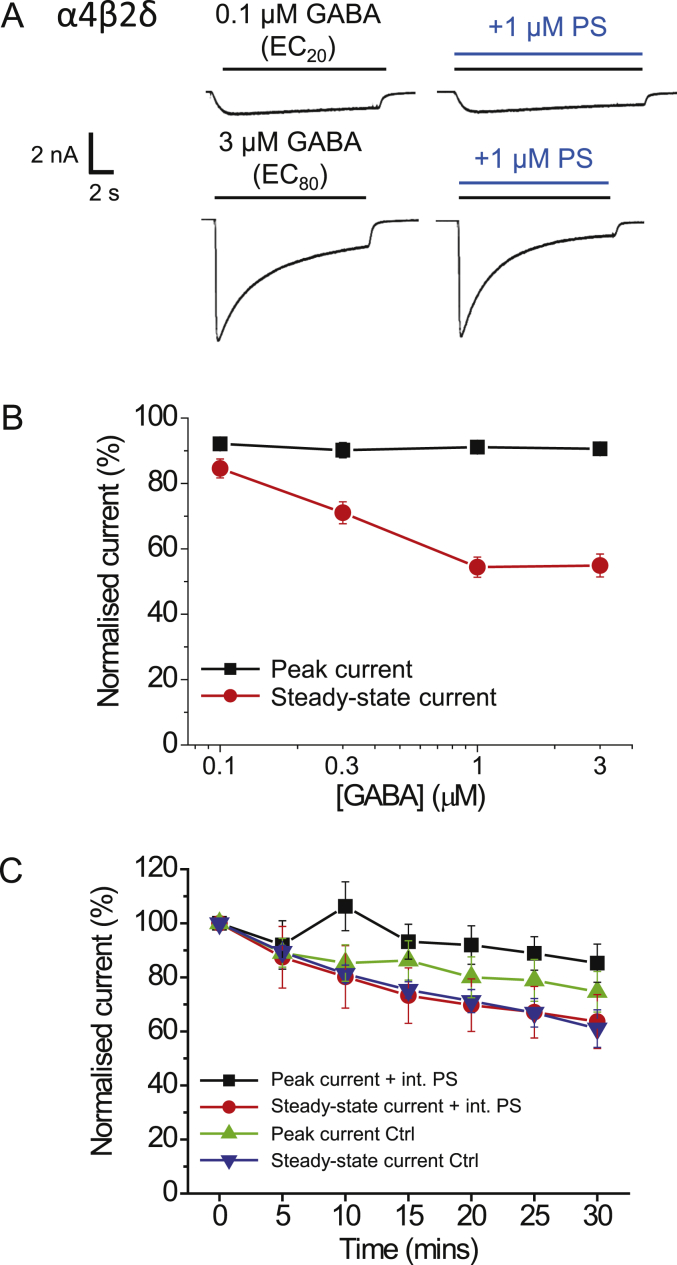
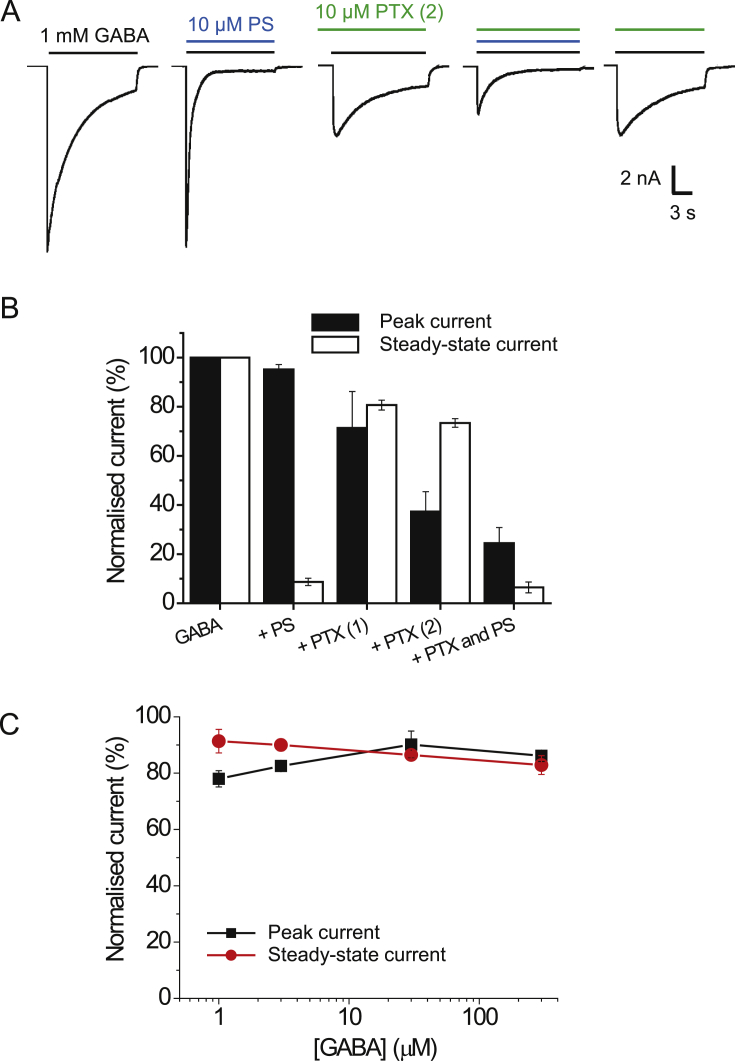
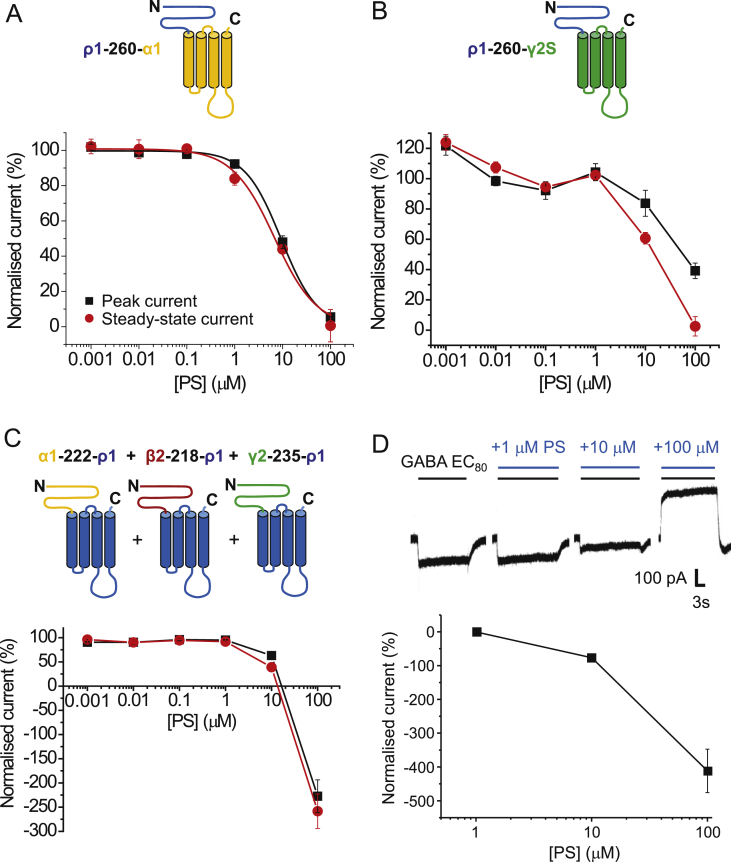
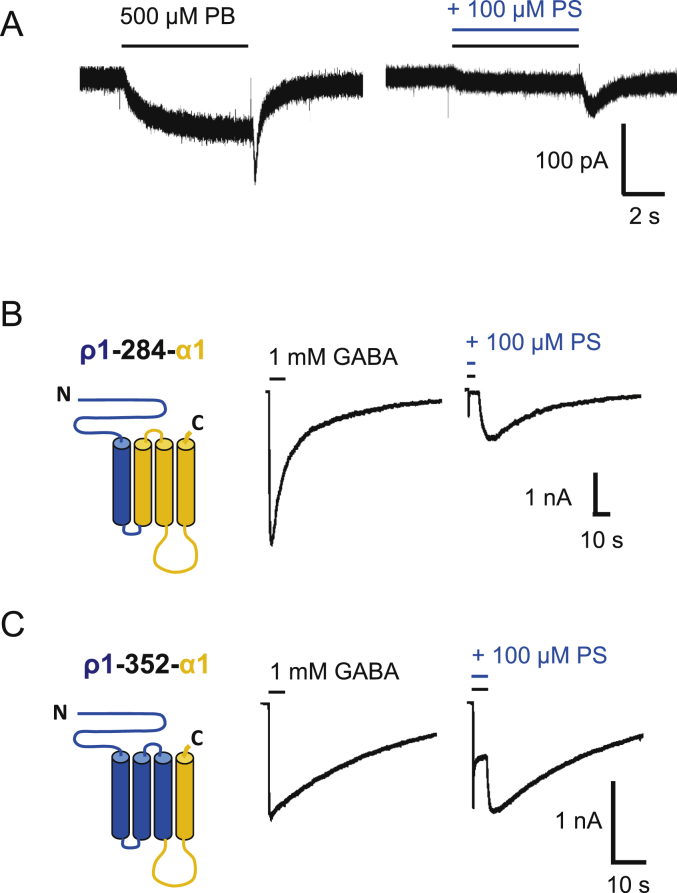
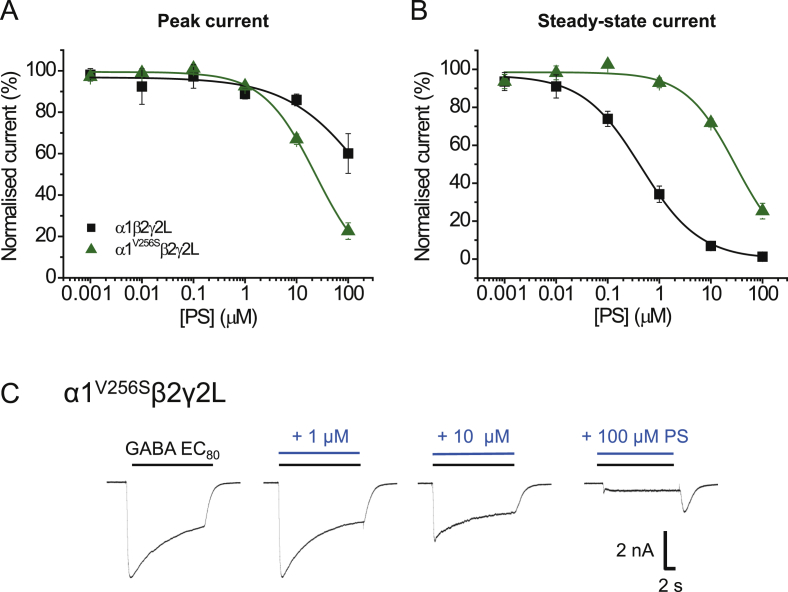
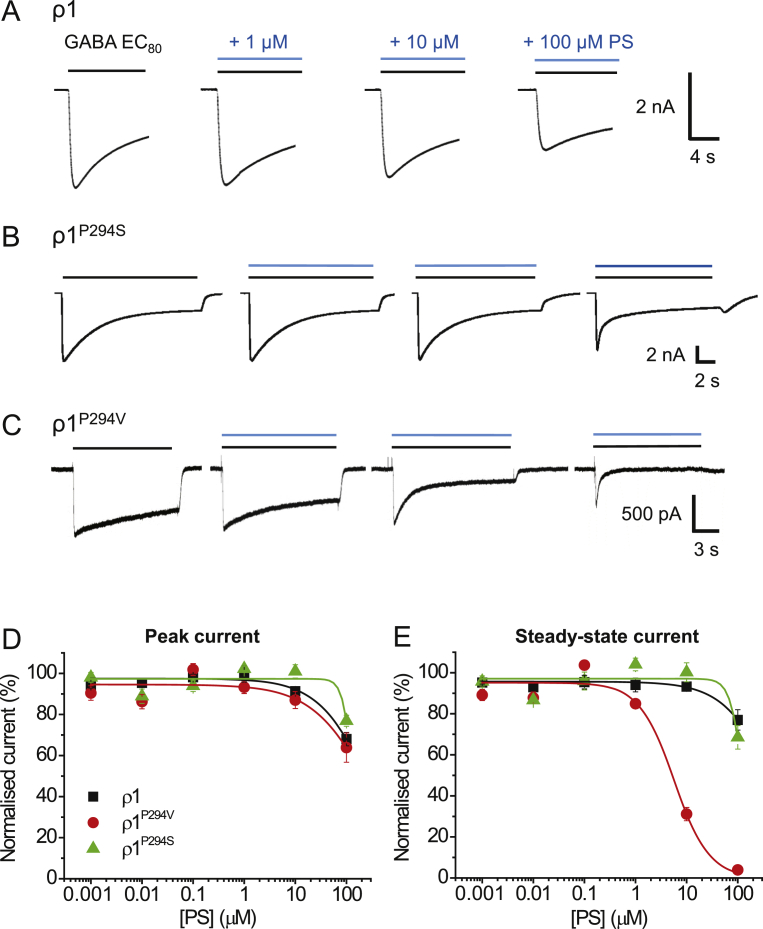
γ-aminobutyric acid type A receptors (GABARs) are important components of the central nervous system and they are functionally tasked with controlling neuronal excitability. These receptors are subject to post-translational modification and also to modulation by endogenous regulators, such as the neurosteroids. These modulators can either potentiate or inhibit GABAR function. Whilst the former class of neurosteroids are considered to bind to and act from the transmembrane domain of the receptor, the domains that are important for the inhibitory neurosteroids remain less clear. In this study, we systematically compare a panel of recombinant synaptic-type and extrasynaptic-type GABARs expressed in heterologous cell systems for their sensitivity to inhibition by the classic inhibitory neurosteroid, pregnenolone sulphate. Generally, peak GABA current responses were inhibited less compared to steady-state currents, implicating the desensitised state in inhibition. Moreover, pregnenolone sulphate inhibition increased with GABA concentration, but showed minimal voltage dependence. There was no strong dependence of inhibition on receptor subunit composition, the exception being the ρ1 receptor, which is markedly less sensitive. By using competition experiments with pregnenolone sulphate and the GABA channel blocker picrotoxinin, discrete binding sites are proposed. Furthermore, by assessing inhibition using site-directed mutagenesis and receptor chimeras comprising α, β or γ subunits with ρ1 subunits, the receptor transmembrane domains are strongly implicated in mediating inhibition and most likely the binding location for pregnenolone sulphate in GABARs. This article is part of the "Special Issue Dedicated to Norman G. Bowery".
γ-氨基丁酸 A 型受体 (GABARs) 是中枢神经系统的重要组成部分,其功能是控制神经元的兴奋性。这些受体受到翻译后修饰和内源性调节剂的调节,如神经甾体。这些调节剂可以增强或抑制 GABAR 功能。虽然前者被认为结合并作用于受体的跨膜结构域,但对于抑制性神经甾体重要的结构域仍然不太清楚。在这项研究中,我们系统地比较了一组在异源细胞系统中表达的突触型和 extrasynaptic 型 GABARs,以评估它们对经典抑制性神经甾体孕烯醇酮硫酸盐的敏感性。一般来说,与稳态电流相比,GABA 电流峰值反应受到的抑制较小,这表明失敏状态参与了抑制。此外,孕烯醇酮硫酸盐的抑制作用随 GABA 浓度的增加而增加,但显示出最小的电压依赖性。抑制作用与受体亚基组成没有很强的依赖性,除了 ρ1 受体,它的敏感性明显降低。通过使用孕烯醇酮硫酸盐和 GABA 通道阻滞剂 picrotoxin 的竞争实验,提出了离散的结合位点。此外,通过使用定点突变和由 ρ1 亚基组成的 α、β 或 γ 亚基的受体嵌合体评估抑制作用,受体跨膜结构域强烈参与介导抑制作用,并且很可能是孕烯醇酮硫酸盐在 GABARs 中的结合位置。本文是“专门为 Norman G. Bowery 编辑的特刊”的一部分。