Sugai Akihiro, Kato Taisuke, Koyama Akihide, Koike Yuka, Kasahara Sou, Konno Takuya, Ishihara Tomohiko, Onodera Osamu
Department of Neurology, Clinical Neuroscience Branch, Brain Research Institute, Niigata University, Niigata, Japan.
Department of System Pathology for Neurological Disorders, Brain Science Branch, Center for Bioresource-Based Research, Brain Research Institute, Niigata University, Niigata, Japan.
Front Neurosci. 2018 Feb 1;12:28. doi: 10.3389/fnins.2018.00028. eCollection 2018.
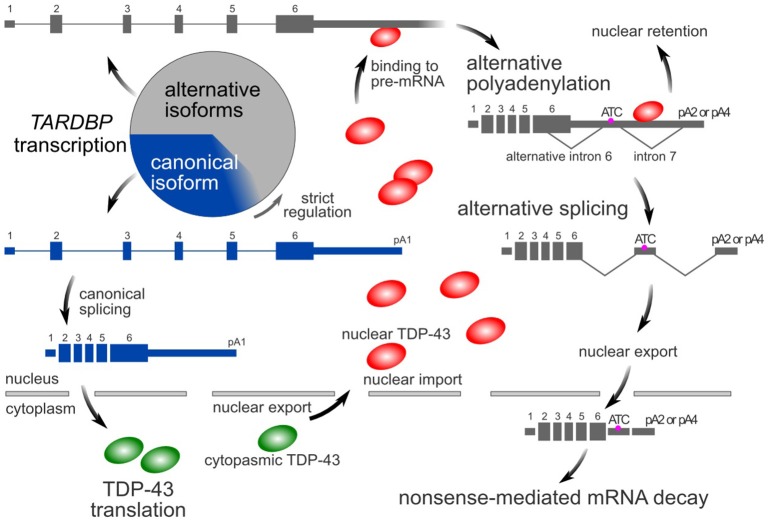
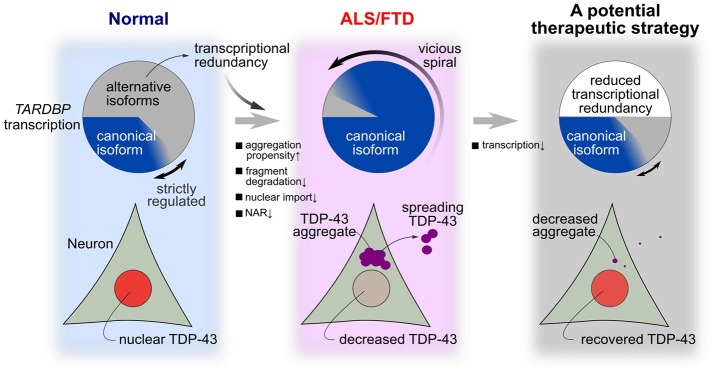
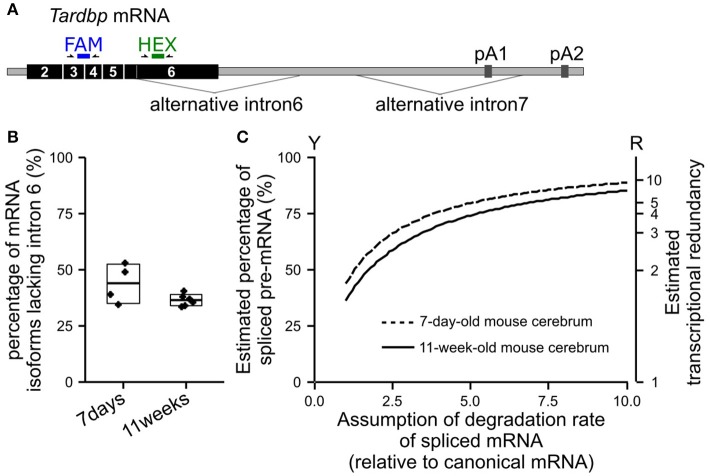
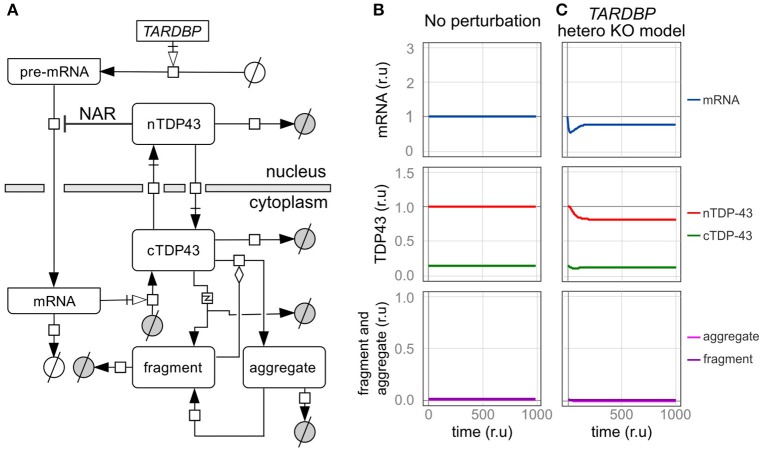
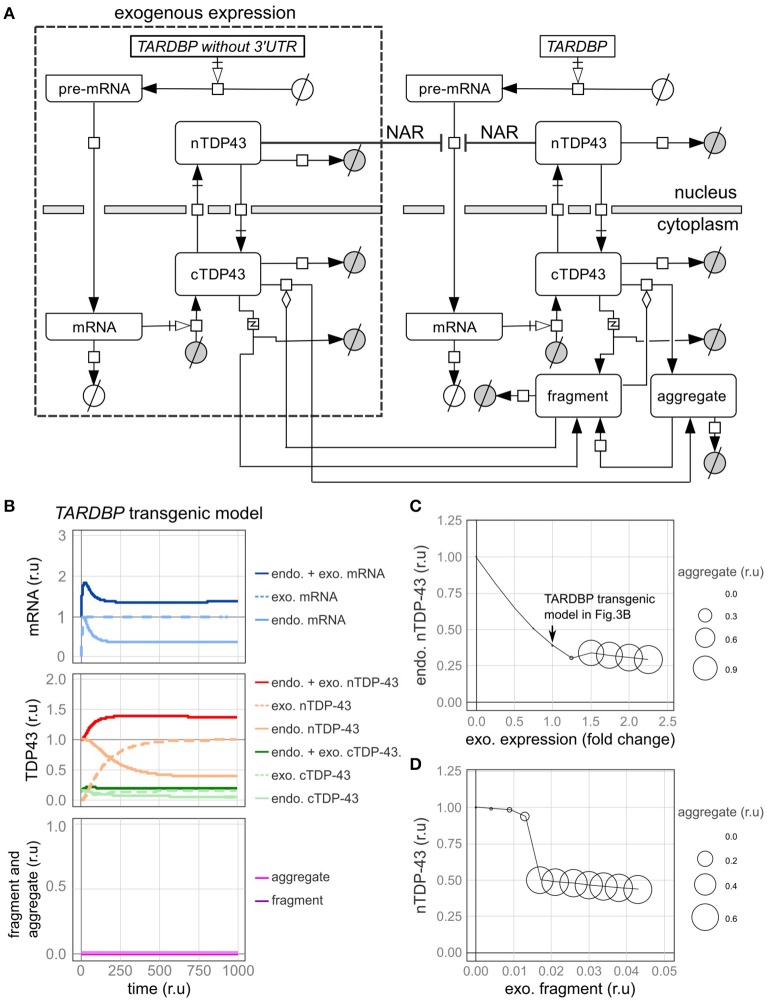
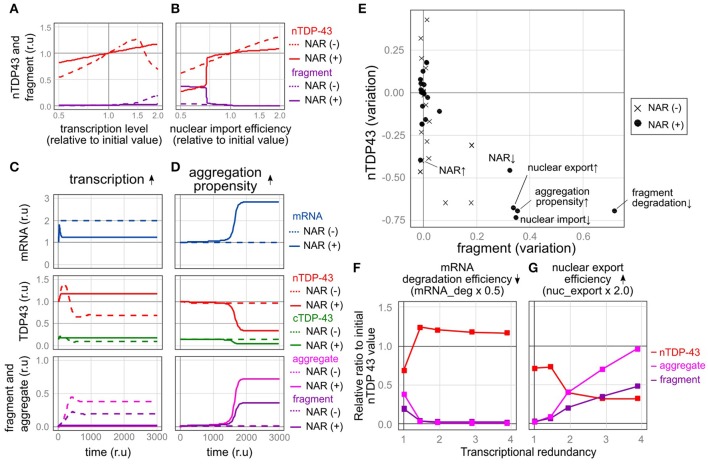
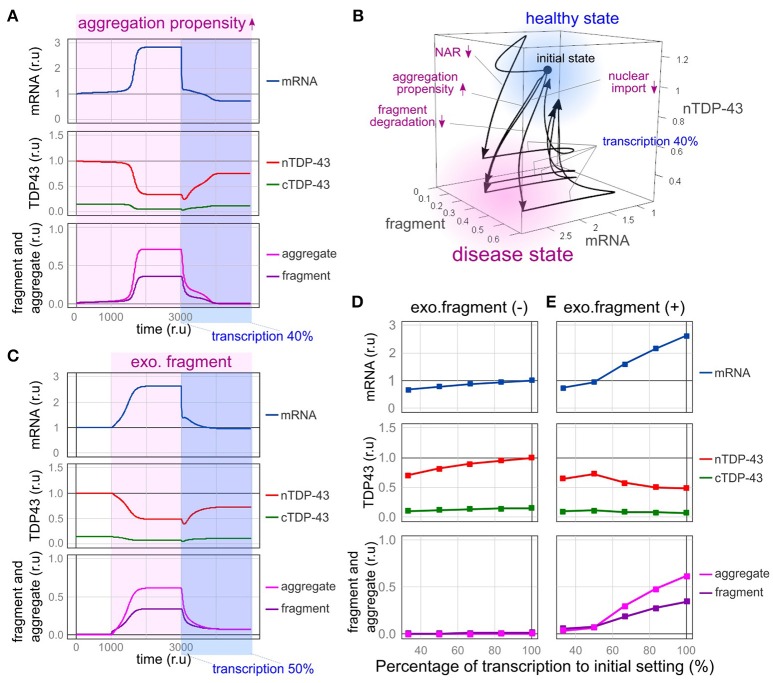
Abnormal accumulation of TAR DNA-binding protein 43 (TDP-43) in the cytoplasm and its disappearance from the nucleus are pathological features of amyotrophic lateral sclerosis and frontotemporal dementia (ALS/FTD) and are directly involved in the pathogenesis of these conditions. TDP-43 is an essential nuclear protein that readily aggregates in a concentration-dependent manner. Therefore, cells must strictly maintain an appropriate amount of nuclear TDP-43. In one relevant maintenance mechanism, TDP-43 binds to its pre-mRNA and promotes alternative splicing, resulting in mRNA degradation via nonsense-mediated mRNA decay. The level of nuclear TDP-43 is tightly regulated by these mechanisms, which control the amount of mRNA that may be translated. Based on the results of previous experiments, we developed an model that mimics the intracellular dynamics of TDP-43 and examined TDP-43 metabolism under various conditions. We discovered an inherent trade-off in this mechanism between transcriptional redundancy, which maintains the robustness of TDP-43 metabolism, and vulnerability to specific interfering factors. These factors include an increased tendency of TDP-43 to aggregate, impaired nuclear-cytoplasmic TDP-43 transport, and a decreased efficiency of degrading abnormal proteins, all of which are functional abnormalities related to the gene that causes familial ALS/FTD. When these conditions continue at a certain intensity, the vulnerability of the autoregulatory machinery becomes apparent over time, and transcriptional redundancy enters a vicious cycle that ultimately results in TDP-43 pathology. The results obtained using this model reveal the difference in TDP-43 metabolism between normal and disease states. Furthermore, using this model, we simulated the effect of a decrease in TDP-43 transcription and found that this decrease improved TDP-43 pathology and suppressed the abnormal propagation of TDP-43. Therefore, we propose a potential therapeutic strategy to suppress transcriptional redundancy, which is the driving force of the pathological condition caused by the specific factors described above, in patients with ALS presenting with TDP-43 pathology. An ALS animal model exhibiting TDP-43 pathology without overexpression of exogenous TDP-43 should be developed to investigate the effect of alleviating the transcriptional redundancy of .
TAR DNA结合蛋白43(TDP - 43)在细胞质中的异常积聚及其从细胞核中的消失是肌萎缩侧索硬化症和额颞叶痴呆(ALS/FTD)的病理特征,并且直接参与这些病症的发病机制。TDP - 43是一种必需的核蛋白,它很容易以浓度依赖的方式聚集。因此,细胞必须严格维持适量的核TDP - 43。在一种相关的维持机制中,TDP - 43与其前体mRNA结合并促进可变剪接,导致通过无义介导的mRNA降解使mRNA降解。核TDP - 43的水平受到这些机制的严格调控,这些机制控制着可能被翻译的mRNA的量。基于先前实验的结果,我们开发了一个模拟TDP - 43细胞内动态的模型,并在各种条件下研究了TDP - 43的代谢。我们发现在这种机制中,维持TDP - 43代谢稳健性的转录冗余与对特定干扰因素的脆弱性之间存在内在的权衡。这些因素包括TDP - 43聚集倾向增加、核质TDP - 43转运受损以及异常蛋白质降解效率降低,所有这些都是与导致家族性ALS/FTD的基因相关的功能异常。当这些情况以一定强度持续时,随着时间的推移,自动调节机制的脆弱性变得明显,转录冗余进入恶性循环,最终导致TDP - 43病理状态。使用该模型获得的结果揭示了正常和疾病状态下TDP - 43代谢的差异。此外,使用该模型,我们模拟了TDP - 43转录减少的影响,发现这种减少改善了TDP - 43病理状态并抑制了TDP - 43的异常传播。因此,我们提出了一种潜在的治疗策略,以抑制转录冗余,转录冗余是上述特定因素导致的病理状况的驱动力,用于治疗表现出TDP - 43病理状态的ALS患者。应该开发一种不对外源TDP - 43进行过表达的表现出TDP - 43病理状态 的ALS动物模型,以研究减轻......转录冗余的效果。 (注:原文中最后一句“An ALS animal model exhibiting TDP-43 pathology without overexpression of exogenous TDP-43 should be developed to investigate the effect of alleviating the transcriptional redundancy of.”最后少了个具体对象,我按原文翻译了,你可根据实际情况补充完整)