Paul Langerhans Institute Dresden, Helmholtz Zentrum München, University Hospital and Faculty of Medicine Carl Gustav Carus, Technische Universität Dresden, Dresden, Germany.
German Center for Diabetes Research, Neuherberg, Germany.
J Cell Biol. 2018 May 7;217(5):1643-1649. doi: 10.1083/jcb.201711047. Epub 2018 Feb 16.
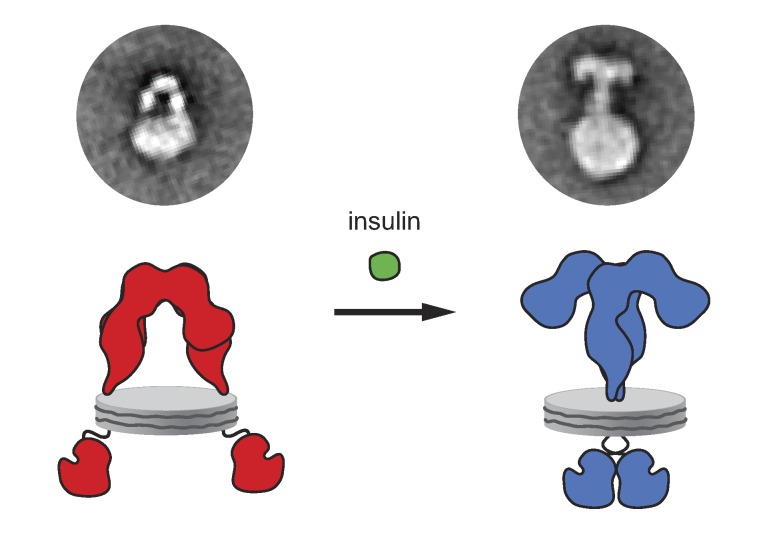
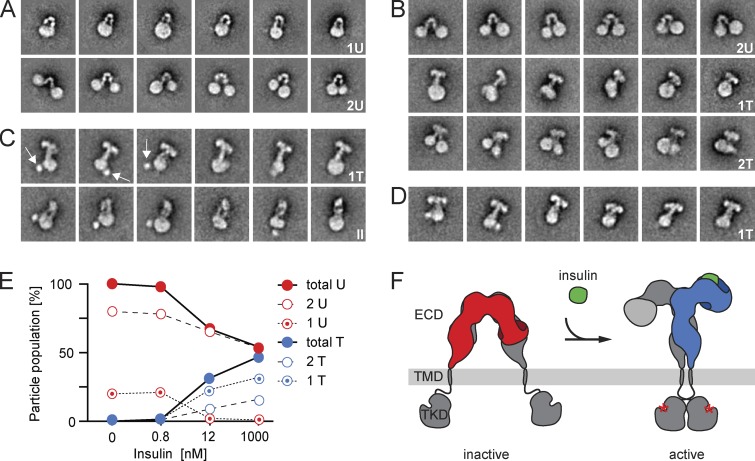
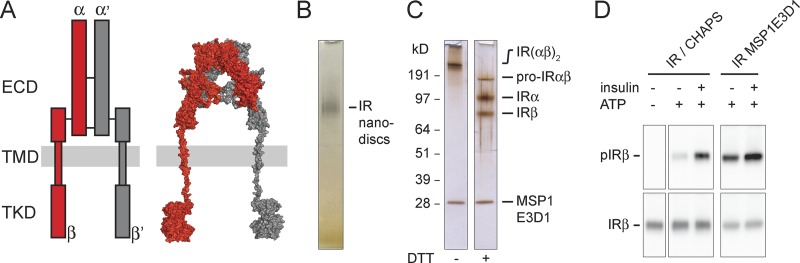
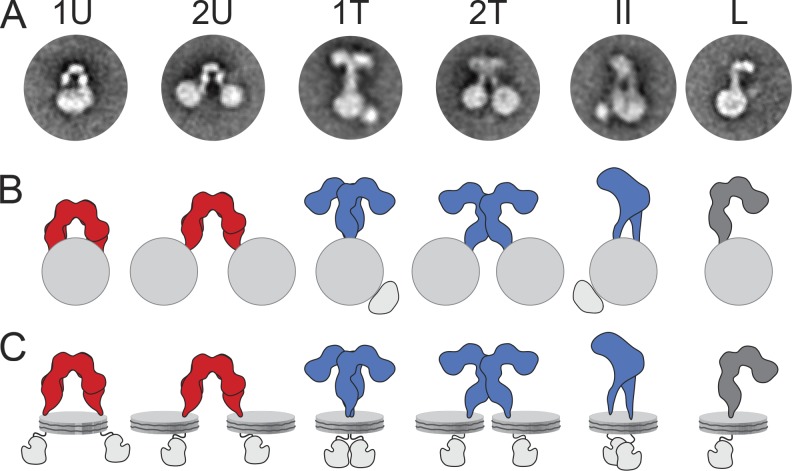
Insulin receptor (IR) signaling plays a critical role in the regulation of metabolism and growth in multicellular organisms. IRs are unique among receptor tyrosine kinases in that they exist exclusively as covalent (αβ) homodimers at the cell surface. Transmembrane signaling by the IR can therefore not be based on ligand-induced dimerization as such but must involve structural changes within the existing receptor dimer. In this study, using glycosylated full-length human IR reconstituted into lipid nanodiscs, we show by single-particle electron microscopy that insulin binding to the dimeric receptor converts its ectodomain from an inverted U-shaped conformation to a T-shaped conformation. This structural rearrangement of the ectodomain propagates to the transmembrane domains, which are well separated in the inactive conformation but come close together upon insulin binding, facilitating autophosphorylation of the cytoplasmic kinase domains.
胰岛素受体(IR)信号在多细胞生物的代谢和生长调节中起着关键作用。IR 在受体酪氨酸激酶中是独一无二的,因为它们仅作为细胞表面的共价(αβ)同二聚体存在。因此,IR 的跨膜信号不能基于配体诱导的二聚化,而必须涉及现有受体二聚体内部的结构变化。在这项研究中,我们使用糖基化全长人胰岛素受体重建到脂质纳米盘中,通过单颗粒电子显微镜显示,胰岛素与二聚体受体结合将其外域从倒 U 形构象转换为 T 形构象。这种外域的结构重排传播到跨膜结构域,在非活性构象中它们彼此很好地分开,但在胰岛素结合时彼此靠近,促进细胞质激酶结构域的自动磷酸化。