Department of Chemical Engineering, Auburn University, Auburn, AL, 36849, USA.
Biomedical Technology, CFD Research Corporation, Huntsville, AL, 35806, USA.
Sci Rep. 2018 Feb 16;8(1):3171. doi: 10.1038/s41598-018-21075-9.
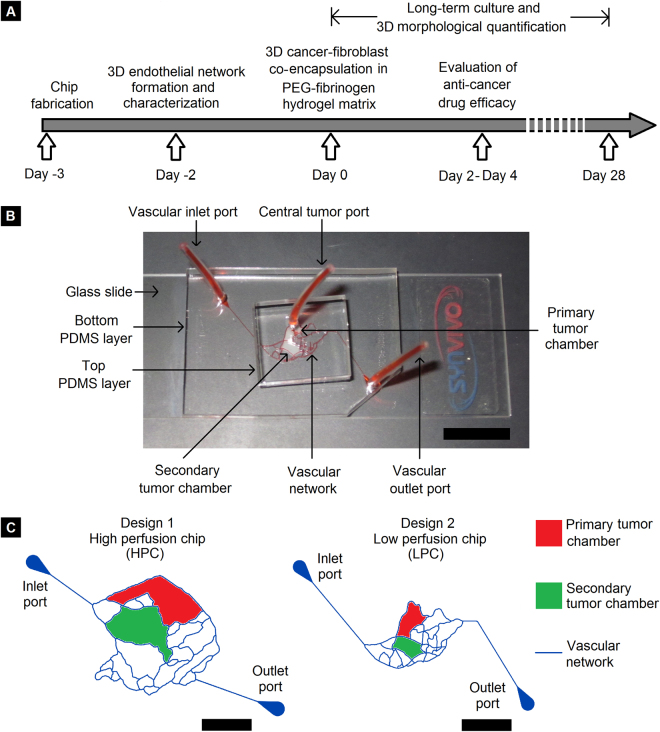
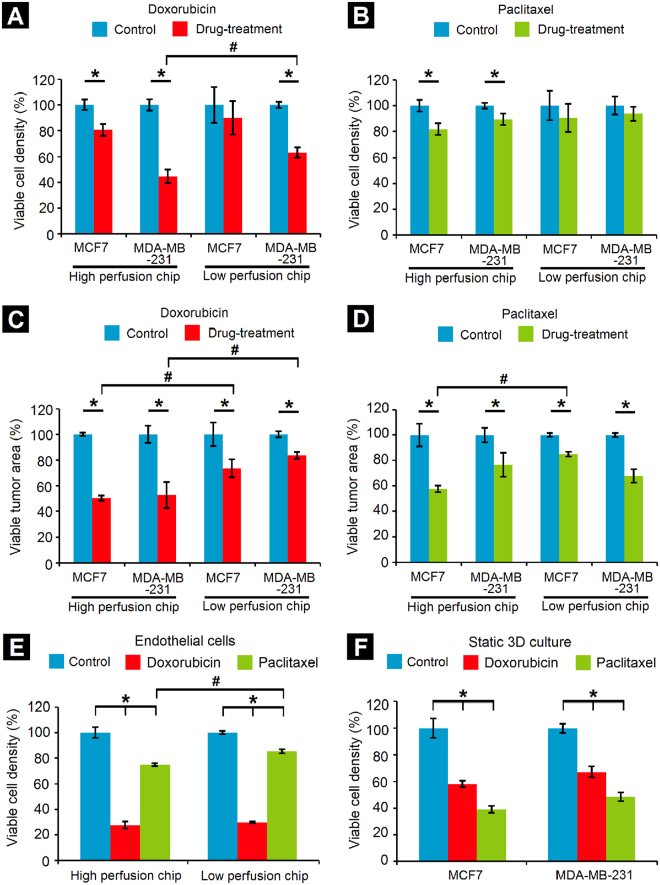
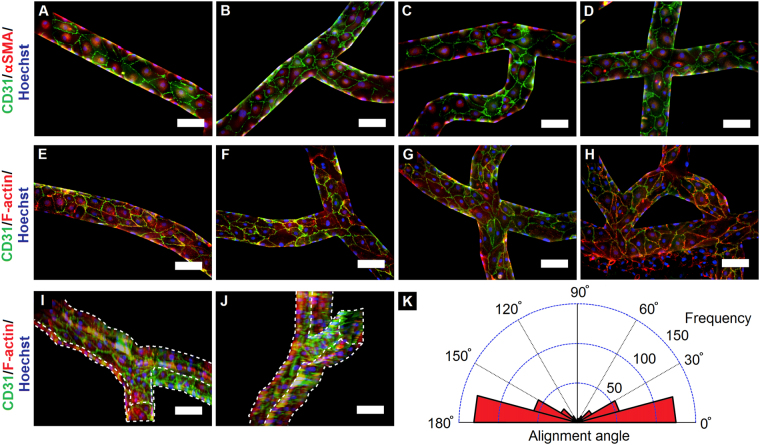
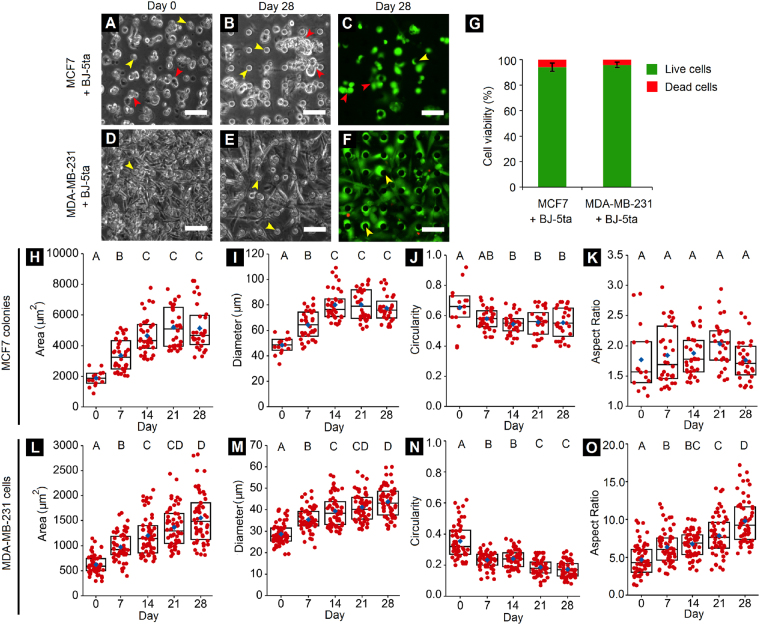
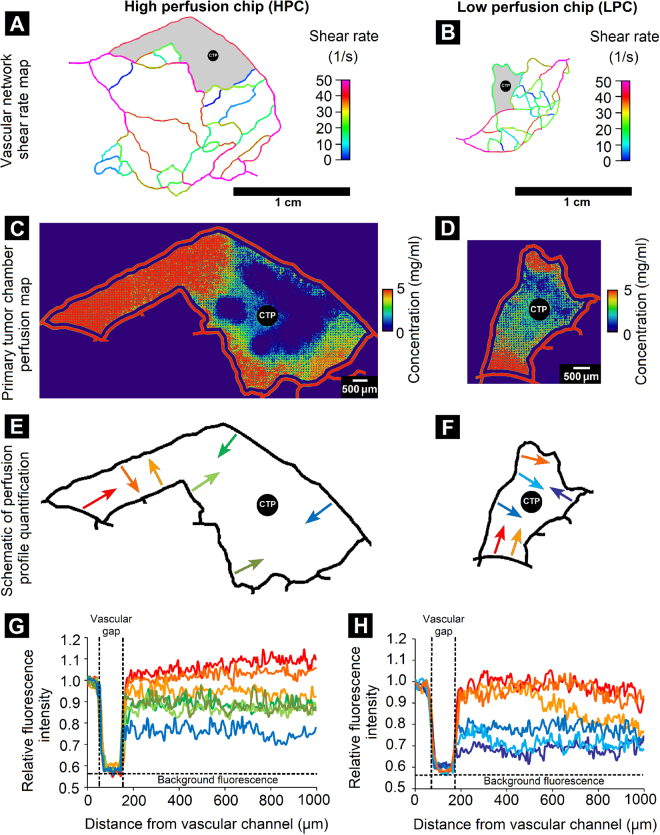
Assessment of anti-cancer drug efficacy in in vitro three-dimensional (3D) bioengineered cancer models provides important contextual and relevant information towards pre-clinical translation of potential drug candidates. However, currently established models fail to sufficiently recapitulate complex tumor heterogeneity. Here we present a chip-based tumor-mimetic platform incorporating a 3D in vitro breast cancer model with a tumor-mimetic microvascular network, replicating the pathophysiological architecture of native vascularized breast tumors. The microfluidic platform facilitated formation of mature, lumenized and flow-aligned endothelium under physiological flow recapitulating both high and low perfused tumor regions. Metastatic and non-metastatic breast cancer cells were maintained in long-term 3D co-culture with stromal fibroblasts in a poly(ethylene glycol)-fibrinogen hydrogel matrix within adjoining tissue chambers. The interstitial space between the chambers and endothelium contained pores to mimic the "leaky" vasculature found in vivo and facilitate cancer cell-endothelial cell communication. Microvascular pattern-dependent flow variations induced concentration gradients within the 3D tumor mass, leading to morphological tumor heterogeneity. Anti-cancer drugs displayed cell type- and flow pattern-dependent effects on cancer cell viability, viable tumor area and associated endothelial cytotoxicity. Overall, the developed microfluidic tumor-mimetic platform facilitates investigation of cancer-stromal-endothelial interactions and highlights the role of a fluidic, tumor-mimetic vascular network on anti-cancer drug delivery and efficacy for improved translation towards pre-clinical studies.
评估体外三维(3D)生物工程癌症模型中的抗癌药物疗效,为潜在药物候选物的临床前转化提供了重要的背景和相关信息。然而,目前已建立的模型未能充分再现复杂的肿瘤异质性。在这里,我们提出了一种基于芯片的肿瘤模拟平台,该平台结合了具有肿瘤模拟微血管网络的体外乳腺癌模型,再现了天然血管化乳腺癌肿瘤的病理生理结构。该微流控平台在生理流量下促进了成熟、有腔和流对齐的内皮形成,再现了高灌注和低灌注肿瘤区域。转移性和非转移性乳腺癌细胞与基质成纤维细胞在毗邻的组织腔室中的聚(乙二醇)-纤维蛋白原水凝胶基质中进行长期 3D 共培养。腔室和内皮之间的间质空间含有孔隙,以模拟体内发现的“渗漏”血管,并促进癌细胞-内皮细胞的通讯。微血管模式依赖性的流速变化导致 3D 肿瘤块内的浓度梯度,从而导致形态学肿瘤异质性。抗癌药物对癌细胞活力、存活肿瘤面积和相关内皮细胞毒性表现出细胞类型和流动模式依赖性的影响。总的来说,开发的微流控肿瘤模拟平台促进了癌症-基质-内皮相互作用的研究,并强调了流体模拟血管网络对抗癌药物输送和疗效的作用,以提高临床前研究的转化。