Research Institute for Sport and Exercise Sciences, Liverpool John Moores University, Tom Reilly Building, Byrom St Campus, Liverpool, L3 3AF, UK.
Institute of Sport, Exercise and Active Living (ISEAL), Victoria University, Footscray Park, Ballarat Road, Melbourne, VIC, 8001, Australia.
Sports Med. 2018 May;48(5):1031-1048. doi: 10.1007/s40279-018-0867-7.
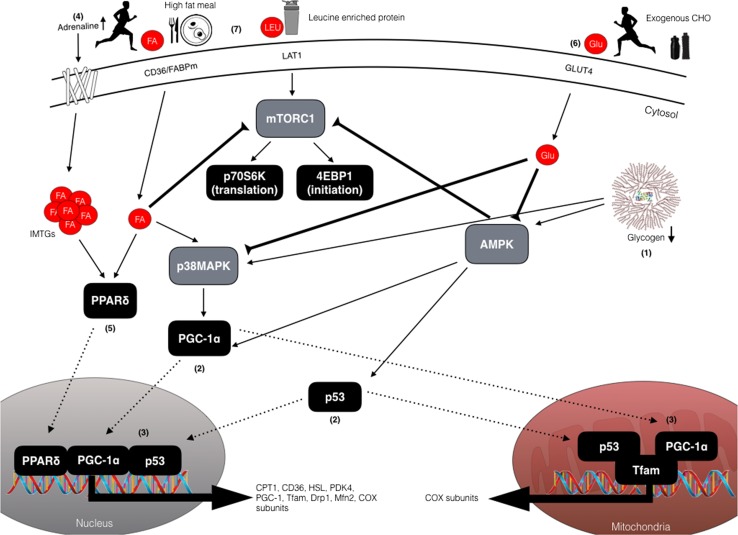
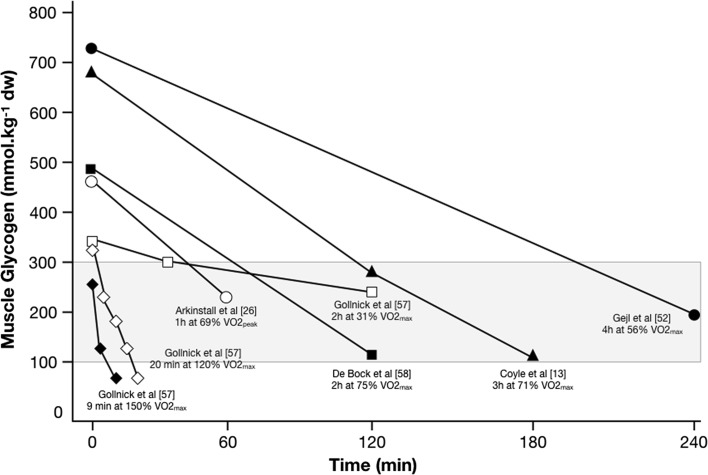
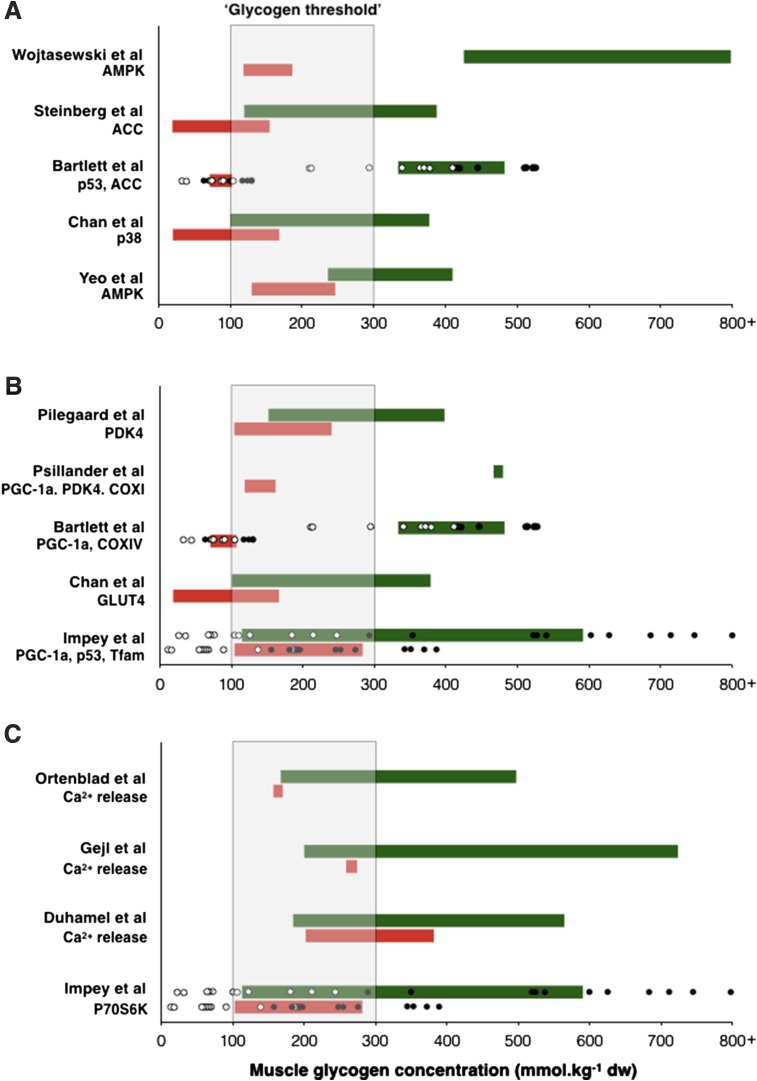
Deliberately training with reduced carbohydrate (CHO) availability to enhance endurance-training-induced metabolic adaptations of skeletal muscle (i.e. the 'train low, compete high' paradigm) is a hot topic within sport nutrition. Train-low studies involve periodically training (e.g., 30-50% of training sessions) with reduced CHO availability, where train-low models include twice per day training, fasted training, post-exercise CHO restriction and 'sleep low, train low'. When compared with high CHO availability, data suggest that augmented cell signalling (73% of 11 studies), gene expression (75% of 12 studies) and training-induced increases in oxidative enzyme activity/protein content (78% of 9 studies) associated with 'train low' are especially apparent when training sessions are commenced within a specific range of muscle glycogen concentrations. Nonetheless, such muscle adaptations do not always translate to improved exercise performance (e.g. 37 and 63% of 11 studies show improvements or no change, respectively). Herein, we present our rationale for the glycogen threshold hypothesis, a window of muscle glycogen concentrations that simultaneously permits completion of required training workloads and activation of the molecular machinery regulating training adaptations. We also present the 'fuel for the work required' paradigm (representative of an amalgamation of train-low models) whereby CHO availability is adjusted in accordance with the demands of the upcoming training session(s). In order to strategically implement train-low sessions, our challenge now is to quantify the glycogen cost of habitual training sessions (so as to inform the attainment of any potential threshold) and ensure absolute training intensity is not compromised, while also creating a metabolic milieu conducive to facilitating the endurance phenotype.
有意减少碳水化合物(CHO)的供应来增强耐力训练引起的骨骼肌代谢适应(即“低训高赛”模式)是运动营养中的一个热门话题。低训研究涉及周期性地进行低 CHO 供应训练(例如,训练次数的 30-50%),其中低训模型包括每天训练两次、空腹训练、运动后 CHO 限制和“低睡低训”。与高 CHO 供应相比,数据表明,增强的细胞信号(11 项研究中的 73%)、基因表达(12 项研究中的 75%)和与“低训”相关的训练诱导的氧化酶活性/蛋白含量增加(9 项研究中的 78%)尤其明显,当训练在特定的肌肉糖原浓度范围内开始时。尽管如此,这种肌肉适应性并不总是转化为运动表现的提高(例如,11 项研究中的 37%和 63%分别显示出改善或没有变化)。在此,我们提出了糖原阈值假说的原理,即肌肉糖原浓度的窗口,它同时允许完成所需的训练工作量和激活调节训练适应性的分子机制。我们还提出了“所需工作的燃料”范式(代表低训模型的融合),即根据即将到来的训练课程的需求来调整 CHO 的供应。为了战略性地实施低训课程,我们现在的挑战是量化习惯性训练课程的糖原消耗(以便告知任何潜在阈值的实现),并确保绝对训练强度不受影响,同时创造有利于促进耐力表型的代谢环境。