College of Life Sciences, State Key Laboratory of Medicinal Chemical Biology, Nankai University, Tianjin, 300071, People's Republic of China.
College of Life Sciences, Tianjin University, Tianjin, 300071, People's Republic of China.
Biochem Biophys Res Commun. 2018 Mar 4;497(2):705-712. doi: 10.1016/j.bbrc.2018.02.136. Epub 2018 Feb 16.
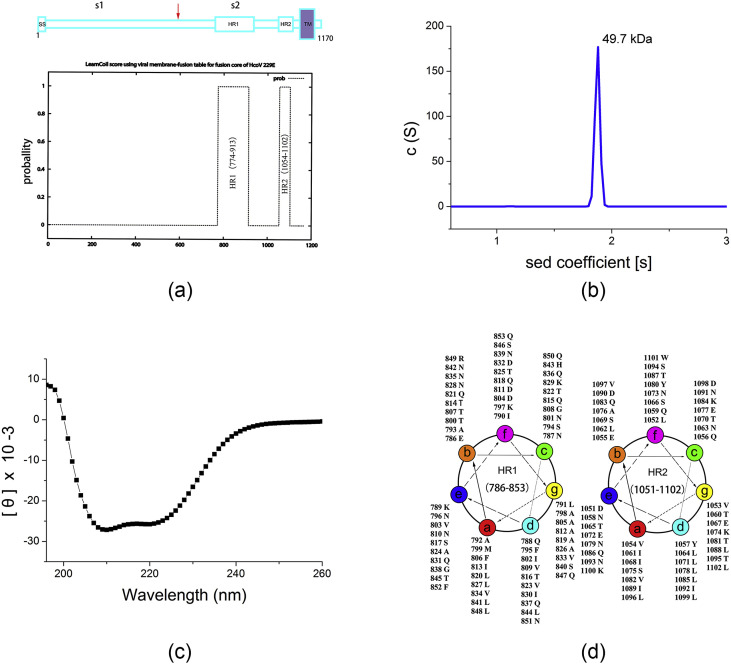
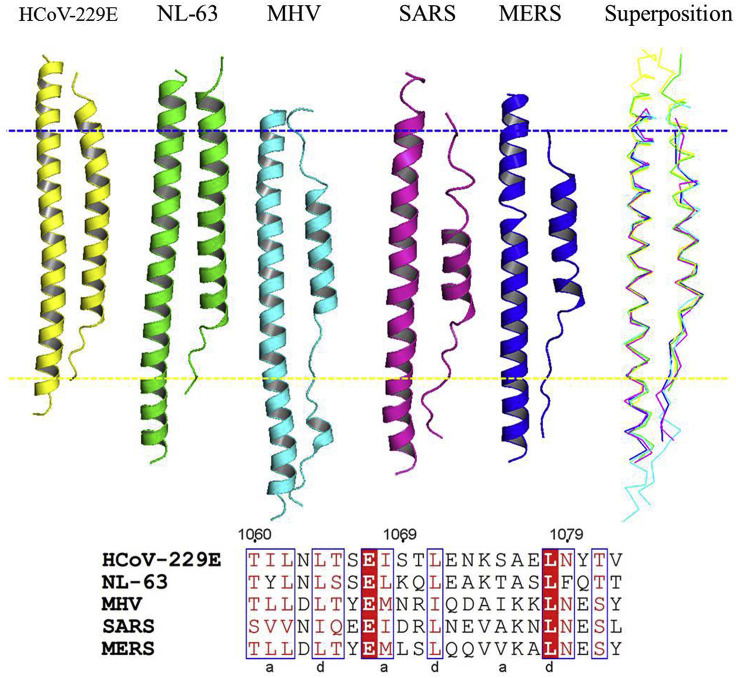
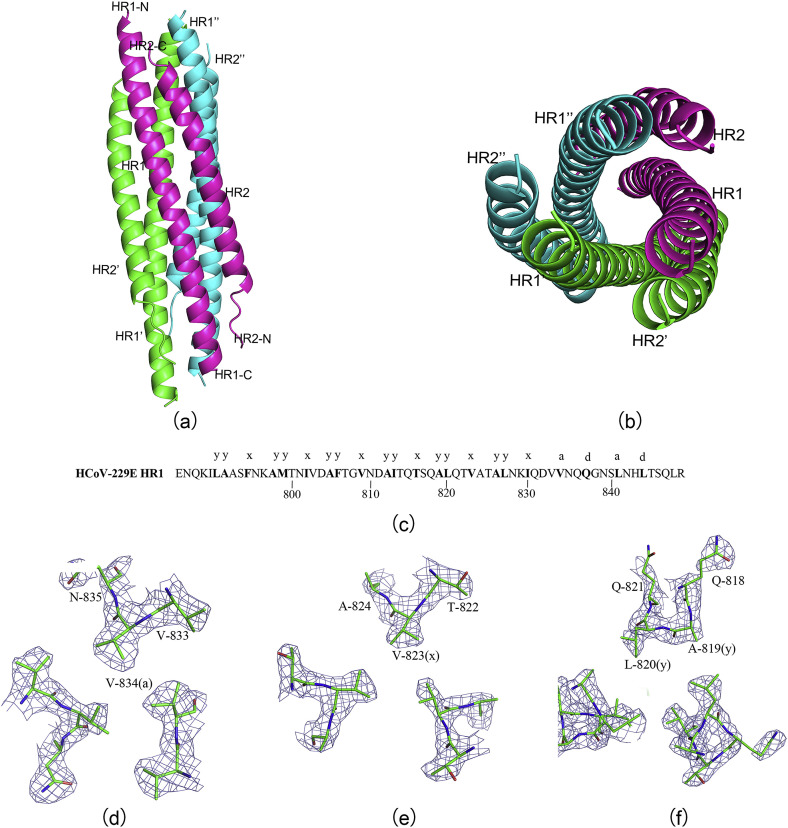
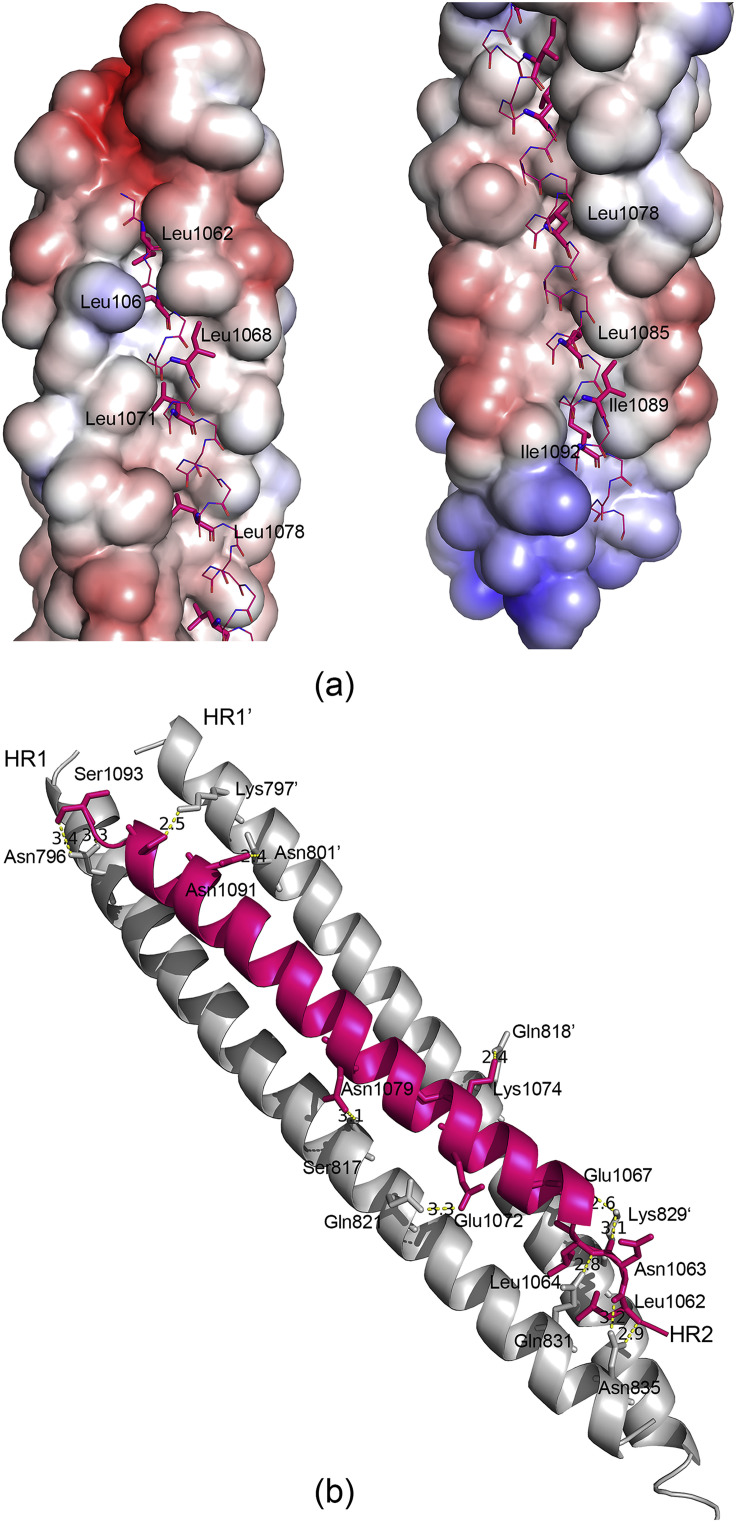
HCoV-229E spike (S) protein mediates virion attachment to cells and subsequent fusion of the viral and cellular membranes. This protein is composed of an N-terminal receptor-binding domain (S1) and a C-terminal trans-membrane fusion domain (S2). S2 contains a highly conserved heptad repeat 1 and 2 (HR1 and HR2). In this study, the HRs sequences were designed and connected with a flexible linker. The recombinant fusion core protein was crystallized and its structure was solved at a resolution of 2.45 Å. Then we characterized the binding of HR1s and HR2s via both sequence alignment and structural analysis. The overall structures, especially the residues in some positions of HR2 are highly conserved. Fourteen hydrophobic and three polar residues from each HR1 peptide are packed in layers at the coiled-coil interface. These core amino acids can be grouped into seven heptad repeats. Analysis of hydrophobic and hydrophilic interactions between HR2 helix and HR1 helices, shows that the HR1 and HR2 polypeptides are highly complementary in both shape and chemical properties. Furthermore, the available knowledge concerning HCoV-229E fusion core may make it possible to design small molecule or polypeptide drugs targeting membrane fusion, a crucial step of HCoV-229E infection.
HCoV-229E 的刺突(S)蛋白介导病毒颗粒与细胞的附着,以及随后病毒和细胞膜的融合。该蛋白由 N 端受体结合域(S1)和 C 端跨膜融合域(S2)组成。S2 包含高度保守的七肽重复 1 和 2(HR1 和 HR2)。在本研究中,设计了 HR 序列并用柔性接头连接。重组融合核心蛋白结晶,并解析其 2.45Å 的结构。然后通过序列比对和结构分析对 HR1 和 HR2 的结合进行了表征。整体结构,特别是 HR2 某些位置的残基高度保守。来自每个 HR1 肽的 14 个疏水残基和 3 个极性残基在螺旋卷曲界面以层状排列。这些核心氨基酸可以分为七个七肽重复。对 HR2 螺旋和 HR1 螺旋之间的疏水和亲水相互作用的分析表明,HR1 和 HR2 多肽在形状和化学性质上高度互补。此外,有关 HCoV-229E 融合核心的现有知识可能使设计针对膜融合的小分子或多肽药物成为可能,膜融合是 HCoV-229E 感染的关键步骤。