The Marshall Centre for Infectious Diseases Research and Training, School of Biomedical Sciences, The University of Western Australia, Perth, WA, Australia.
Wesfarmers Centre of Vaccines and Infectious Diseases, Telethon Kids Institute, The University of Western Australia, Perth, WA, Australia.
BMC Microbiol. 2018 Feb 20;18(1):13. doi: 10.1186/s12866-018-1154-3.
Recurrent acute otitis media (rAOM, recurrent ear infection) is a common childhood disease caused by bacteria termed otopathogens, for which current treatments have limited effectiveness. Generic probiotic therapies have shown promise, but seem to lack specificity. We hypothesised that healthy children with no history of AOM carry protective commensal bacteria that could be translated into a specific probiotic therapy to break the cycle of re-infection. We characterised the nasopharyngeal microbiome of these children (controls) in comparison to children with rAOM (cases) to identify potentially protective bacteria. As some children with rAOM do not appear to carry any of the known otopathogens, we also hypothesised that characterisation of the middle ear microbiome could identify novel otopathogens, which may also guide the development of more effective therapies.
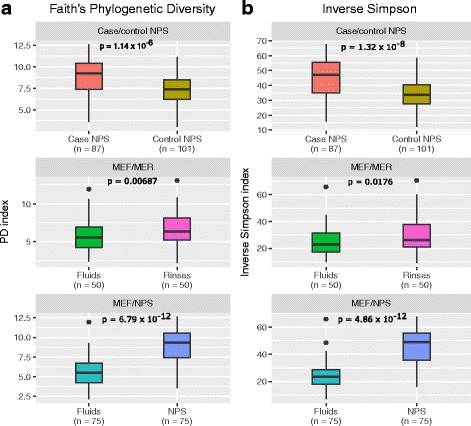
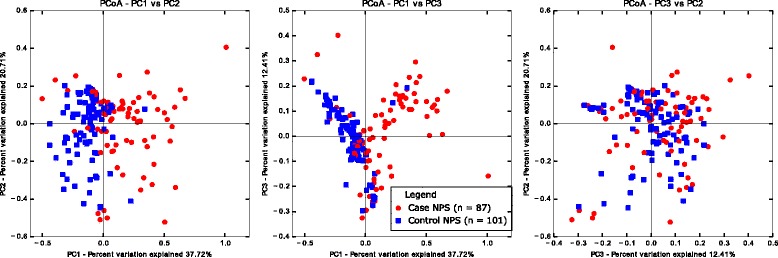
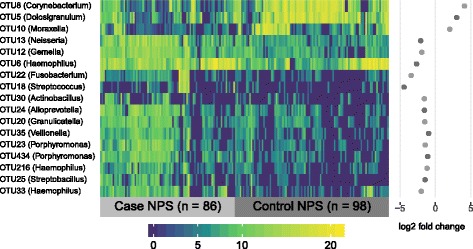
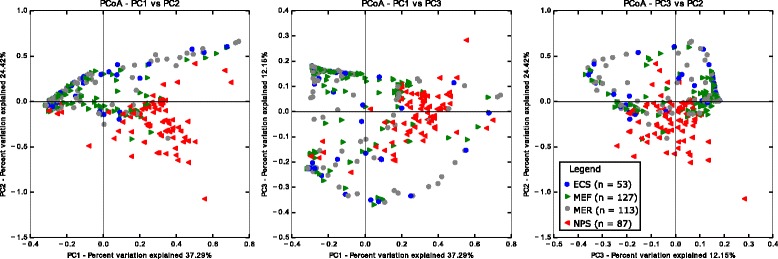
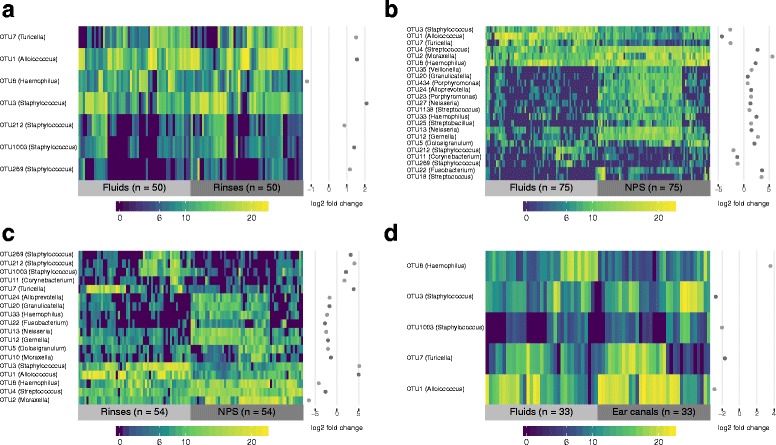
Middle ear fluids, middle ear rinses and ear canal swabs from the cases and nasopharyngeal swabs from both groups underwent 16S rRNA gene sequencing. The nasopharyngeal microbiomes of cases and controls were distinct. We observed a significantly higher abundance of Corynebacterium and Dolosigranulum in the nasopharynx of controls. Alloiococcus, Staphylococcus and Turicella were abundant in the middle ear and ear canal of cases, but were uncommon in the nasopharynx of both groups. Gemella and Neisseria were characteristic of the case nasopharynx, but were not prevalent in the middle ear.
Corynebacterium and Dolosigranulum are characteristic of a healthy nasopharyngeal microbiome. Alloiococcus, Staphylococcus and Turicella are possible novel otopathogens, though their rarity in the nasopharynx and prevalence in the ear canal means that their role as normal aural flora cannot be ruled out. Gemella and Neisseria are unlikely to be novel otopathogens as they do not appear to colonise the middle ear in children with rAOM.
复发性急性中耳炎(rAOM,复发性耳部感染)是一种常见的儿童疾病,由细菌引起,这些细菌被称为耳病原体,目前的治疗方法效果有限。通用益生菌疗法显示出了前景,但似乎缺乏特异性。我们假设,没有中耳炎病史的健康儿童携带保护性共生菌,可以转化为特定的益生菌疗法,打破再次感染的循环。我们比较了这些儿童(对照组)的鼻咽微生物组与 rAOM 儿童(病例组)的鼻咽微生物组,以确定潜在的保护性细菌。由于一些 rAOM 儿童似乎不携带任何已知的耳病原体,我们还假设中耳微生物组的特征可以识别新的耳病原体,这也可能有助于开发更有效的治疗方法。
从病例中采集中耳液、中耳冲洗液和耳道拭子,从两组中采集鼻咽拭子,进行 16S rRNA 基因测序。病例和对照组的鼻咽微生物组明显不同。我们观察到对照组鼻咽中 Corynebacterium 和 Dolosigranulum 的丰度显著更高。Alloiococcus、Staphylococcus 和 Turicella 在中耳和耳道中丰富,但在两组的鼻咽中都不常见。Gemella 和 Neisseria 是病例鼻咽的特征,但在中耳中并不常见。
Corynebacterium 和 Dolosigranulum 是健康鼻咽微生物组的特征。Alloiococcus、Staphylococcus 和 Turicella 可能是新的耳病原体,但它们在鼻咽中的稀有性和在耳道中的普遍性意味着它们作为正常耳腔菌群的作用不能排除。Gemella 和 Neisseria 不太可能是新的耳病原体,因为它们似乎不会在 rAOM 儿童的中耳中定植。