Forsayeth John, Hadaczek Piotr
Department of Neurological Surgery, University of California, San Francisco, San Francisco, CA, United States.
Front Neurosci. 2018 Feb 5;12:45. doi: 10.3389/fnins.2018.00045. eCollection 2018.
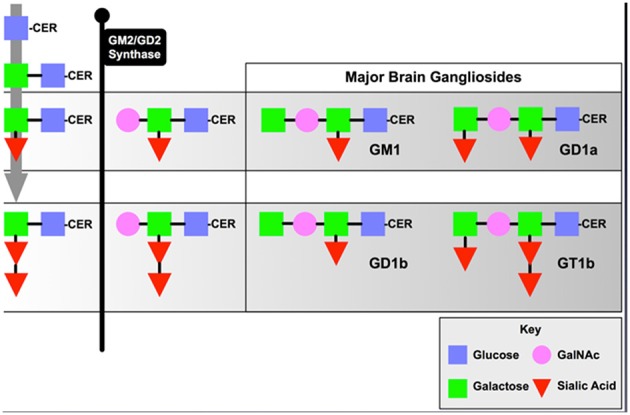
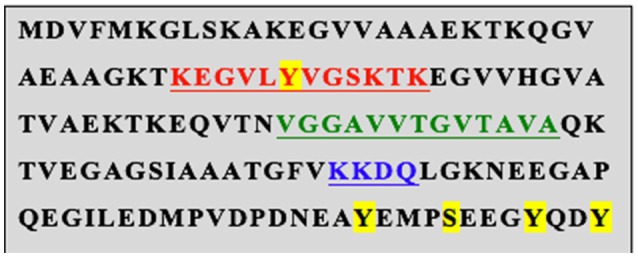
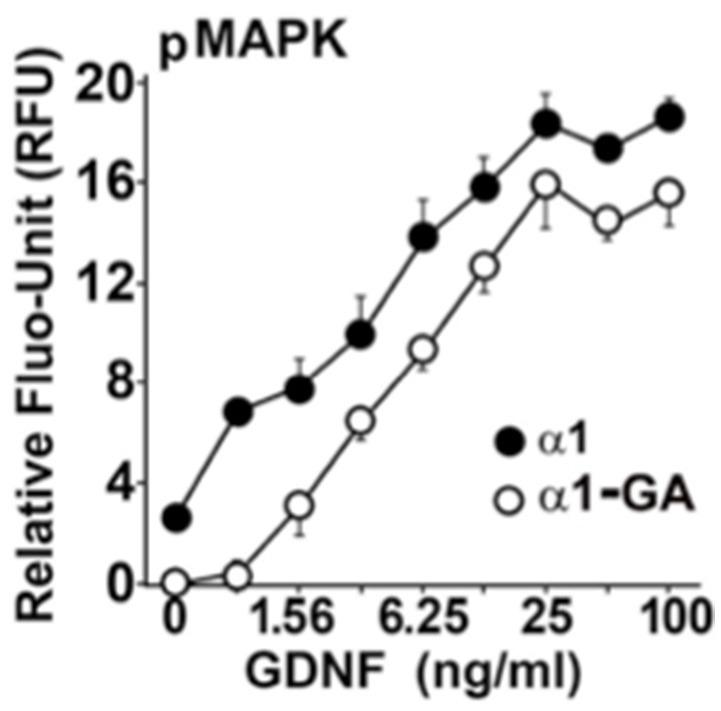
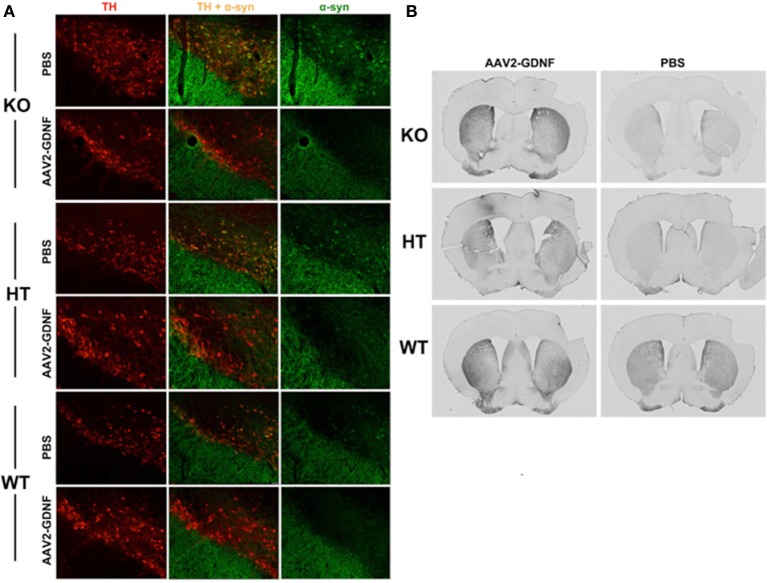
Here we advance the hypothesis that Parkinson's disease (PD) is fundamentally a failure of trophic support for specific classes of neurons, primarily catecholaminergic. Evidence from our laboratory provides a framework into which a broad array of findings from many quarters can be integrated into a general theory that offers testable hypotheses to new and established investigators. Mice deficient in the ability to synthesize series-a gangliosides, specifically GM1 ganglioside, develop parkinsonism. We found that this seems to be due to a failure in signaling efficiency by the important catecholaminergic growth factor, GDNF. Interestingly, these mice accumulate alpha-synuclein in nigral neurons. Striatal over-expression of GDNF eliminates these aggregates and also restores normal motor function. These findings bring into question common beliefs about alpha-synuclein pathology and may help us to reinterpret other experimental findings in a new light. The purpose of this article is to provoke new thinking about PD and hopefully encourage younger scientists to explore some of the ideas presented below.
在此,我们提出一个假说:帕金森病(PD)本质上是特定类型神经元(主要是儿茶酚胺能神经元)营养支持的失败。我们实验室的证据提供了一个框架,许多方面的广泛研究结果都可以整合到一个通用理论中,该理论为新老研究人员提供了可检验的假设。缺乏合成a系列神经节苷脂(特别是GM1神经节苷脂)能力的小鼠会出现帕金森综合征。我们发现,这似乎是由于重要的儿茶酚胺能生长因子GDNF的信号传导效率低下所致。有趣的是,这些小鼠在黑质神经元中积累α-突触核蛋白。纹状体内GDNF的过表达消除了这些聚集体,并恢复了正常的运动功能。这些发现对关于α-突触核蛋白病理学的普遍观点提出了质疑,并可能帮助我们以新的视角重新解释其他实验结果。本文的目的是激发对帕金森病的新思考,并有望鼓励年轻科学家探索以下提出的一些观点。